Differences Between Black Jujube and Red Jujube
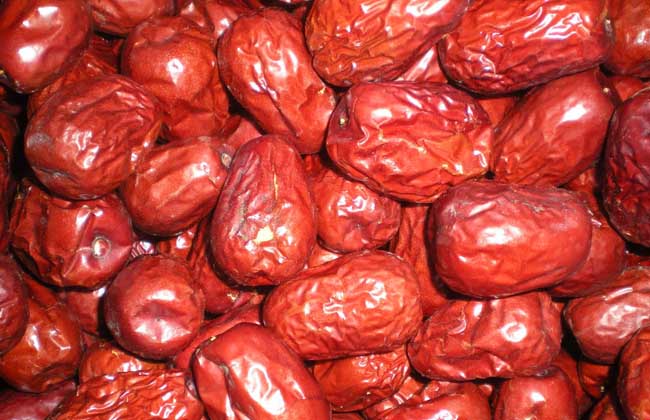
Red jujube, also known as Chinese date, is characterized by a very high vitamin content and has the reputation of a “natural vitamin pill”. Black jujube, also called junqianzi or wild persimmon, is widely distributed in northern China and is mainly divided into two types: pit-containing and pitless. The main varieties include Dahe black jujube, milk jujube and grape black jujube. Let us take a look below at the differences between black jujube and red jujube!
Differences in Family and Genus Between Black Jujube and Red Jujube
1. Black jujube: Black jujube is a deciduous small tree in the plant kingdom, Angiosperms, Dicotyledons, Sympetalae, Ericales, Ebenaceae, Diospyros.
2. Red jujube: Red jujube is a deciduous small tree in the plant kingdom, Angiosperms, Dicotyledons, Archichlamydeae, Rhamnales, Rhamnaceae, Zizipheae, Ziziphus.
Differences in Morphology Between Black Jujube and Red Jujube
1. Black jujube: The black jujube tree is 5-10 m tall, with dark brown bark deeply fissured into block-like sections, and young branches covered with gray downy hairs. The leaves are elliptical to oblong, 6-12 cm long and 3-6 cm wide, densely covered with downy hairs on the surface that later fall off, gray or pale white on the underside, with downy hairs on the veins. The flowers are pale yellow or pale red, solitary or clustered in the leaf axils, with the calyx densely covered in downy hairs and deeply divided into 4 lobes, the lobes ovate. The fruit is nearly spherical, 1-1.5 cm in diameter, blue-black when ripe, with a white waxy layer, and nearly sessile. The flowering period is May, and the fruit ripening period is October to November.
2. Red jujube: The red jujube tree reaches more than 10 m in height, with brown or grayish-brown bark. The petiole is 1-6 mm long, or up to 1 cm on long branches, hairless or sparsely slightly hairy. The stipular spines are slender and often fall off later. The flowers are yellow-green, bisexual, hairless, with short peduncles, solitary or densely grouped in axillary cymes. The drupe is oblong or long ovoid, 2-3.5 cm long and 1.5-2 cm in diameter, red when mature and later turning red-purple, with fleshy, thick mesocarp and a sweet taste. The seeds are flatly elliptical, about 1 cm long and 8 mm wide.
Differences in Producing Areas Between Black Jujube and Red Jujube
1. Black jujube: Black jujube is vigorous, sun-loving, tolerates semi-shade, and is stronger than persimmon trees in both cold tolerance and drought tolerance. It is very moisture-tolerant and prefers fertile, deep soil, but has a certain tolerance for poor soil, moderately alkaline soil and calcareous soil, and is strongly resistant to sulfur dioxide. It is distributed in Hebei, Shanxi, Shaanxi, Liaoning, Central South and Southwest China, among other places, and the black jujube of Shexian, Hebei is relatively well known.
2. Red jujube: Red jujube is native to China and is often cultivated in Asia, Europe and the Americas. In China it is distributed in Jilin, Liaoning, Hebei, Shandong, Shanxi, Shaanxi, Henan, Gansu, **, Anhui, Jiangsu, Zhejiang, Jiangxi, Fujian, Guangdong, Guangxi, Hunan, Hubei, Sichuan, Yunnan, Guizhou and other places, growing in mountainous areas, hills or plains below 1700 m in altitude, and is widely cultivated.
Differences in Effects Between Black Jujube and Red Jujube
1. Black jujube: Black jujube enters the spleen and stomach meridians and can tonify the center and boost qi, nourish blood, calm the mind and improve eyesight. According to modern pharmacological research, it contains glucose, fructose, sucrose, vitamin C, riboflavin, carotene, 13 amino acids and 36 trace elements, among others, and can be called a “natural comprehensive vitamin pill”. It has an excellent effect on vision care during the adolescent stage for girls.
2. Red jujube: Red jujube is sweet in taste and warm in nature. It has the effects of tonifying the spleen and stomach, boosting qi and blood, calming the mind, regulating nutrient and defensive qi, and harmonizing the nature of medicines. It mainly treats syndromes such as weakness of the spleen and stomach, insufficient qi and blood, little food intake and loose stools, fatigue and lack of strength, palpitations and insomnia, visceral agitation in women, and disharmony between nutrient and defensive qi. The leaves, flowers, fruits, bark, roots, spines and wood of the jujube tree can all be used as medicine.