What Does the Major Cold Solar Term Mean? Understanding the Meaning of Major Cold in One Article
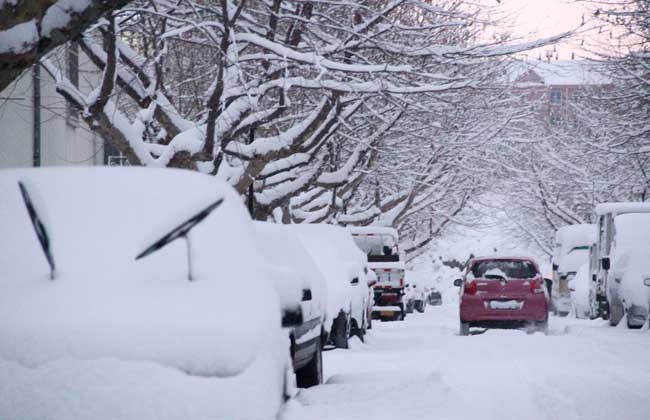
Major Cold is the last of the 24 solar terms. Every year around January 20, when the sun reaches the celestial longitude of 300 degrees, it is Major Cold. At this time, cold waves frequently move southward, and it is the coldest period of the year in most parts of China, with strong winds, low temperatures, and snow on the ground that does not melt, presenting a severe cold scene of ice and snow and freezing weather. Let us take a look below at what the Major Cold solar term means!
What does the Major Cold solar term mean?
Major Cold is the last of China's 24 solar terms. After Major Cold, a new yearly cycle of solar terms begins again. In ancient China, Major Cold was divided into three pentads: the first pentad when hens hatch chicks, the second pentad when birds of prey are swift and fierce, and the third pentad when the ice in waters is solid to the center. That is to say, by the Major Cold solar term, chicks can be hatched. Birds of prey such as hawks and falcons, however, are in a state of extremely strong hunting ability, circling in the air searching for food everywhere to replenish their body's energy and resist the severe cold. In the last five days of the year, the ice in waters freezes all the way to the center and is at its firmest and thickest, so children can skate freely on the river. In addition, the flower-signal winds appearing at Major Cold are: the first pentad Daphne odora, the second pentad orchid, and the third pentad Symplocos, which can also serve as important indicators for judging Major Cold.
Seasonal Characteristics of the Major Cold Solar Term
During the Major Cold solar term, atmospheric circulation is relatively stable, and the circulation adjustment cycle is about 20 days. When this kind of circulation adjustment occurs, widespread rain and snow weather and strong winds with cooling often appear. When there is a long-wave ridge west of 80 degrees east longitude and a coastal trough over East Asia, China is controlled by northwest wind airflow and affected by continuously replenished cold air, resulting in sustained low temperatures. Like Minor Cold, Major Cold is also a solar term that indicates the degree of coldness of the weather. Although modern meteorological observation records show that in some parts of China, Major Cold is not as cold as Minor Cold, in certain years and in a few coastal places, the lowest temperature of the whole year still occurs within the Major Cold solar term. Therefore, continued efforts should be made to protect crops from the cold, and special attention should be paid to protecting livestock so they safely pass the winter.
Minor Cold and Major Cold are the periods with the least rainfall of the year. In an average Major Cold solar term, rainfall in most parts of southern China increases only slightly compared with the earlier period. In most parts of South China it is 5 to 10 mm, while in the mountainous areas of the northwestern plateau it is generally only 1 to 5 mm. South China has a dry winter, and overwintering crops consume relatively little water during this period, so the contradiction between farmland water supply and demand is generally not prominent. However, “Do not complain about the bitter cold and the rain and snow; the snow comes to benefit next year's wheat.” When rain and snow are scarce, timely irrigation according to different farming habits and conditions in different regions is undoubtedly very beneficial to the growth of wheat crops.
The Major Cold Solar Term and Agricultural Production
During the Major Cold solar term, farm work in various places is still very limited. In northern regions, people are mostly busy collecting and piling manure to prepare for the beginning of spring, or strengthening cold and freeze protection for livestock. In southern regions, field management of wheat and other crops is still strengthened. In the Lingnan area of Guangdong, there is the custom of jointly catching field mice during Major Cold. Because crops have already been harvested at this time, many field mouse burrows that are usually unseen become exposed, and Major Cold also becomes an important opportunity for local people in Lingnan to concentrate on eliminating field mice. In addition, people in various places also use changes in the Major Cold climate to predict the rainfall and grain harvest of the coming year, so as to arrange farm work early.
During the Major Cold solar term, attention should be paid to clearing ditches and banking up soil to prevent water damage and freezing damage, and to removing weeds to prevent weed damage. At the same time, an appropriate amount of tillering fertilizer should be applied to promote strong seedlings through the winter. Prolonged low temperatures pose a great threat to vegetables, wheat, rapeseed, citrus, tea, and evergreen woody and herbaceous crops, and prevention should be taken seriously.