What does the winter solstice mean? A detailed explanation of the meaning of the winter solstice solar term
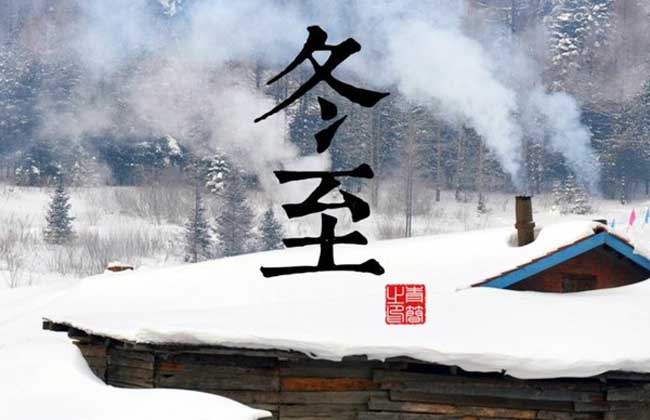
The winter solstice festival is one of the 24 solar terms and a traditional Chinese festival, also known as the winter festival or jiaodong. It was once said that "the winter solstice is as important as the New Year." The imperial court and common people have always attached great importance to it, and sacrificial activities have been held since the Zhou Dynasty. It falls between December 21 and 22 on the Gregorian calendar each year. Let's take a look below at what the winter solstice means!
What does the winter solstice mean?
The ancients believed that from the winter solstice onward, the yang energy of heaven and earth begins to rise and gradually grow stronger, representing the start of the next cycle and a day of great auspiciousness. Therefore, later, customs such as ancestor worship and family gatherings during the Spring Festival also often appeared at the winter solstice. The winter solstice is also called "minor New Year," which on one hand indicates that the end of the year is near and few days remain, and on the other hand shows the importance of the winter solstice. Observing the winter solstice as a festival originated in the Zhou Dynasty, flourished in the Tang and Song dynasties, and has continued to the present day. The first month of the Zhou calendar was the eleventh month of the Xia calendar; therefore, the first month of the Zhou Dynasty equals the eleventh month of today, so there was no distinction between paying respects at the New Year and celebrating the winter. It was not until Emperor Wu of Han adopted the Xia calendar that the first month and the winter solstice were separated. Therefore, it can also be said that celebrating the "winter solstice festival" specifically only began after the Han Dynasty, flourished in the Tang and Song dynasties, and has continued to the present day.
The historical origins of the winter solstice
According to records, during the Zhou and Qin eras, the eleventh month of winter was taken as the first month, and the winter solstice was regarded as the beginning of the year to celebrate the New Year. The Book of Han says: "At the winter solstice, yang energy rises, and the way of the ruler grows, so congratulations are offered..." In other words, people began to celebrate the winter solstice festival to welcome the arrival of the new year. The ancients believed that from the winter solstice onward, the yang energy of heaven and earth begins to rise and gradually grow stronger, representing the start of the next cycle and a day of great auspiciousness. Therefore, later, customs such as ancestor worship and family gatherings during the Spring Festival were often chosen to take place at the winter solstice. The winter solstice is also called "minor New Year," which on one hand indicates that the end of the year is near and few days remain, and on the other hand shows the importance of the winter solstice.
Observing the winter solstice as a festival originated in the Han Dynasty, flourished in the Tang and Song dynasties, and has continued to the present day. The first month of the Zhou calendar was the eleventh month of the Xia calendar; therefore, the first month of the Zhou Dynasty equals the eleventh month of today's Gregorian calendar, so there was no distinction between paying respects at the New Year and celebrating the winter. It was not until Emperor Wu of Han adopted the Xia calendar that the first month and the winter solstice were separated. It can also be said that simply celebrating the "winter solstice festival" only began after the Han Dynasty, flourished in the Tang and Song dynasties, and has continued to the present day.
In the Han Dynasty, the winter solstice was regarded as the "winter festival," and government offices held congratulatory ceremonies called "hedong" (congratulating the winter). Official holidays were observed as a rule, and the "baidong" (paying respects to winter) etiquette of mutual congratulations was popular in official circles. The Book of the Later Han records: "Before and after the winter solstice, gentlemen settle their bodies and quiet their minds; all officials cease affairs, do not attend to government, and choose an auspicious time to then handle matters." So on this day, the court above and below took a holiday and rested, the army stood by, border passes closed, merchants and travelers stopped business, relatives and friends exchanged fine foods and visited one another, joyfully spending a festival of "settling the body and quieting the mind." During the Wei, Jin, and Six Dynasties, the winter solstice was called "yasui," and people paid festival respects to their parents and elders. After the Song Dynasty, the winter solstice gradually became a celebratory activity for sacrificing to ancestors and deities.
During the Tang and Song periods, the winter solstice was a day for sacrificing to heaven and ancestors. On this day, the emperor went to the outskirts to hold a grand ceremony of sacrificing to heaven, and common people paid respects to their parents and elders. In the Ming and Qing dynasties, emperors all held grand ceremonies of sacrificing to heaven, called "winter solstice suburban heaven sacrifice." Within the palace there was a ceremony in which all officials submitted congratulatory memorials to the emperor, and they also exchanged calling cards to congratulate one another, just like New Year's Day.
Traditional foods of the winter solstice
1. Northern dumplings: Every year on the day of the lunar winter solstice, regardless of wealth or poverty, dumplings are an indispensable holiday meal. As the saying goes: "On the first day of the tenth month, when the winter solstice arrives, every household eats dumplings." This custom was left behind in memory of the "Medical Sage" Zhang Zhongjing, who gave out medicine at the winter solstice.
2. Mutton soup: The custom of eating mutton at the winter solstice is said to have begun in the Han Dynasty. According to legend, on the day of the winter solstice, Liu Bang, Emperor Gaozu of Han, ate mutton cooked by Fan Kuai, found the flavor especially delicious, and praised it endlessly. From then on, the custom of eating mutton at the winter solstice took shape among the people. People rushed to eat mutton and various nourishing foods on the day of the winter solstice in hopes of a good omen for the coming year. In the Tengzhou area of Shandong today, this day is called Fujiu; before the festival, gifts such as mutton are given to elders, and every household drinks mutton soup on Fujiu, all for the sake of a good omen for the individual, the elders, and the family.
3. Jiangnan rice: In the water towns of Jiangnan, there is a custom on the night of the winter solstice for the whole family to gather together and eat red bean glutinous rice. According to legend, Gonggong had a worthless son who committed many evil deeds and died on the day of the winter solstice. After death, he became a plague ghost and continued to harm the people. However, this plague ghost feared red beans the most, so people cooked and ate red bean rice on the day of the winter solstice to drive away the plague ghost and prevent disasters and illness.
4. Sweet potato soup fruit: In the traditional customs of Ningbo, sweet potato soup fruit is one of the must-eat foods at the winter solstice. "Fan" (sweet potato) and "fan" (to flip) are homophones; in the understanding of Ningbo people, eating sweet potatoes at the winter solstice means "flipping over" all the bad luck of the past year. Tangguo is similar to tangtuan, but much smaller and has no filling. Tangguo is also called yuanzi, taking the meaning of "reunion" and "completeness." Old Ningbo people also have a saying that "after eating tangguo, you are one year older."
5. Taiwan rice cakes: In Taiwan, China, there is still a tradition of using nine-layer cake to worship ancestors at the winter solstice. Glutinous rice flour is kneaded into animals such as chickens, ducks, turtles, pigs, cows, and sheep that symbolize good fortune, contentment, blessing, prosperity, and longevity, then steamed in layers in a steamer and used to worship ancestors, showing that the old ancestors are not forgotten. People with the same surname and clan gather at the ancestral hall on the winter solstice or an earlier agreed date and, in order of seniority, pay respects to the ancestors one by one, commonly known as "ancestor worship." After the ceremony, a grand banquet is also held to entertain the clan relatives who came to worship. Everyone drinks heartily and renews feelings that have grown distant after long separation, and this is called "eating with the ancestors." The winter solstice festival and ancestors have been passed down from generation to generation in Taiwan, China, to show that people do not forget their "roots." Radishes, green vegetables, tofu, wood ear mushrooms, and so on.
6. Taizhou lei yuan: People in Taizhou, Zhejiang, love good food, and the winter solstice is an important solar term of the year. On this day, they make special dishes and foods. First, they must pay respects to ancestors and pray for ancestors to bless the whole family with peace and good fortune in the coming year. Then the whole family happily gathers together to drink and eat. Among these, eating "winter solstice yuan" (lei yuan, also called hard lei yuan or fan cao yuan) is an old Taizhou tradition; lei yuan takes the meaning of round, smooth, and reunion.
7. Suzhou wine: The Gusu region places great importance on the winter solstice solar term. There is a saying in the Gusu region: "The winter solstice is like the great New Year." Traditional Gusu households drink winter-brewed wine on the night of the winter solstice. Winter-brewed wine is a type of rice wine brewed with added osmanthus, with a pleasant aroma. While drinking winter-brewed wine freely on the winter solstice night, the people of Gusu also pair it with various braised dishes such as braised beef and braised mutton. In the cold winter, winter-brewed wine not only drives away the cold, but also carries the beautiful wishes of the people of Gusu for life.
8. Jiangxi maci: Maci is a specialty of Zhejiang and Jiangxi, and also a traditional snack of Fujian people and an offering used by Fujian people during sacrifices. After the maci is dried in the shade, it is suitable for steaming, pan-frying, roasting over fire, or stir-frying with sand.
9. Winter solstice noodles: "After eating winter solstice noodles, the day grows by one thread." In Hefei, Anhui, the custom of eating noodles at the winter solstice is related to the solar term, climate, and farming. After the winter solstice comes the coldest days of the nine periods, with every nine days counted as one "nine." In the severe winter when dripping water freezes, only after eating a bowl of steaming hot egg noodles can it be considered that the winter solstice has been observed.
10. Tangyuan: A Han Chinese folk saying in the Chaoshan region goes: "The winter festival is as big as the New Year," and "If you do not return for the winter festival, you have no ancestors." This means that people who are away must hurry home on the day of the winter solstice to pay respects to their ancestors no matter what; otherwise, they are considered to lack a sense of ancestral home. Compatriots on both sides of the Taiwan Strait value the winter solstice greatly and treat it as a festival of reunion. After eating winter festival yuan, people in Chaoshan also attach two winter festival yuan to prominent places in the home such as doors, windows, tables, cabinets, ladders, and beds, and even to the bow of fishing boats, the horns of farm oxen, and the fruit trees grown by fruit farmers, without exception.
11. Longan with boiled eggs: In ancient times, the winter solstice was a major festival. Jiaxing attaches great importance to the winter solstice, with the proverb "The winter solstice is greater than the New Year," preserving ancient customs. According to the Jiaxing Prefecture Gazetteer: "At the winter solstice, ancestors are sacrificed to, and officials and gentry congratulate one another, as at the New Year's ceremony." Among the people, tonic consumption at the winter solstice is advocated, including red bean glutinous rice, ginseng soup, white wood ear, walnut kernel stewed with wine, and longan boiled with eggs. To this day, Jiaxing still carries on the custom of eating "longan with boiled eggs" at the winter solstice. Old people say that because the winter solstice night is the longest of the year, if you do not eat, you will freeze all night and still be hungry in the middle of the night.
12. Pumpkin pancakes: Once the winter solstice passes, the New Year is in sight. When the winter solstice arrives, Hefei people all eat pumpkin pancakes. The aroma of pumpkin pancakes fills the streets and alleys, and there is also a proverb that goes, "After eating winter solstice noodles, the day grows by one thread," meaning that after the winter solstice, the nights become shorter and the days longer.