When Is the Great Heat Solar Term? A Detailed Explanation of the Exact Date and Time
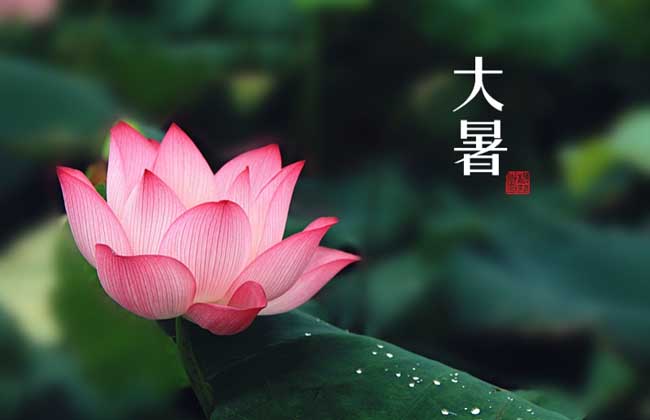
Great Heat is one of the 24 solar terms in the lunar calendar, when the sun is at 120 degrees of celestial longitude. During Great Heat, Han Chinese folk customs include drinking fu tea, sun-drying fu ginger, and burning fu incense. The Great Heat solar term falls around the "middle fu" of the "three fu days," the hottest period of the year, when temperatures are at their highest and crops grow fastest. At the same time, meteorological disasters such as drought, flooding and windstorms are also most frequent in many regions.
What Date Is Great Heat?
The date of Great Heat in 2016 was July 22, 2016, the 19th day of the sixth lunar month in the bingshen Year of the Monkey.
What Does Great Heat Mean?
The Han working people divided Great Heat into three pentads: "In the first pentad, rotten grass turns into fireflies; in the second pentad, the soil is moist and the weather is muggy; in the third pentad, heavy rain falls from time to time." There are about 2,000 species of fireflies in the world, divided into aquatic and terrestrial types. Terrestrial fireflies lay their eggs on withered grass, and at Great Heat the firefly eggs hatch, so the ancients believed fireflies were transformed from rotten grass. The second pentad means the weather begins to become muggy and the soil is very damp. The third pentad means that heavy thunderstorms often occur, and this heavy rain weakens the summer dampness as the weather begins its transition toward Start of Autumn.
Festival Customs of Great Heat
1. Zhejiang: The "Great Heat Ship" activity in the coastal area of Taizhou, Zhejiang, has a history of several hundred years. The "Great Heat Ship" is built as a scaled-down version of an old-style three-masted sailing ship, loaded with various offerings. After the activity begins, more than 50 fishermen take turns carrying the "Great Heat Ship" through the streets, with drums and bugles sounding and firecrackers cracking, while crowds of people praying for blessings line both sides of the street. The "Great Heat Ship" is finally transported to the dock, where a series of blessing ceremonies is held. Afterwards, the "Great Heat Ship" is towed out of the fishing harbor by a fishing boat and then set alight on the sea, left to drift and sink, as a blessing for bountiful harvests and peaceful lives.
2. Putian: On the day of the Great Heat festival, families in Putian have the custom of eating lychees, mutton and rice ferment, called "celebrating Great Heat." On that day, relatives and friends often exchange lychees and mutton as gifts.
3. Taiwan, China: During the Great Heat festival, the waters around Taiwan are mostly filled with schools of warm-water fish, with squid in the northeastern waters, small squid, red snapper and other fish off Keelung, and yellowfin seabream in the waters off Changhua. A Taiwanese folk saying goes: "Eat pineapple at Great Heat," meaning that pineapples are most delicious at this time of year. In addition, the 15th day of the sixth lunar month is the "Half-Year Festival." Since the 15th day of the sixth lunar month marks the halfway point of the year, on this day after worshipping the gods the whole family eats "half-year roundies" together. Half-year roundies are made by grinding glutinous rice into powder and kneading it with red coloring, and are mostly boiled into a sweet dish to be enjoyed, symbolizing reunion and sweetness.
4. Japan: During the Great Heat solar term, Japanese people set up long bamboo tubes in their communities, put cooked noodles into the tubes to cool in running water, and offer them for everyone to taste. It is said that after eating this kind of bamboo-tube cold noodle, one will not suffer heatstroke in summer.
5. Drinking summer mutton: In many areas of Shandong, there is a custom of "drinking summer mutton" (that is, drinking mutton soup) on the day Great Heat arrives. In Zaozhuang City, many residents go to local mutton soup restaurants to "drink summer mutton" on this day.
6. Cricket fighting: Great Heat is the season when crickets are most abundant in rural fields, and in some areas of China people have the custom of enjoying cricket fights after tea and meals.
7. Eating grass jelly: In many places in Guangdong, there is a custom of "eating grass jelly" during Great Heat. Grass jelly, also known as liangfen grass or immortal grass, is a herbaceous plant of the genus Mesona in the mint family, and an important medicinal and edible plant resource. Because of its remarkable heat-relieving effect, it is hailed as "immortal grass." After the stems and leaves are sun-dried, they can be made into burned grass jelly, called liangfen in the Guangdong area, a sweet dessert that relieves summer heat.
8. Eating pineapple: During Great Heat, Taiwan, China has the custom of eating pineapple, and Han Chinese folk believe that pineapples are most delicious at this time of year. In addition, the pronunciation of pineapple in Minnan dialect is the same as "wanglai" (prosperity comes), so it is also used as a symbol of praying for peace and good fortune and for prosperous business.