What does Cold Dew mean? Understanding the meaning of the Cold Dew solar term in one article
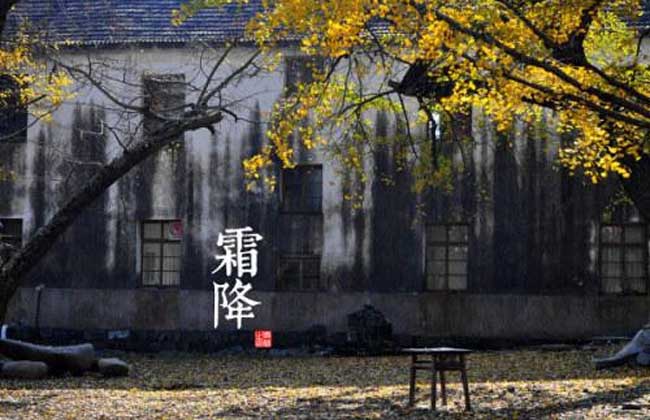
Cold Dew is the 17th solar term of the 24 traditional Chinese lunar solar terms and the fifth solar term of autumn, marking the official beginning of the autumn season; it falls on October 8 or 9 of the Gregorian calendar each year, when the sun reaches the celestial longitude of 195 degrees. In most areas of southern China, temperatures continue to drop. Across the vast regions at and north of the Nanling Mountains, autumn has already arrived; the Northeast has entered late autumn, and the Northwest has entered or is about to enter winter.
What does Cold Dew mean?
Cold Dew means the temperature is lower than during White Dew, and the dew on the ground is colder, about to condense into frost. During Cold Dew, vast areas at and north of the Nanling Mountains have all entered autumn, while the Northeast and Northwest have entered or are about to enter winter. In the capital, Beijing, early frost can be seen in most years at this time; except for the Qinghai-Tibet Plateau, where it snows year-round, northern Northeast China and northern ** generally begin to see snowfall.
Climatic characteristics of Cold Dew
Traditionally in China, dew is regarded as a sign of weather turning cooler and colder. During the mid-autumn White Dew solar term, "dew condenses and turns white"; by the late-autumn Cold Dew, it is already "the dew air is cold and about to condense into frost." At this time, temperatures in most areas of southern China continue to drop. In South China, the daily average temperature is mostly below 20°C; even along the Yangtze River, the mercury column can hardly rise above 30°C, while the lowest temperature can drop below 10°C. On the northwestern plateau, except for a few low river valleys, the pentad (5-day) average temperature is generally below 10°C. Measured by the climatological standards for dividing the four seasons, winter has already arrived, with frost spread over a thousand li and snow drifting across ten thousand li, entirely different from the autumn scenery of South China.
Cold Dew and agricultural production
During Cold Dew, rainfall in South China also gradually decreases. In western South China, it is mostly around 20 mm, while in the east it is generally about 30 to 40 mm. Continuous rain is very frequent, from morning to night, drizzly and fine, affecting the "three autumns" production and becoming a disastrous weather pattern in most areas of southern China. The climatic characteristics accompanying continuous rain are high humidity, abundant cloud cover, little sunshine, many overcast days, and a marked increase in foggy days from then on. However, whether the autumn continuous rain is severe or not directly affects the progress and quality of the "three autumns." For this reason, on the one hand, weather forecasts should be used to seize sunny days for harvesting and sowing. On the other hand, effective farming measures such as deep furrows and high beds should be adopted according to local conditions to reduce wet damage and improve sowing quality. In plateau areas, around Cold Dew is one of the seasons when snow disasters are most severe; accumulated snow blocks traffic and harms livestock production, so precautions should be taken.