When Is the Summer Solstice? A Detailed Explanation of the Summer Solstice Date
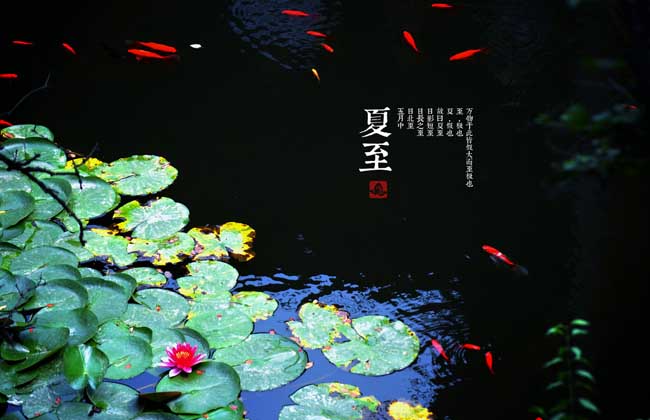
The summer solstice is one of the 24 solar terms, falling on June 21 or 22 of the Gregorian calendar each year. On this day, the sun reaches a celestial longitude of 90 degrees (in the constellation Gemini), and the point where the sun shines directly on the earth reaches its northernmost position of the year, almost directly over the Tropic of Cancer. At this time, the Northern Hemisphere has the longest daylight hours, with daytime in the Beijing area lasting as long as 15 hours. On this day, the Northern Hemisphere receives the most sunlight, nearly double that of the Southern Hemisphere.
When is the summer solstice?
The summer solstice in 2016 falls from 06:34 on June 21, 2016 to 00:03 on July 7, 2016, a Tuesday, the 17th day of the fifth lunar month in 2016.
The Origin of the Summer Solstice Solar Term
The summer solstice is the earliest of the 24 solar terms to have been determined. In the 7th century BC, the ancients determined the summer solstice by using a sundial to measure the shadow of the sun. Each year, the summer solstice begins on June 21 (or 22) and ends on July 7 (or 8). According to the "Kezun Xiandu Chaoben": "The sun reaches its northernmost point, the day is at its longest, and the shadow is at its shortest, hence it is called the summer solstice. Zhi means extreme." On the summer solstice, the point where the sun shines directly on the earth reaches its northernmost position of the year, almost directly over the Tropic of Cancer (23°26'N), and the Northern Hemisphere's daylight reaches its longest, with days growing longer the farther north one goes. For example, in Haikou, Hainan, the day length on this day is a little over 13 hours, in Hangzhou it is 14 hours, in Beijing about 15 hours, and in Mohe, Heilongjiang, it can reach more than 17 hours. After the summer solstice, the point where the sun shines directly on the earth gradually moves southward, and daylight in the Northern Hemisphere begins to shorten day by day. There is a folk saying: "After eating summer solstice noodles, the day shortens by one thread." At this time, the Southern Hemisphere is in the depths of winter.
The Climatic Characteristics of the Summer Solstice
1. Convective weather: After the summer solstice, the ground is strongly heated and air convection is vigorous, making thunder showers likely to form from afternoon to evening. These thermal thunderstorms come and go quickly and cover a small area, which people call "summer rain separated by a field ridge." The Tang dynasty poet Liu Yuxi once cleverly used this kind of weather as a metaphor, writing the famous lines "The sun rises in the east while it rains in the west; though one says there is no sunshine, there is sunshine." The heavy precipitation brought by convective weather is not always as beautiful as described in poetry and often causes localized disasters. The poet Xu Shuxin, in the poem "In the Summer Rain," also gave a fitting description of summer thunderstorm weather: "In summer, the warm wind blows as the heat sits on the terrace; frogs croak and cicadas chirp, stirring up the dust. A thunderbolt cracks the blue sky like a golden gong; cold rain falls like coins against the face."
2. Rainstorm weather: In most cases, during the "summer solstice" period, it coincides with the plum rain in the middle and lower reaches of the Yangtze River and the Jianghuai basin, and rainstorms occur frequently, easily causing floods and waterlogging disasters and even threatening people's lives and property, so flood control work should be strengthened.
3. Jianghuai plum rain: The summer solstice period is exactly the "plum rain" season in the Jianghuai area. This is when plums in Jiangnan ripen and turn yellow, and the air is very humid. Cold and warm air masses meet here and form a low-pressure trough, leading to continuous rainy weather. In such weather, objects become moldy, people feel uncomfortable, some mosquitoes and insects reproduce very quickly, and some intestinal pathogens also breed easily. At this time, attention should be paid to the hygiene of drinking water, and raw and cold foods should be avoided as much as possible to prevent the occurrence and spread of infectious diseases.
4. High-temperature sauna: The summer solstice, like the winter solstice, is a solar term that reflects the change of the four seasons. In astronomy, the summer solstice is defined as the beginning of summer in the Northern Hemisphere. After the summer solstice, although the subsolar point begins to gradually move southward from the Tropic of Cancer, and daylight in the Northern Hemisphere shortens day by day while night gradually lengthens, because the heat radiated by the sun to the ground is still greater than that released from the ground into the air, temperatures will continue to rise for some time afterward, hence the saying "It is not hot until after the summer solstice." Judging from data from 1951 to 2006, the historical extreme values in many northern cities all occurred after the summer solstice.