When is the Start of Summer solar term? A full list of the exact dates and times
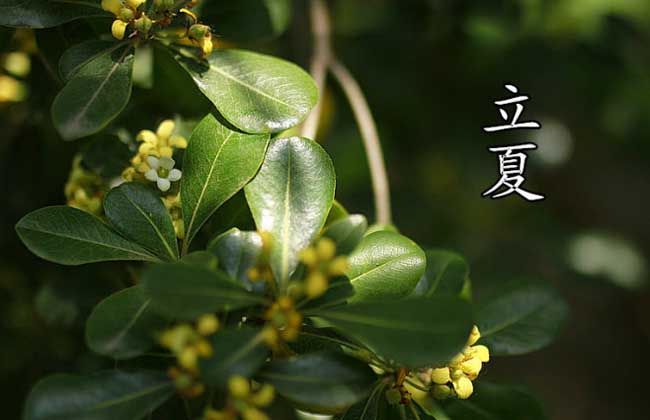
The Start of Summer is the 7th of the 24 solar terms in the lunar calendar and the first solar term of summer, marking the official beginning of the first month of summer. The Start of Summer solar term occurs when the sun reaches the celestial longitude of 45 degrees. In astronomy, the Start of Summer indicates that spring is about to bid farewell and summer is beginning. People customarily regard the Start of Summer as an important solar term when temperatures rise noticeably, the heat is about to arrive, thunderstorms increase, and crops enter their peak growing season.
When is the Start of Summer?
The Start of Summer in 2016 fell at 09:41:50 on May 5, 2016, the 29th day of the third month (a long month) of the lunar year 2016. The Start of Summer in 2017 fell at 15:30:59 on May 5, 2017, the 10th day of the fourth month (a long month) of the lunar year 2017.
The solar term temperature of the Start of Summer
According to climatological standards, summer begins when the daily average temperature steadily rises to above 22°C. Around the Start of Summer, only the region south of the line from Fuzhou to the Nanling Mountains in China has truly entered summer, while some areas of the northeast and northwest are just entering spring at this time, and the average temperature across most of the country is around 18-20°C. In the rest of South China, the temperature is around 20°C, while in low-altitude river valleys, the summer heat is felt as early as mid-April, and by the Start of Summer the temperature has already reached above 24°C.
The rainfall characteristics of the Start of Summer
After the Start of Summer, Jiangnan officially enters the rainy season, and both rainfall amounts and rainy days increase noticeably. Continuous overcast and rainy weather not only causes wet damage to crops, but also triggers outbreaks of various diseases. The heading and flowering stage of wheat is the period most susceptible to fusarium head blight. If warm but rainy weather is forecast, spraying should be carried out promptly from the early flowering stage to the full flowering stage for prevention and control. Under conditions of continuous rain or sudden warmth followed by sudden cold, cotton in the south often suffers outbreaks of diseases such as anthracnose and damping-off, causing large areas of dead or missing seedlings. Necessary measures to raise temperature and reduce humidity should be taken in time, along with chemical control, to preserve the full stand of seedlings and strive for strong seedlings.
Around the Start of Summer, temperatures in North China, the northwest and other places rise quickly, but precipitation is still not plentiful. Combined with frequent spring winds and strong evaporation, dry air and dry soil often seriously affect the normal growth of crops. In particular, the dry hot wind around the grain-filling and milk-ripe stages of wheat is an important disastrous weather condition leading to reduced yields, and timely irrigation is the key measure for drought resistance and disaster prevention. “Three days after the Start of Summer, hoe everywhere.” At this time weeds grow very quickly, and “if you don't hoe weeds for one day, you won't be able to hoe them for three.” Intertillage and weeding can not only remove weeds, resist drought and prevent waterlogging, but also raise soil temperature and accelerate the decomposition of soil nutrients, which is of great significance for promoting the robust growth of cotton, corn, sorghum, peanuts and other crops during the seedling stage.
After the Start of Summer comes the key period for large-scale transplanting of early rice, and whether the rains come early or late and how much rain falls during this period is closely related to the later harvest. As the farming proverb goes: “If no rain falls at the Start of Summer, hang up the plow and harrow.” “If there is no rain at the Start of Summer, the pestle will have no rice.” There is also a folk custom of fearing the summer heat and weighing oneself, and in the Jiangxi area there is the custom of drinking tea at the Start of Summer, saying that if you do not drink Start of Summer tea, you will have a hard summer to endure.
The solar term customs of the Start of Summer
1. The ceremony of welcoming summer: The “xia” in “Start of Summer” means “great”, referring to the plants sown in spring having already stood upright and grown. In ancient times, people attached great importance to the rituals and customs of the Start of Summer. On the day of the Start of Summer, ancient emperors would lead civil and military officials to the southern suburbs of the capital to welcome summer and hold a ceremony for welcoming summer. Rulers and ministers all wore vermilion ceremonial robes and carried vermilion jade pendants, and even horses and carriage flags had to be vermilion, to express prayers for a good harvest and beautiful wishes. In the palace, “on the day of the Start of Summer, ice was opened and bestowed upon the civil and military ministers.” The ice had been stored in the previous winter and was granted by the emperor to the officials.
2. Tasting new foods: In later times, the Start of Summer also included festival activities such as tasting new foods. For example, Suzhou has the saying “at the Start of Summer, see the three new things”, the three new things being cherries, green plums and wheat, used to worship ancestors. In Changshu, the foods for tasting new things are even more abundant, with the saying “nine meats and thirteen vegetarian dishes”. The nine meats are crucian carp, salted eggs, whelk, xi (that is, simmered over a low fire, a cooking method using multiple spices to make xi chicken), pickled fresh food, braised shrimp and cherry pork; the thirteen vegetarian dishes include cherries, plums, wheat silkworms (new wheat kneaded into thin strips and cooked), bamboo shoots, broad beans, spear needles, peas, cucumbers, lettuce, bur clover, radishes, roses and pine flowers. In Nantong, people eat boiled chicken and duck eggs.
3. The egg-fighting game: At noon that day, every household boiled whole eggs (chicken eggs boiled in the shell and not broken), soaked them in cold water for several minutes, then put them into already woven silk mesh bags and hung them around children's necks. The children would then gather in groups of three or five and play the egg-fighting game. The egg has two ends: the pointed one is the head and the round one is the tail. In egg fighting, egg head strikes egg head and egg tail strikes egg tail. They fight one after another, and the one whose egg breaks admits defeat, until superiority is finally determined. The winner with the egg head ranks first, and the egg is called the king; the winner with the egg tail ranks second, and the egg is called the little king or second king.
4. Weighing people at the Start of Summer: After eating lunch at the Start of Summer, there is also the custom of weighing people. People hang a large wooden steelyard at the village entrance or in the gateway, with a stool suspended from the hook, and everyone takes turns sitting on the stool to be weighed. The person operating the steelyard calls out the scale markings while saying auspicious words. When weighing an old person, one says, “Eighty-seven on the scale, live to ninety-one.” When weighing a girl, one says, “One hundred and five jin, a wealthy family will come calling. She won't agree, won't agree, simply won't agree, but she is destined for a top scholar young gentleman.” When weighing a child, one says, “One strike of the scale marks twenty-three, the little gentleman will make his mark when he grows up. A seventh-rank county magistrate is no difficulty, and even the three excellencies and nine ministers can be attained.” The scale markings can only be called from the inside out (that is, from small numbers to large numbers), and not from the outside in.