What Does Chushu Mean? A Detailed Explanation of the Meaning of the Chushu Solar Term
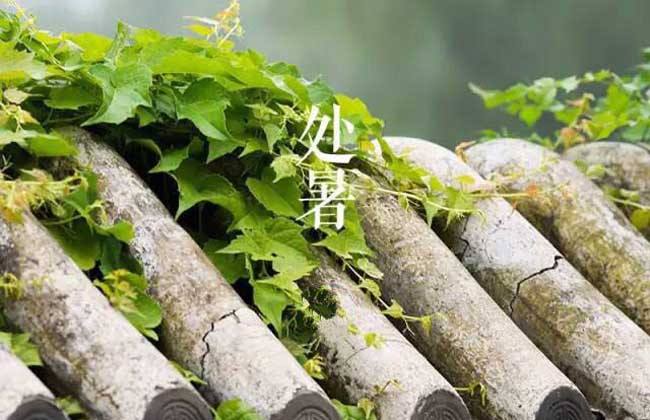
Chushu is the 14th solar term of the 24 traditional Chinese solar terms. The term begins around August 23 on the Gregorian calendar, when the sun reaches the celestial longitude of 150 degrees. The Chushu solar term means entering autumn in the meteorological sense. After Chushu, temperatures in areas of China north of the Yangtze River gradually decline, which is the meaning of "chu shu" - the heat leaving.
The Origin of the Chushu Solar Term
When the sun reaches the celestial longitude of 150 degrees, it is Chushu, one of the 24 traditional Chinese solar terms. Chushu is a solar term that reflects changes in temperature. "Chu" carries the meaning of hiding and ending, and "Chushu" indicates that the hot summer days have come to an end. "Chu" means termination, indicating that the heat is about to pass and the summer heat will end on this day, with temperatures gradually declining across most of China. Chushu is different from Minor Heat and Major Heat, and also different from Minor Cold and Major Cold. It is a solar term that represents the transition of temperature from hot to cold.
In China, Chushu is divided into three pentads: "In the first pentad, eagles begin to sacrifice birds; in the second pentad, heaven and earth begin to wither; in the third pentad, grain ripens." During this solar term, eagles begin to hunt birds in large numbers, and all things between heaven and earth begin to wither. The "grain" in "grain ripens" refers collectively to crops such as broomcorn millet, foxtail millet, rice and sorghum, and "ripen" means mature. After Chushu, apart from South China and the Southwest, the rainy season in most parts of China is about to end and precipitation gradually decreases. In particular, North China, Northeast China and Northwest China must promptly store water and preserve soil moisture to prevent drought during the autumn sowing period from delaying the sowing time of winter crops.
The Weather Characteristics of Chushu
1. Temperature drop: During the Chushu solar term, it is not enough to describe it simply as temperatures beginning to fall. Falling temperatures are only one phenomenon. The reason behind this phenomenon is, first, that the sun's direct point continues to move southward and solar radiation weakens; second, the subtropical high retreats southward in leaps, and the Mongolian cold high begins to stir, testing its strength and showing its first edge.
2. Clear autumn skies and crisp air: During Chushu, only Northeast China and Northwest China truly enter autumn. But whenever cold air affects China, if the air is dry, it often brings windy weather; if there is a warm, moist air flow in the atmosphere, it often forms a proper autumn rain. After each spell of wind and rain, especially after rain, people feel a more obvious drop in temperature. In the Jianghuai region of southern North China, larger precipitation processes may also occur. Temperatures drop noticeably, the temperature difference between day and night increases, and after rain the bright sun hangs in the sky. People are often not very adaptable to the changes between cold and heat at the turn of summer and autumn, and can easily trigger diseases such as respiratory illnesses, gastroenteritis and colds if they are not careful.
3. Indian summer: The subtropical high that dominates in summer, although retreating southward in great strides, is by no means willing to easily give up its dominance or easily retreat to the waters of the western Pacific. In the southern regions it controls, people who have just felt a trace of autumn coolness often experience high temperatures again at the end of Chushu. This is the veritable "Indian summer." For areas that have just emerged from the sanfu period and suffered severe summer drought, if they continue to be controlled by the subtropical high, it is often easy to form a continuous summer-autumn drought, greatly advancing the autumn fire prevention period, which requires vigilance. It should be noted that the middle and lower reaches of the Yangtze River often only welcome the clear, crisp autumn weather of an "old wives' summer" after the Indian summer weather ends, but this does not happen until after October. During this period, the overall trend of heavy rain across the country is weakening.
4. Thunderstorm activity: Thunderstorm activity is not as active as in midsummer, but thunderstorm activity in South China, the Southwest and West China is still relatively frequent. In South China, because the low-latitude warm, moist air flow is still relatively active, thunderstorms there are more numerous than elsewhere, while in the Southwest and West China, because they are located at the edge of the subtropical high and also due to the effect of mountainous terrain, thunderstorm activity is also relatively frequent. Entering September, most of China begins to enter a period of little rain, while West China has relatively more autumn rain.
Customs and Activities of Chushu
1. Outings to welcome autumn: The folk customs around the Chushu solar term, such as ancestor worship and welcoming autumn, are mostly related to ancestor worship and welcoming autumn. Around Chushu, there are folk activities celebrating and praising Zhongyuan, commonly known as "doing the July half" or the "Zhongyuan Festival." In old times, from the first day of the seventh lunar month, there was a ceremony to open the ghost gate, and until the end of the month when the ghost gate was closed, universal salvation and almsgiving activities were held. It is said that the universal salvation activities began with opening the ghost gate, then erecting lantern poles and releasing river lanterns to attract wandering souls, while the main part consisted of building universal salvation altars, setting up orphan sheds, and interspersing activities such as grabbing the orphan, finally ending with closing the ghost gate.
2. Releasing river lanterns: River lanterns are also called "lotus lanterns." Generally, a lamp or candle is placed on a base, and on the night of Zhongyuan it is placed in rivers, lakes and seas and allowed to drift. Releasing river lanterns is meant to universally save the drowned ghosts in the water and other lonely wandering ghosts. A passage from Xiao Hong's "Tales of Hulan River" is the best footnote to this custom: "The fifteenth of the seventh month is Ghost Festival. The wronged souls and resentful ghosts of the dead cannot be reborn and linger miserably in hell. They want to be reborn but cannot find the way. If on this day a dead ghost carries a river lantern, then it can be reborn."
3. Fishing season opening festival: For coastal fishermen, after Chushu comes the season of fishery harvest. Every year during Chushu, a grand annual fishing season opening festival is held along the coast of Zhejiang Province. It is decided that on the day the fishing moratorium in the East China Sea ends, a grand fishing season opening ceremony will be held to see the fishermen off as they set sail to sea.
4. Water-splashing custom: In Japan, during the one month from Major Heat to Chushu, various places across Japan have the custom of organizing water splashing to cool down.