When Is the Start of Autumn? A Detailed Explanation of the Exact Time of the Start of Autumn Solar Term
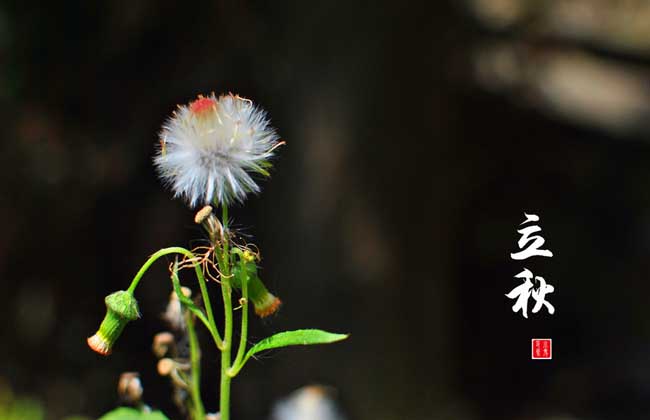
The Start of Autumn (Liqiu) is the 13th of the 24 solar terms in the lunar calendar, and moreover the first solar term of autumn, marking the official beginning of the first month of autumn, and "autumn" refers to the departure of heat and the arrival of coolness. When the Start of Autumn arrives, the leaves of the Chinese parasol tree begin to fall, hence the idiom "one falling leaf heralds autumn." From a textual perspective, the character "autumn" is composed of the characters for grain and fire, meaning the ripening of grain.
When Is the Start of Autumn
The time of the Start of Autumn in 2016 was August 7, 2016, at 09:52:58, the fifth day of the seventh lunar month (a short month) of 2016. The time of the Start of Autumn in 2017 was August 7, 2017, at 15:39:58, the sixteenth day of the sixth lunar month (a short month) of 2017.
The Climatic Characteristics of the Start of Autumn
During the Start of Autumn solar term, the sun moves from Cancer into Leo. When observing the sky at night, one can see the handle of the Big Dipper pointing toward the celestial stem "shen" (southwest). The day the Start of Autumn begins falls exactly in the seventh lunar month, and the seventh month is precisely "shen month." At the time of the Start of Autumn, the sun is at a declination of +16 degrees 19 minutes, already considerably farther south than the +23 degrees 26 minutes of the summer solstice, and the length of daylight in the Beijing area is therefore shortened to 14 hours 04 minutes (the summer solstice is 15 hours). However, the weather at this time is usually still very hot. After the Start of Autumn there is still one "fu" (dog day) period remaining, and the "autumn tiger" still exists. Therefore the public must still pay attention to preventing heatstroke.
The "Start of Autumn" has arrived, but it does not mean that autumn weather has already come. The division of climatic seasons is based on the "pentad mean temperature," that is, only when the average temperature at a locality remains below 22 degrees C for five consecutive days is it considered truly the autumn season. China has a vast territory, and although the climate varies from place to place, at this time most regions have still not entered autumn weather, and moreover the last fu of the year's hottest sanfu period is still on the 3rd day after the Start of Autumn. Especially in southern China, during this solar term it is still the time of summer heat, and at the same time, because the typhoon-rain season is gradually ending, the temperature is even hotter, and thus Chinese medicine calls the period from the Start of Autumn to before the Autumn Equinox "long summer."
The earliest places where autumn comes, Heilongjiang and the northern regions, do not enter autumn until mid-August. In ordinary years, the capital Beijing begins to enjoy the cool autumn breeze in early September, autumn in the Qinhuai region begins in mid-September, and the autumn wind blows to the line of Lishui in Zhejiang, Nanchang in Jiangxi, and Hengyang in Hunan in early October. The news of autumn arrives at the Leizhou Peninsula only in early to mid-November, and when the footsteps of autumn reach Yazhou in Hainan at the "ends of the earth," it is already almost New Year's Day.
The Culture and Customs of the Start of Autumn
1. The Start of Autumn Festival: The Start of Autumn Festival is also called the July Festival. In the Zhou Dynasty, on this day the Son of Heaven personally led the three dukes, six ministers, feudal lords, and senior officials to the western suburbs to welcome autumn and hold ceremonies to sacrifice to Shaohao and Rushou. The Han Dynasty still carried on this custom. Since the Republic of China period, in the vast rural areas, on the day or night of the Start of Autumn, there has been the custom of divining whether the weather would be cool or hot. There are also customs of tasting new crops with watermelon and green beans and making offerings to ancestors. There are also customs on the day before the Start of Autumn of displaying iced melons, steaming eggplant preserves, and decocting xianger drink.
2. Shaiqiu (Drying Autumn Harvest): Every year at the Start of Autumn, as fruits and vegetables ripen, Huangling enters the peak season for shaiqiu. Shaiqiu is a typical agricultural folk phenomenon with very strong regional characteristics. Among villagers living in mountainous areas such as Hunan, Jiangxi, and Anhui, because the terrain is complex and there is very little flat land in the villages, they have no choice but to use the areas in front of and behind their houses as well as their own windowsills and rooftops to set up racks or hang crops to dry, and over time this evolved into a traditional agricultural folk phenomenon. This special way of life and scene of villagers drying crops gradually became material pursued and created by painters and photographers, and shaped the poetic name "shaiqiu."
3. The Autumn Busy Fair: The autumn busy fair is generally held in the seventh or eighth lunar month, and is a trade fair held to prepare for the autumn busy season. Some are held in combination with temple fair activities, and some are trade fairs held solely for the autumn busy season. Their purpose is to exchange production tools, sell livestock, and exchange grain and daily necessities. Their scale is the same as the summer busy fair, with mule and horse markets, grain markets, farm tool production markets, cloth markets, and markets for Beijing-Guangzhou general merchandise. Nowadays such gatherings are all called "economic and trade exchange conferences." During the fair there are also theatrical performances, horse racing, monkey shows, and other artistic programs for entertainment.
4. Mutual Aid in the Autumn Harvest: When the autumn busy season begins, rural areas generally have the custom of "mutual aid in the autumn harvest," you help me and I help you, going to the fields in groups of three or five to rush the harvest of already ripe corn. One crop of corn must be picked four times: first picking, second picking, third picking, and final gleaning. Women, the elderly, and children around ten years old carry bamboo baskets in their hands, row after row, plant after plant, picking one by one. One must absolutely avoid "the monkey picking corn, picking one and dropping one." Instead, pick one and put it in the basket, then place it in the pile of corn ears at the edge of the field, and finally haul it home with a cart. In the first picking, first pick the corn ears that have already ripened; leave the unripened corn ears to be picked in the second picking. The second and third pickings use the same method. Finally, in the gleaning, the remaining corn ears, regardless of whether old or tender, are all picked and brought home. Whichever family's corn ripens early is helped first, so that neither the farming season is violated nor is a single grain lost.
5. Autumn Field Entertainment: In autumn, especially around the busy autumn season, although farming is busy, with autumn planting and autumn harvesting, everyone is bustling with joy! But amid the busyness there is also fun. One often sees some young people and children around ten years old. After the corn, millet, and broomcorn millet have grown, especially when the corn has grown to the height of a person and has just formed ears, the fields are exactly the place for them to play and put on plays. They pick off tender corn ears, dig a hole in the ground, leave a chimney, and this makes a natural earthen stove. Then they put the tender corn ears in, gather firewood everywhere, and the top flowers of the corn make very good fuel, and they add fire to burn it. In a little while all the corn ears in the whole kiln are cooked, and a rich corn feast is held in the fields. They also climb trees to catch sparrow eggs and hunt rabbits on the spot; there are many edible wild foods, all of which can be cooked in the pot in the wild. There are meat dishes and vegetarian dishes, with all kinds of flavors. They also put the persimmons they knock down and the sweet potatoes they get into the earthen kiln hole and warm-roast them for one shichen, and they turn into sweet and fragrant persimmons. This kind of fun in the autumn fields has been passed down from generation to generation.
6. Putting on Autumn Fat: Among the people it is popular on the day of the Start of Autumn to weigh people on a hanging scale and compare their weight with that at the Start of Summer. Because when people reach summer, they originally have little appetite, their meals are light and simple, and after two or three months their weight generally decreases a little. Once the autumn wind rises, the appetite opens wide, and one wants to eat something good to add a little nutrition and make up for the losses of summer. The way to make up for it is "putting on autumn fat": on the day of the Start of Autumn, all kinds of meat, stewed meat, roasted meat, braised meat, and so on, "using meat to put on fat."
7. Biting Autumn: "Biting autumn" is also called "nipping autumn" in some places. Tianjin pays attention to eating watermelon or muskmelon on the day of the Start of Autumn, calling it "nipping autumn," implying that the scorching summer heat is hard to endure, and when the Start of Autumn comes, one bites it. Jiangsu and other places also eat watermelon on the day of the Start of Autumn to "nip autumn," and it is said this can prevent autumn prickly heat. In Zhejiang and other places, on the day of the Start of Autumn people take watermelon and shaojiu together, and folk belief holds that this can prevent malaria. City people buy a watermelon and bring it home on the day of the Start of Autumn, and the whole family gathers around to bite into it, and that is biting autumn. Farmers' biting autumn is much more bold and unrestrained. In melon sheds, under the shade of trees, in groups of three or five, sitting on the ground, they hug red-fleshed watermelon and bite into it, hug green-fleshed muskmelon and bite into it, hug white sweet potatoes and bite into it, hug golden corn cobs and bite into it. What biting autumn expresses is, in fact, a kind of joy of harvest.
8. Autumn Sacrifice: The autumn sacrifice was originally a day in autumn for sacrificing to the earth god, beginning in the Han Dynasty, and later generations fixed the autumn sacrifice on the fifth wu day after the Start of Autumn. At this time the harvest was already complete, and both the government and the people offered sacrifices to the gods on this day in thanks. In the Song Dynasty, the autumn sacrifice had the customs of eating cakes, drinking wine, and married women returning to their parents' homes. Tang Dynasty poet Han Wo's poem "Not Seeing": "This body wishes to be the swallow of your house; when the autumn sacrifice comes, it still does not return." In some places, there still circulate today the sayings of "doing the sacrifice," "honoring the earth god," and "cooking sacrifice porridge."