What Does the Grain Rain Solar Term Really Mean? A Clear Explanation in One Article
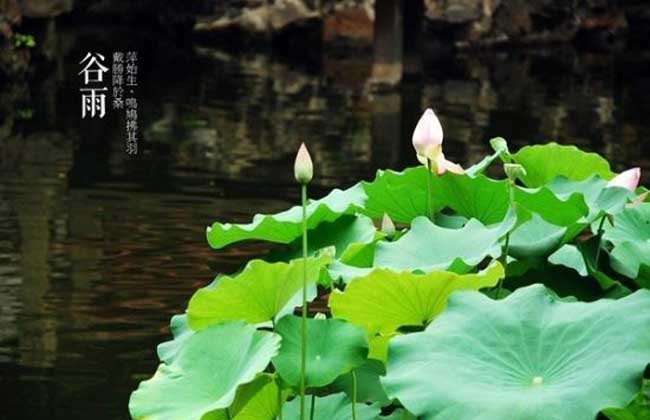
Grain Rain is the sixth solar term of the twenty-four solar terms. Each year between April 19 and 21, when the sun reaches the celestial longitude of 30°, it is Grain Rain. It originates from the ancient saying that “rain gives birth to a hundred grains,” and it is also the best season for sowing seeds and transplanting seedlings, planting melons and beans. Grain Rain is the last solar term of spring. The arrival of the Grain Rain solar term means that cold wave weather has basically ended and temperatures are rising faster, which greatly benefits the growth of grain crops.
Farming Activities During the Grain Rain Solar Term
Grain Rain is the last solar term of spring. At this time, the seedlings in the fields have just been transplanted and the crops newly sown, and they most need the moisture of rain, which is why it is said that “spring rain is as precious as oil.” At this time, most of southern China and the eastern part of China receive relatively abundant rainfall; in late April, rainfall is about 30 to 50 mm in normal years. The first heavy rain of the year generally appears during this period, which is favorable for rice transplanting and the seedling-stage growth of corn and cotton. However, in the rest of southern China, rainfall is mostly less than 30 mm, so irrigation measures are needed to reduce the impact of drought.
In the mountainous areas of the northwestern plateau, it is still the dry season, with precipitation generally only 5 to 20 mm. The rainfall around Grain Rain in southern China often “steals in on the night wind, moistening things silently,” because “night rain in the Ba Mountains” occurs most often in April and May. “In Shu the sky often has night rain, and by morning the river railings are already clear” - this kind of weather with rain at night and clear skies by day is quite suitable for the growth of major spring crops and the harvest of minor spring crops. During Grain Rain, if temperatures are on the high side and cloudy and rainy weather is frequent, it will cause the occurrence and spread of diseases and insect pests in the three wheat crops. Rural areas everywhere should, according to weather changes, do a good job in preventing and controlling diseases and insect pests in the three wheat crops.
Weather Characteristics of Grain Rain
In ancient China, Grain Rain was divided into three periods: “In the first period, duckweed begins to grow; in the second period, the calling dove brushes its feathers; in the third period, the hoopoe descends on the mulberry tree.” This means that after Grain Rain, rainfall increases, duckweed begins to grow, then the cuckoo begins to remind people to sow, and then the hoopoe begins to be seen on the mulberry trees.
After the Grain Rain solar term, rainfall increases, and rain gives birth to a hundred grains. With sufficient and timely rainfall, grain crops grow vigorously. In southern China during Grain Rain, "the poplar flowers have all fallen and the cuckoo cries," willow catkins drift down, the cuckoo calls at night, peonies burst into bloom, and cherries turn red and ripe. The natural scenery tells people that late spring has arrived. At this time, temperatures in the south rise relatively quickly. In general, in late April the average temperature, except in parts of northern and western southern China, has already reached 20℃ to 22℃, more than 2℃ higher than in mid-April. In eastern southern China, there are often one or two days with high temperatures above 30℃, making people begin to feel the heat. Low-altitude river valley areas have already entered summer.
The climate characteristic of relatively high spring temperatures in southern China is conducive to taking early cultivation measures for major spring crops. The suitable temperature for planting sweet potato is 18℃ to 22℃, which can already be met at this time. Experience in the old drought areas of southern China proves that if sweet potato is planted early after Grain Rain, the vines and leaves can cover the beds before the summer drought, enhancing drought resistance and achieving high and stable yields.
“Before Grain Rain, it is a good time to plant cotton,” and it is also said: “If you do not plant flowers at Grain Rain, your heart feels like a crab crawling in it.” Since ancient times, cotton farmers have taken the Grain Rain festival as the indicator for cotton sowing and turned it into proverbs passed down from generation to generation. Most of the weather proverbs of the Grain Rain festival revolve around whether there is rain or not, such as “If Grain Rain is gloomy, the Beginning of Summer will be rainy,” “If it rains at Grain Rain, there will be no dry soil for forty-five days,” and so on. There is also the point that if the Grain Rain solar term has high temperatures and frequent cloudy and rainy weather, it will cause the occurrence and spread of diseases and insect pests in the three wheat crops. Rural areas everywhere should, according to weather changes, do a good job in preventing and controlling diseases and insect pests in the three wheat crops.
Legends and Allusions of Grain Rain
The lunar calendar has twenty-four solar terms, and the sixth is the Grain Rain festival. How should these two words "Grain Rain" be explained? Why use them as the name of a solar term? To clarify the reason, one must begin with Cangjie creating Chinese characters.
After the creation of the world, humankind passed through several hundred thousand years without writing. In the era of the Yellow Emperor, a capable man named Cangjie appeared at court. He resolved to free the human world from the suffering of having no Chinese characters. He resigned from office and traveled throughout the Nine Provinces. Returning to his hometown of Yangwu Village, he lived alone in a ravine where there was no one else and created characters. After creating them for three years, he created as many characters as a dou of rapeseed. When the Jade Emperor heard of this, he was deeply moved and decided to richly reward Cangjie. What was the reward? A golden man.
That night, Cangjie was sleeping soundly when he suddenly heard someone call him: “Cangjie, come quickly and receive your reward.” Cangjie groggily opened his eyes and saw the whole room dazzlingly bright. He did not know what had caused this and hurriedly sat up and looked around. This look mattered little, for he saw a golden man standing on the ground. He muttered to himself: What is going on here? Where did this golden man come from? Could I be dreaming? Just as he was thinking, the roosters in the neighboring houses crowed, and before long day broke, yet the golden man still stood steadily on the ground. He recalled the shout he had heard in his dream and understood that this golden man was a prize given to him by the gods in heaven. On second thought, he felt that he had only done what he ought to do and did not deserve such a reward. So he bowed three times toward the empty sky as thanks to the spirits.
The next day, he called together the young men of the whole village and, carrying and pushing it together, sent the golden man to the Yellow Emperor's palace. When the Yellow Emperor asked about the origin of the golden man, he only said that he had picked it up by chance and said that this was a thing of the world. It should rightly be shared by all people under heaven. Since he had picked it up by chance, he did not dare to keep it as private property and had come specially to present it. The Yellow Emperor knew well how noble his character was and accepted it with a smile. However, four or five days later, just as the Yellow Emperor and his ministers were admiring the golden man, a ray of rosy light suddenly flew in, and the golden man disappeared. The Yellow Emperor felt very distressed but could not figure out where the golden man had gone, so he sent someone to inform Cangjie.
Now it is said that Cangjie was sleeping soundly and in his dream again heard someone shout loudly: “Cangjie, you do not want the golden man the Jade Emperor rewarded you with. What do you want?” Cangjie said in the dream: “I want a bumper harvest of the five grains, so that the common people under heaven all have food to eat.” That person also said: “Good. I will go report to the Jade Emperor and have him take the golden man back and send you some grain.” Hearing this, Cangjie woke up. Looking out the window, he saw a sky full of stars and knew he had been dreaming, so he did not think much more about it and fell asleep again.
The next day, the weather was clear and cloudless. Cangjie was just about to go out when he saw grain falling from the sky. The grain fell more densely than raindrops, and it fell for a full half shichen; only when it had accumulated more than a chi deep on the ground did it stop. Cangjie was both astonished and delighted and hurried out the door, only to see that the grain had spread over the entire village and covered the mountains, rivers, and flat land. The villagers were also very amazed, and every one of them gathered grain into their homes.
At this time, Cangjie suddenly recalled the scene in his dream and knew that this was the Jade Emperor's reward to him, so he hurried to report it to the Yellow Emperor. Halfway there, he met the person sent by the Yellow Emperor. They explained the situation to each other and then went together to see the Yellow Emperor. After hearing Cangjie's report, the Yellow Emperor also deeply felt that Cangjie's merit should be vigorously commended. Therefore, he made the day when grain rained down a festival, called the Grain Rain Festival, and ordered all people under heaven to sing and dance wildly on this day every year to thank heaven. From then on, the Grain Rain Festival has continued. The people of Baishui all take this day as a festival to offer sacrifices to Cangjie.