What are the traditional customs of Qingming Festival? This article will tell you
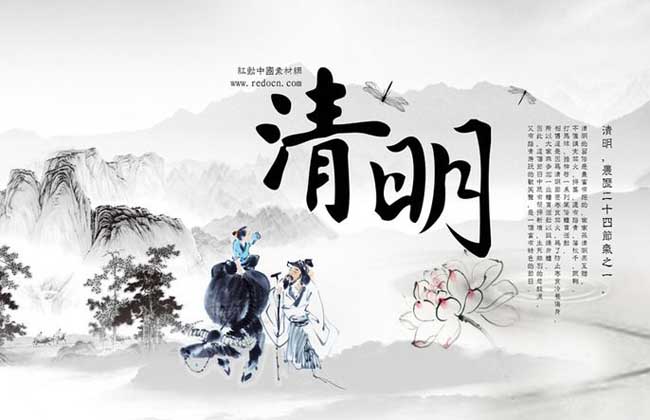
Qingming is the fifth of the 24 solar terms in the Chinese lunar calendar, marking the official beginning of late spring. The Qingming solar term begins when the sun reaches the celestial longitude of 15 degrees. In Chinese tradition, the 15 days starting from Qingming are divided into three pentads every 5 days: the first pentad brings the blossoming of paulownia, the second pentad sees field mice turn into quails, and the third pentad brings the first appearance of rainbows. This means that in this season, white paulownia flowers first begin to bloom, then the shade-loving field mice disappear, all returning to their underground burrows, and after that rainbows can be seen in the sky after the rain.
Spring outings
Spring outings, also called seeking spring, searching for spring, or country outings, mean stepping on the green grass, roaming in the countryside, and enjoying the spring scenery. In April at Qingming, spring returns to the earth, and nature everywhere presents a scene full of vitality, making it a great time for outings. People in China have long maintained the habit of spring outings at Qingming. The period around Qingming is a good time for spring outings, so it has become an important part of Qingming Festival customs.
Cuju
Ju is a type of leather ball, with the outer cover made of leather and the inside tightly stuffed with hair. In the Tang dynasty, the ball was inflated with air. Cuju means kicking the ball with the feet. This was a game loved by people during the ancient Qingming Festival. It is said to have been invented by the Yellow Emperor, originally for training warriors, and today we call it football.
Swinging on a swing
Swinging on a swing was a custom of the ancient Chinese Qingming Festival. The word for swing means pulling the leather rope and moving. It has a very old history and was earliest called qianqiu, later changed to qiuqian to avoid taboos. In ancient times, swings were mostly made with tree branches as frames and colorful ribbons tied on. Later they gradually developed into swings made of two ropes plus a footboard. Swinging not only improves health but also cultivates a courageous spirit, and it is still loved by people, especially children.
Flying kites
Flying kites is also a favorite activity of people during Qingming. Whenever Qingming comes, people fly them not only during the day but also at night. At night, strings of small colorful lanterns are hung under the kites or on the taut kite lines, like twinkling stars, and are called “divine lanterns”. In the past, some people would cut the string after flying a kite into the blue sky and let the clear wind carry it to the ends of the earth. It is said that this can eliminate illness and disaster and bring good luck.
Tree planting
Qingming falls on the day after Cold Food Festival and belongs to a season when the air is clear and bright, all things appear, and vegetation turns green. After mourning, one should raise one's head and move toward the future; after winter comes spring. During Cold Food Festival, people offer sacrifices and express grief; after it, they go out for spring outings, fly kites, swing on swings, and plant a few willow branches to watch them grow into shade later. Moreover, during Cold Food Festival, people occasionally accidentally burn the plants on the hills. Once it is over and Qingming arrives, it is time to plant more trees to make up for it. The spirit of ancestors should be like the trees on the hills, evergreen, and human life should also grow and rise in this spring breeze like newly planted trees. Therefore, Qingming is also China's traditional Arbor Day. Qingming has countless business opportunities.
Egg tapping
Every Qingming, there are always a few children willing to tap eggs. Egg tapping is pressing two eggs together and squeezing each other to see who can crack the other's egg. Because hot food cannot be eaten, this game became children's favorite.
Cold Food Festival
The 105th day after the winter solstice is called Cold Food. In the past, fires were prohibited on this day and cold food was eaten, so it was also called the “Cold Festival” and the “No-Smoke Festival”. Folk legend says that Cold Food was meant to commemorate Jie Zitui of the Spring and Autumn period, who was burned to death on Mianshan, after which Duke Wen of Jin ordered fires to be banned. Jie Zitui was from Shanxi, so the custom of eating cold food first became popular in Shanxi. In old times, fires were extinguished during Cold Food, and the next day there was a ceremony in the palace of drilling wood to obtain new fire, while among the people many also used willow twigs to ask each other for new fire.