What is the origin of Qingming Festival? A guide to the historical roots of Qingming Festival
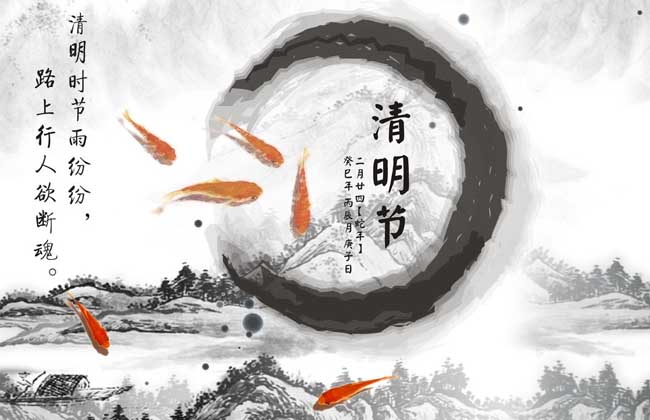
Qingming is the fifth solar term of the 24 solar terms in the lunar calendar, and together with Chuxi, Yulan, and Chongyang it is known as one of the four great ancestor-worship festivals of traditional Chinese holidays. It is the only public holiday determined by a lunar solar term in Taiwan, China, mainland China, and Hong Kong, China, while in Macao, China there is also the Winter Solstice. Let us take a look below at what the origin of Qingming Festival is!
What is the origin of Qingming Festival?
The origin of Qingming Festival is said to begin with the "tomb worship" rites of ancient emperors, kings, generals and ministers. Later, the common people also followed suit, worshipping ancestors and sweeping tombs on this day, and through the ages it was passed down and became a fixed custom of the Chinese nation. Originally, Cold Food Festival and Qingming Festival were two different festivals. In the Tang Dynasty, the day for worship and tomb sweeping was set as the Cold Food Festival. The correct day of the Cold Food Festival is the 105th day after the Winter Solstice, around Qingming. Because the two dates were close, Qingming and Cold Food were combined into one day.
When is Qingming Festival?
April 4, 5 or 6 on the Gregorian calendar. The time of Qingming Festival falls at the junction of mid-spring and late spring, that is, the 108th day after the Winter Solstice. Qingming was originally only the name of a solar term. Its transformation into a festival commemorating ancestors is related to the Cold Food Festival. Duke Wen of Jin set the day after the Cold Food Festival as Qingming Festival. In most areas of Shanxi, the Cold Food Festival is observed on the day before Qingming Festival; in Yushe County and other places, the Cold Food Festival is observed two days before Qingming Festival; in Yuanqu County, it is still customary for the day before Qingming Festival to be the Cold Food Festival and the two days before to be Minor Cold Food. In 1935, the government of the Republic of China designated April 5 as the national holiday Qingming Festival, also called National Tomb-Sweeping Day.
The origin and legend of Qingming Festival
It is said that during the Spring and Autumn period, Duke Chong'er of Jin went into exile abroad to escape persecution. On the journey, in a desolate place with no one around, he was both tired and hungry and could no longer stand up. His accompanying ministers searched for a long time but could not find any food. Just as everyone was extremely anxious, the minister Jie Zitui went to a quiet place, cut a piece of meat from his own thigh, and cooked a bowl of meat soup for the duke to drink. Chong'er gradually recovered his strength, and when he discovered that the meat had been cut from Jie Zitui's own thigh, he shed tears.
Nineteen years later, Chong'er became the ruler of the state, that is, Duke Wen of Jin in history. After ascending the throne, Duke Wen richly rewarded the meritorious ministers who had accompanied him into exile, but forgot only Jie Zitui. Many people spoke up for Jie Zitui and urged him to appear before the ruler to seek reward, yet Jie Zitui most despised those who fought for credit and sought rewards. He packed his things and quietly went to Mianshan to live in seclusion.
When Duke Wen of Jin heard of this, he was overcome with shame and personally led people to invite Jie Zitui back, but Jie Zitui had already left home and gone to Mianshan. Mianshan was high and the roads were dangerous, with dense trees, so finding two people was no easy task. Someone offered a plan: set fire to Mianshan from three sides to force Jie Zitui out. The great fire burned across Mianshan, yet there was no sign of Jie Zitui. After the fire went out, people discovered that Jie Zitui, carrying his elderly mother on his back, had already died sitting under an old willow tree. When Duke Wen of Jin saw this, he wept bitterly. While preparing the body for burial, a blood-written message was found in a hollow in the tree, reading: "Cutting flesh to serve my lord shows my loyal heart; I only wish my lord to remain ever clear and bright." To commemorate Jie Zitui, Duke Wen of Jin ordered this day to be made the Cold Food Festival.
The following year, Duke Wen of Jin led his ministers up the mountain to offer sacrifices, and discovered that the old willow tree had died and come back to life. He then bestowed on the old willow the name "Qingming Willow," and proclaimed to the world that the day after the Cold Food Festival would be made Qingming Festival.