When is Qingming Festival? An introduction to the exact date of the Qingming solar term
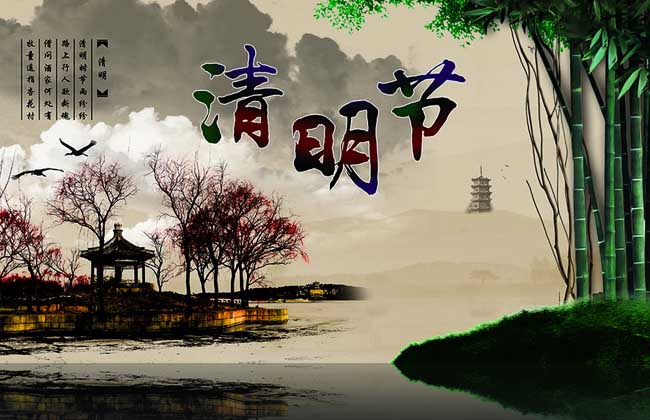
Qingming Festival is one of the 24 solar terms and also one of the most important sacrificial festivals. It is a day for honoring ancestors and sweeping tombs. The traditional Qingming Festival of China's Han ethnic group began roughly in the Zhou Dynasty, more than 2,500 years ago. Influenced by Han culture, 24 ethnic minorities including the Manchu, Hezhen, Zhuang, Oroqen, Dong, Tujia, Miao, Yao, Li, Sui, Jing and Qiang also observe Qingming Festival customs. Sweeping tombs and honoring ancestors, and spring outings are the basic themes.
When is Qingming Festival?
April 4, 5 or 6 on the Gregorian calendar. Qingming Festival falls at the turn between mid-spring and late spring, that is, the 108th day after the winter solstice. Qingming was originally only the name of a solar term. Its transformation into a festival commemorating ancestors is related to the Cold Food Festival. Duke Wen of Jin set the day after the Cold Food Festival as Qingming Festival. In most areas of Shanxi, the Cold Food Festival is observed on the day before Qingming Festival; in Yushe County and other places, it is observed two days before Qingming Festival; in Yuanqu County, the day before Qingming Festival is regarded as the Cold Food Festival and the two days before as Minor Cold Food. In 1935, the government of the Republic of China designated April 5 as the national holiday Qingming Festival, also called National Tomb-Sweeping Day.
Legends about the origin of Qingming Festival
According to legend, during the Spring and Autumn period, Prince Chong'er of Jin went into exile abroad to escape persecution. On the way, in a desolate, sparsely populated place, he was both exhausted and hungry and could no longer stand up. His accompanying ministers searched for a long time but could not find any food. Just as everyone was extremely anxious, the minister Jie Zitui went to a quiet spot, cut a piece of flesh from his own thigh, and cooked a bowl of meat soup for the prince to drink. Chong'er gradually recovered his strength, and when he discovered that the meat had been cut from Jie Zitui's own thigh, he shed tears.
Nineteen years later, Chong'er became the ruler, known in history as Duke Wen of Jin. After taking the throne, Duke Wen richly rewarded the officials who had accompanied him into exile, but forgot only Jie Zitui. Many people spoke out on Jie Zitui's behalf and urged him to appear before the ruler to seek reward, yet Jie Zitui most despised those who fought for credit and rewards. He packed his belongings and quietly went to Mianshan to live in seclusion.
When Duke Wen of Jin heard of this, he was overcome with shame and personally led people to invite Jie Zitui back, but Jie Zitui had already left home for Mianshan. Mianshan was high and the roads treacherous, with dense trees, so finding two people was no easy task. Someone suggested setting fire to Mianshan on three sides to force Jie Zitui out. The great fire spread across Mianshan, yet there was no sign of Jie Zitui. After the fire went out, people discovered that Jie Zitui, carrying his old mother on his back, had died sitting under an old willow tree. Seeing this, Duke Wen of Jin wept bitterly. While preparing the body for burial, a blood-written message was found in the hollow of the tree, reading: “Cutting flesh to serve my lord shows my loyal heart; I only hope my lord will always remain clear and bright.” To commemorate Jie Zitui, Duke Wen of Jin ordered that this day be made the Cold Food Festival.
The following year, Duke Wen of Jin led his ministers up the mountain to offer sacrifices and found that the old willow tree had died and come back to life. He then bestowed on the old willow the name “Qingming Willow” and proclaimed to the whole realm that the day after the Cold Food Festival be set as Qingming Festival.
Customs of Qingming Festival
1. Honoring ancestors: In Chinese history, banning fire during the Cold Food Festival and commemorating the deceased had long since become a custom. After the Tang Dynasty, the Cold Food Festival gradually declined, so sweeping tombs and honoring ancestors at Qingming Festival became an enduring traditional custom thereafter. In today's society, people still observe the custom of visiting graves, sweeping tombs and honoring ancestors around Qingming Festival, clearing weeds, placing offerings, burning incense and praying before the grave, burning paper money and gold ingots, or simply laying a bouquet of fresh flowers to express remembrance of their forebears.
2. Spring outings: At Qingming, spring returns to the earth, so people take advantage of the occasion and, besides sweeping tombs, the whole family, old and young, also enjoys an outing in the countryside. On the way home, they casually break off a few willow branches with newly budding leaves and wear them on their heads, full of joy and harmony. Some people also make a point of going out into nature during Qingming Festival to admire and take in the vibrant spring scenery, hiking in the suburbs to release the pent-up feelings held since the harsh winter. This kind of outing is also called a spring excursion, and in ancient times it was called seeking spring or searching for spring. Its meaning is to tread on the green grass, roam in the countryside and enjoy the spring scenery.
3. Inserting willow branches: Qingming Festival is the time when willows sprout and turn green, and among the people there are customs of breaking willows, wearing willows and inserting willows. During spring outings, people casually break off a few willow twigs, which they can hold in their hands to play with, weave into hats to wear on their heads, or take home and insert above the door lintel or under the eaves. It is said that willow branches have the power to ward off evil, so inserting and wearing willows is not only a fashionable decoration but also has the effect of seeking blessings and warding off evil. Inserting willows at Qingming may also be related to the old Cold Food Festival custom of using willow branches to ask for new fire.
4. Amusements: Besides the above customs of sweeping tombs and honoring ancestors, and spring outings and inserting willows, Qingming Festival also has a great many amusement customs that have been deeply loved by people for thousands of years, such as tug-of-war, kite flying and swinging, which continue to this day, as well as willow shooting and cuju, which were once popular but are no longer seen today.
5. Cockfighting: In ancient times, cockfighting games prevailed at Qingming. Cockfighting began at Qingming and lasted until the summer solstice. The earliest record of cockfighting in our country is found in the Zuo Zhuan. By the Tang Dynasty, cockfighting became a trend, not only among the common people, but even the emperor took part in cockfighting. For example, Emperor Xuanzong of Tang loved cockfighting most.
6. Tree planting: Around Qingming, with the spring sun shining and spring rain falling, planting saplings has a high survival rate and fast growth. Therefore, since ancient times, China has had the habit of planting trees at Qingming. Some people even call Qingming Festival “Arbor Day”, and the tree-planting custom has been passed down to this day. The custom of planting trees at Qingming Festival originated from the Qingming customs of wearing and inserting willows.