What Does Vernal Equinox Mean? The Origin of the Vernal Equinox Solar Term and Its Agricultural Significance
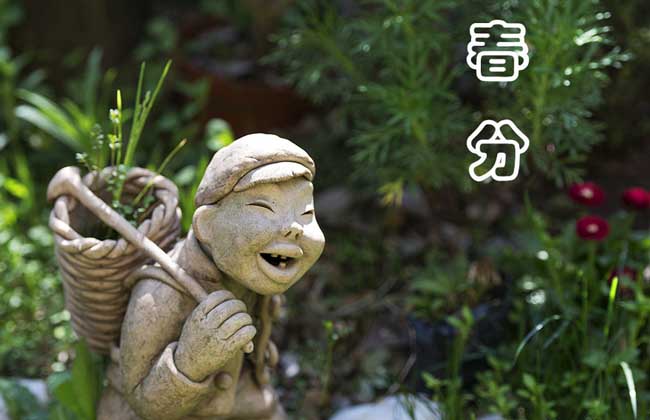
The Vernal Equinox is one of the 24 solar terms, the midpoint of the 90 days of spring. Each year it falls around March 20 on the Gregorian calendar, when the sun is at 0 degrees of celestial longitude (the vernal equinox point). On this day, the sun shines directly on the Earth's equator, and the seasons in the Northern and Southern Hemispheres are opposite: it is the Vernal Equinox in the Northern Hemisphere, while in the Southern Hemisphere it is the Autumnal Equinox. Let us take a look below at what the Vernal Equinox means!
When Is the Vernal Equinox?
The Vernal Equinox usually refers specifically to the moment when the sun's apparent celestial longitude is at 0 degrees, around the 15th day of the second lunar month each year (roughly March 20 to 21 on the Gregorian calendar). As a time period, it also refers to the position of the sun between 0 degrees and 15 degrees of celestial longitude, that is, the period from the day of the Vernal Equinox to the day before Qingming, which on the Gregorian calendar is roughly between March 20 and April 5.
The Relationship Between the Vernal Equinox and Agriculture
In northern regions with little spring rain, spring irrigation should be carried out promptly, with good jointing-stage watering and jointing-stage fertilizer application, and attention paid to guarding against late frost damage; in the south, work on drainage and waterlogging prevention must still continue. Early rice seedling cultivation in Jiangnan and film-covered early rice seedling cultivation in the Jianghuai region have already begun. Early spring weather alternates frequently between cold and warm, so attention should be paid to soaking seeds to hasten germination when cold air arrives, and to sowing during clear weather as soon as the cold air ends. As the common saying goes: "“Cold tail, warm head, no worries when planting seedlings.”" Based on weather conditions, strive to secure 3 to 5 sunny days after sowing to ensure a full stand of seedlings. Spring tea has begun to sprout, so quick-acting fertilizer should be applied in time and pests and diseases controlled, striving for a high-yield, high-quality tea harvest.
As the saying goes, "“At the Vernal Equinox the wheat stands up, and fertilizer and water must follow closely.”" Every spring rain brings a spell of warmth, and after the spring rain comes busy plowing. The great busy season of spring is about to begin, and spring management, spring plowing, and spring sowing are about to enter their busy phase. After the Vernal Equinox, overwintering crops enter their growth stage, and field management must be strengthened. Because temperatures rise quickly and water demand is relatively large, farmers should strengthen water storage and soil moisture conservation. "“At the Vernal Equinox the wheat stands up, and every moment is worth a thousand pieces of gold.”"
The Climatic Characteristics of the Vernal Equinox
1. Sunlight: On the day of the Vernal Equinox, sunlight shines directly on the equator, and day and night are almost equal. Afterward, the position of direct sunlight gradually moves north, and the Northern Hemisphere begins to have longer days and shorter nights. The Vernal Equinox is a relatively important solar term. It not only has astronomical significance: day and night are equal in the Northern and Southern Hemispheres; climatically, it also has relatively distinct characteristics. During the Vernal Equinox period, except for the Qinghai-Tibet Plateau, Northeast China, Northwest China, and northern North China, all of China enters bright spring. Across the vast land, willows are green, orioles fly and grass grows, wheat joints, and rapeseed flowers are fragrant.
2. Atmospheric pressure conditions: During the Vernal Equinox solar term, the East Asian trough weakens markedly, and the trough and ridge activity in the westerlies increases noticeably. Low-pressure activity and cyclone development are common from Mongolia to Northeast China, and the movement of lows guides cold air southward, bringing frequent windy and dusty weather to northern regions. When the long-wave trough moves eastward, affected by the convergence of cold and warm air masses, continuous rainy weather and late-spring cold spells occur.
3. Temperature and precipitation: During the Vernal Equinox period, except for the high-cold mountain areas where it is winter all year round and regions north of 45 degrees north latitude, the daily average temperature across China steadily rises above 0°C. At this time severe cold has passed, and temperatures rise relatively quickly. Especially in North China and the Huang-Huai Plain, the daily average temperature rises above 10°C almost at the same time as the rainy Jiangnan region along the river, entering bright spring. Across the vast land, willows on the banks are green, orioles fly and grass grows, wheat joints, rapeseed flowers are fragrant, and peach blossoms are pink, plum blossoms white, and spring flowers yellow, while South China presents an even more late-spring scene. According to climatic patterns, at this time precipitation in Jiangnan increases rapidly, entering the spring "“peach blossom flood”" period, while in the vast regions of Northeast China, North China, and Northwest China, where "“spring rain is as precious as oil,”" precipitation remains very low, and resisting the threat of spring drought is a major issue in agricultural production.