What does the Awakening of Insects solar term mean? A detailed explanation of its meaning and origin
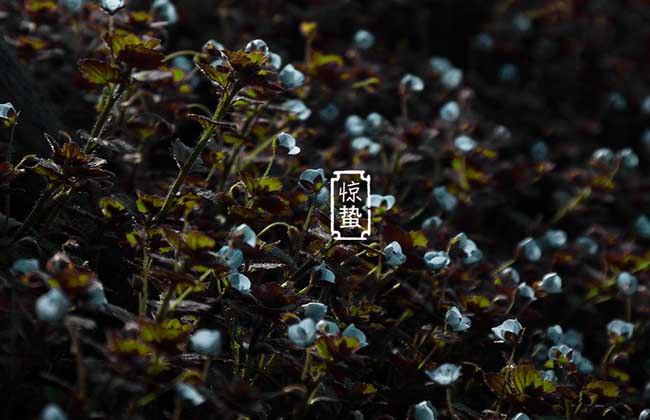
Awakening of Insects (Jingzhe) is the third of the twenty-four solar terms in the lunar calendar, known in ancient times as “Qizhe” (the stirring of hibernating insects), and marks the beginning of mid-spring. At this time the sun reaches the celestial longitude of 345°, the weather turns warmer, and spring thunder gradually begins. Animals that hide away in the earth for the winter, neither drinking nor eating, are said to be in “hibernation” (zhe), while “Jingzhe” (awakening of insects) is the day when heaven sends thunder to awaken the hibernating animals. At this time most regions of China enter the spring plowing season.
What the Awakening of Insects solar term means
The Awakening of Insects solar term holds considerable significance for the busy farming season. Since ancient times, the working people of our country have attached great importance to this solar term, regarding it as the start of spring plowing. A Tang poem says: "A light rain renews all the plants, one peal of thunder and the Awakening of Insects begins. How many idle days does the farming household have? From here the plowing and planting start." Agricultural proverbs also say: "Once the Awakening of Insects passes, spring plowing cannot rest" and "When the nine nines are over and the poplars bloom, all the farm work comes at once." In North China, winter wheat begins to turn green and grow again, and the soil still alternates between freezing and thawing; timely harrowing is an important measure to reduce water evaporation. "If you don't harrow the land at the Awakening of Insects, it's like letting the steam out of a steamed bun" - this is the local people's valuable experience for preventing drought and preserving soil moisture.
The climate characteristics of the Awakening of Insects solar term
"Spring thunder rumbles, all things grow." The Awakening of Insects period is the fine sunny weather of the "nine nines," with temperatures rising and rainfall increasing. Apart from Northeast and Northwest China, which still present a snow-covered winter scene, the average temperature in most parts of our country has risen above 0°C: the daily average temperature in North China is 3-6°C, in the region along the Yangtze and south of it is above 8°C, and in the Southwest and South China it has already reached 10-15°C, long since a scene of mild, harmonious spring light.
"Spring thunder startles a hundred insects." The warm climate conditions favor the occurrence and spread of many kinds of pests and diseases, and weeds in the fields sprout one after another, so pest and disease control and intertillage weeding should be carried out in good time. "When peach blossoms open, swine fever comes" - epidemic prevention for poultry and livestock should also be taken seriously. At this time temperatures rise fairly quickly, and most areas of the Yangtze River basin gradually begin to have spring thunder. In most parts of southern China, the first spring thunder can be heard around Rain Water and the Awakening of Insects in ordinary years, while in northern Northwest China, except in a few years, thunder generally does not come until Pure Brightness, making this the region where thunderstorms begin latest in most parts of southern China.
Folk customs of the Awakening of Insects solar term
1. Worshipping the White Tiger to resolve quarrels and troubles: In Chinese folk legend, the White Tiger is the god of gossip and disputes, and every year on this day it comes out to seek food and opens its mouth to devour people. Anyone who offends it will, within that year, often suffer from evil petty people stirring up waves against them, blocking their career development and causing every kind of misfortune. To protect themselves, people worship the White Tiger on the day of the Awakening of Insects. The so-called worship of the White Tiger means paying homage to a white tiger drawn on paper; the paper tiger is usually yellow with black stripes, and a pair of fangs is drawn at the corners of its mouth. When worshipping, one must feed it fat pig's blood so that, having eaten its fill, it will no longer open its mouth to harm people, and then smear raw pork on the paper tiger's mouth so that it is full of grease and oil and cannot open its mouth to speak of people's faults.
2. Eating pears at the Awakening of Insects: Among the people there has long been the custom of “eating pears at the Awakening of Insects.” When this custom originated cannot be traced, but the people of Qi County have a story passed down from generation to generation. It is said that the renowned Shanxi merchant family, the Qu family, whose ancestor Qu Ji was a native of Changzi County in Shangdang, in the early Hongwu years of the Ming dynasty took his two sons, Xin and Yi, and used Shangdang's hemp and pears to trade for Qi County's coarse cloth and red dates, traveling back and forth between the two places and making a profit from it. Over time they accumulated savings and settled down in Qi County town. During the Yongzheng period, the fourteenth generation descendant Qu Baichuan set out for the western frontier, and it was exactly the day of the Awakening of Insects. His father took out a pear and, after letting him eat it, said that their ancestors had made their fortune by selling pears, gone through great hardships, and settled in Qi County; today, on the Awakening of Insects, you are going out to the western frontier, and eating a pear is to make you not forget your ancestors and to strive in business so as to bring glory to the family. Qu Baichuan went to the western frontier, became rich through business, and named the shop he opened “Changyuan Hou.” Later, those who went to the western frontier also followed suit and ate pears, often with the meaning of “leaving home to start a business,” and still later people also ate pears on the day of the Awakening of Insects, with the idea of “striving to honor one's ancestors.”
3. Stretching drumheads: The Awakening of Insects is brought about by the sound of thunder. The ancients imagined the Thunder God as a great deity with a bird's beak and a human body, who had grown wings, holding a hammer in one hand and with the other continuously striking many heavenly drums surrounding his body, producing rumbling thunder. On the day of the Awakening of Insects, when the Thunder God strikes the heavenly drums in the heavenly court, people on earth also use this occasion to stretch drumheads. Volume 40 of the Rites of Zhou, in the chapter "Hui Ren," says: "Whenever a drum is covered, it must be on the day of Qizhe." The commentary says: "The Awakening of Insects is the middle of the first month of spring; the hibernating insects first hear the thunder and stir, and the drum is what is taken as the image; covering means stretching the drum with hide." It can be seen that not only does the life of the hundred insects accord with the cycle of the four seasons of the year, but humans, the most intelligent of all beings, must also follow the timing of heaven, so that in all things they can achieve twice the result with half the effort.
4. "Beating the petty person" to drive away bad luck: The Awakening of Insects symbolizes the beginning of the second month, when a sudden clap of thunder out of a clear sky awakens all the hibernating snakes, insects, rats and ants, and the crawling insects and ants in the home rise up in response, searching everywhere for food. So in ancient times, on the day of the Awakening of Insects, people would hold incense sticks and mugwort and fumigate the four corners of the house, using the fragrance to drive away snakes, insects, mosquitoes, rats and musty smells. Over time this gradually evolved into the custom of those who are unhappy patting and striking their opponents and driving away bad luck, which is the predecessor of "beating the petty person." So every year on the day of the Awakening of Insects an interesting scene appears: women pat paper effigies with wooden slippers while chanting incantations for beating the petty person: "I beat you, petty person's head, beat you till you can't stop trembling, beat you till you throw up whatever you eat."
5. Giving vent to inner resentment: Many people mythologize "beating the petty person," but in fact it is purely a folk custom. The purpose of beating the petty person is, through patting and striking paper effigies representing one's opponents, to drive away the petty people and plague gods around one and to release one's inner dissatisfaction. Most people who go to beat the petty person generally aim to seek that all goes smoothly in the new year, with no petty people causing trouble, and those who are "beaten" are mainly the other woman and the "informers" at work. The purpose of beating the petty person is to hope that they will retreat in the face of difficulties and to give vent to one's own inner resentment.