What Does the Rain Water Solar Term Mean? A Detailed Explanation of Its Meaning and Origin
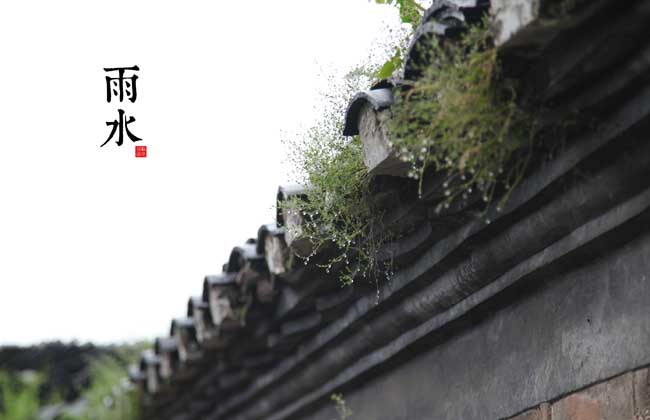
Rain Water is the 2nd of the 24 solar terms, falling around the 15th day of the first lunar month (February 18-20 on the Gregorian calendar), when the sun reaches the celestial longitude of 330 degrees. Like Grain Rain, Minor Snow and Major Snow, it is a solar term that reflects precipitation phenomena. On this day, married daughters usually return home to visit their parents, bringing their mother a length of red silk and a pot of stewed meat. Let's take a look below at what the Rain Water solar term means!
The meaning of the Rain Water solar term
The Rain Water solar term signifies the arrival of spring in the meteorological sense. After “Rain Water”, temperatures in most parts of China rise above 0°C. The daily average temperature on the Huang-Huai Plain has reached around 3°C, the average temperature in Jiangnan is around 5°C, temperatures in South China are above 10°C, while the average temperature in North China is still below 0°C. Around Rain Water, rapeseed and winter wheat generally resume green growth and have relatively high water requirements. “Spring rain is as precious as oil” - at this time, suitable precipitation is especially important for crop growth. In North China, Northwest China and the Huang-Huai region, however, precipitation at this time is generally low and often cannot meet the needs of agricultural production.
If early spring is dry, timely spring irrigation around Rain Water can achieve the best economic benefits. South of the Huai River, the focus is on strengthening intertillage and hoeing, while also clearing field ditches and draining water properly to prevent excessive spring rain from causing wet damage and root rot. As the saying goes: “Water wheat at the sprouting stage, water vegetables at the flowering stage.” For rapeseed that has bolted, apply bolting and flowering fertilizer in time to strive for more pods and heavier grains. In South China, seedling cultivation for double-cropping early rice has already begun; attention should be paid to seizing the “cold tail and warm head” period, sowing on clear days, and striving for full seedlings in one sowing.
The weather of the Rain Water solar term
The weather during the Rain Water season is unpredictable, and it is one of the periods with the most cold wave events of the whole year. The alternating cold and warm, suddenly warm yet still cold weather is highly harmful to the growth of crops, forests and fruit trees that have already sprouted and resumed green growth, as well as to people's health. While paying attention to cold and frost protection for crops, greenhouse vegetables and industry and transport sectors, one should still pay attention to personal health care to prevent the occurrence of epidemic diseases such as colds in late winter and early spring.
Among the weather proverbs related to Rain Water, some predict later weather based on rain and snow, such as “Rain on Rain Water means a hundred days of overcast” and “If rain falls on Rain Water, it will stay gloomy until Grain Rain.” Some predict later weather based on cold and warmth: “Cold Rain Water, warm Awakening of Insects” and “Warm Rain Water, cold Awakening of Insects.” Others predict later weather based on wind, such as “If an east wind rises on Rain Water, there will surely be rain in the dog days,” and so on.
The weather characteristics of the Rain Water solar term have a great impact on the growth of overwintering crops. As the farming proverb says: “Rain on Rain Water means good crops; both the major and minor spring harvests are treasures.” and “At the Beginning of Spring the weather gradually warms; at Rain Water, fertilizing keeps us busy.” Rural areas should, according to the weather characteristics, carry out intertillage, weeding and fertilizing for crops such as the three wheat varieties, clear ditches and build up soil moisture, and prepare well for drainage and waterlogging prevention. With the arrival of the Rain Water solar term, the weather of swirling snowflakes and bone-chilling cold gradually disappears, while days of spring breeze on the face, melting ice and snow, moist air, gentle sunshine and soft drizzle are coming toward us.
Customs of the Rain Water solar term
On the day of Rain Water, there is a particularly amusing folk activity called “La Baobao” (Baobao means godfather). In the past, people had a habit of seeking divination for their children to see what their children's fate was like and whether they needed to find a godfather. The purpose of finding a godfather was to ensure that the son or daughter would grow up smoothly and healthily. (This may also be related to the medical conditions of earlier times, because when medical conditions were poor, many children who fell ill simply could not be treated. So they needed to rely on the godfather's good fortune to help raise the child.) Thus the activity of La Baobao on the Rain Water festival came into being. This practice continued year after year and over time became a local custom.
The custom of finding a godfather on the Rain Water festival takes the meaning of “being nourished by rain and dew makes growth easy.” In western Sichuan, there was a specific place for finding a godfather on this day. Whether it was sunny or rainy that day, parents who wanted to find a godfather would carry a basket filled with wine, dishes, incense, candles, paper money and the like, and take their child through the crowd, weaving back and forth to pick out a godfather. If they hoped the child would grow up knowledgeable, they would choose a scholar as godfather; if the child was thin and weak, they would choose a tall and strong person as godfather. Once someone was caught to be the “godfather”, some would struggle free and run away, some could not break away no matter how they pulled, but most would readily agree, considering it a sign that others trusted them and that their own fate would therefore improve as well. After catching one, the catcher would call out repeatedly: “Let's become god-relatives”, then set out the brought wine and dishes, burn incense and light candles, and tell the child: “Quickly bow to your godfather, kowtow”, “Please, godfather, drink wine and eat dishes”, “Please, god-relative, give the child a name.” Then La Baobao was considered a success. After parting, some kept in contact all year round and were called “year-round god-relatives”, while those who had no contact after parting were called “passing-by god-relatives.”
Another main custom of the Rain Water festival involves the son-in-law, who goes to deliver festival gifts to his father-in-law and mother-in-law. The gifts for delivering the festival are usually two rattan chairs, wrapped with a red band one zhang and two chi long, which is called “Receiving Longevity”, meaning wishing the father-in-law and mother-in-law a long life of a hundred years. Another typical gift for delivering the festival is “jar meat”: pig trotters stewed in a clay pot with snow mountain soybeans and kelp, then the jar mouth is sealed with red paper and red string and sent to the father-in-law and mother-in-law. This expresses thanks and respect to the father-in-law and mother-in-law for the hard work of raising their daughter to adulthood. If it is a newly married son-in-law delivering the festival gifts, the father-in-law and mother-in-law also give an umbrella in return, so that when the son-in-law goes out to toil, he can shield himself from wind and rain; it also carries the meaning of wishing the son-in-law a smooth and peaceful journey in life.
In the folk culture of western Sichuan, the Rain Water festival is a solar term full of imagination and human warmth. On this day, whether it rains or not, it is filled with a misty, poetic, picturesque rain-like atmosphere: at dawn, along the foggy roadside, some young women holding their small sons or daughters by the hand wait for the first passerby to come before them. Once someone passes by, no matter whether male or female, old or young, they stop the person, press the son or daughter to the ground, kowtow and form a bond, making the person the godfather or godmother. In western Sichuan folk culture this is called “bumping into a bond”, that is, there is no predetermined target in advance; whoever one bumps into is the one. The purpose of “bumping into a bond” is to ensure that the son or daughter grows up smoothly and healthily. Of course, in modern society “bumping into a bond” generally survives only in rural areas, while city people generally have friends, classmates or colleagues mutually “form bonds” for their children.
Returning to the bride's family home during the Rain Water festival is another custom popular in the western Sichuan area. When the Rain Water festival comes, married daughters bring gifts and return to their parents' home to visit them. Women who have given birth must bring gifts such as jar meat and chairs to thank their parents for the grace of raising them. For women who have not conceived for a long time, their mother sews a pair of red trousers for them to wear close to the body, and it is said that this can help them conceive and bear a child as soon as possible. This custom is still popular in rural areas today.