What are the customs of Start of Spring? These old traditions you should know
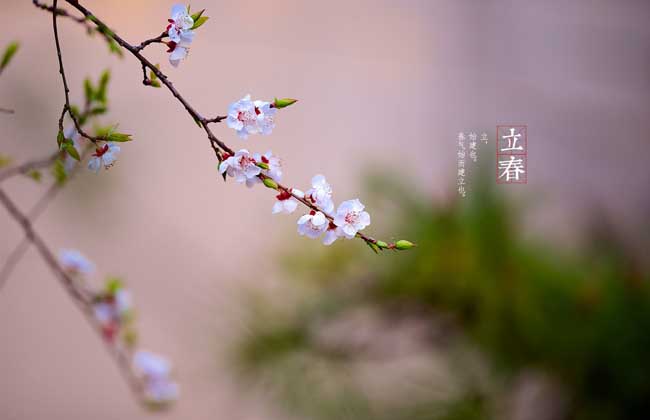
Start of Spring (Lichun), one of the 24 solar terms of the lunar calendar, is commonly known as "Beating Spring." It sometimes falls in the twelfth lunar month and sometimes in the first lunar month. Once Start of Spring passes, it means winter has ended and spring has arrived. Since ancient times, our country has been an agricultural nation, sowing in spring and harvesting in autumn, with the key lying in spring. As a folk saying goes, "The whole year's work depends on a good start in spring." Now let us take a look together at what the customs of Start of Spring are!
Parading Spring Scenes
According to "A Brief Record of Travels in Guangdong," during the Qing Dynasty there was an activity in the Chaoshan region called "Parading Spring Scenes." In the parade procession on the day of Start of Spring, there would always be decorated pavilions with singing courtesans seated on them, carried by two people. In the Jiaying Meizhou area, there were also distinctions between tall spring and short spring: short spring had one person sitting on the platform, while tall spring used two people: one person standing on the platform, then a straight wooden pole was bound and hidden within that person's long robe, level with this person's shoulders. Then a horizontal wooden bar was bound across the top of the straight pole, this horizontal bar hidden within the wide sleeves, and another person stood on the horizontal bar. For safety, both feet were firmly bound to the horizontal bar, and the two people dressed as characters from a certain story. Another person held a long stick wrapped with cloth strips and supported it under the armpits of the person above, parading along with the spring-welcoming procession. If obstacles were encountered on the road, the person holding the long stick would use the stick to push the obstacles aside.
Pasting the Spring Ox
The custom of pasting the Spring Ox began before Start of Spring. According to the traditional method, the county government (county yamen) would hire skilled craftsmen in paper art, who gathered in the county town before Start of Spring to carefully craft the image of the Spring Ox. Generally, bamboo strips were bound into the ox's skeleton, spring wood was used for the legs, then paper was pasted on and pigments applied, and the image of an ox was successfully made. It was commonly said that if more red and yellow paper was pasted, that year would have "a bumper harvest of all five grains," while if black paper was pasted, that year's harvest would be poor. Therefore, the county magistrate arranged to use more red and yellow paper, to win the people's hearts. After the Spring Ox was pasted, an eye-opening and dotting ceremony was held, that is, an incense table was set up and people bowed in worship.
Biting Spring
Biting Spring refers to the custom of eating spring plates, spring pancakes, spring rolls and chewing radish on the day of Start of Spring. The single word "bite" expresses the many food customs of the solar term. Spring plates and spring pancakes are vegetables, fruits, cakes and pastries arranged on a plate to be given to relatives and friends or eaten oneself, and are called spring plates. Du Fu's poem "Start of Spring" says: "On a spring day, a spring plate of fine fresh greens, suddenly I recall the time when plum blossoms bloomed in the two capitals." The custom of biting spring first appeared in the Jin Dynasty. By the Tang and Song dynasties, the trend of eating spring plates and spring pancakes prevailed and spread among the common people, who took even greater pleasure in making dishes with pancakes and giving them to one another. The custom of biting spring also includes chewing and eating radish. "A Record of the Seasons in Yanjing" says: "On this day, wealthy families mostly eat spring pancakes, and women mostly buy radish to eat, calling it 'biting spring.' It is said this can ward off spring drowsiness." In the old capital, the radish from Damenhong in the Southern Park was the most popular, and there was a common saying that "the radish of Damenhong is the voice of the capital gate."
Beating the Spring Ox
According to the Jiaqing edition of the "Chenghai County Gazetteer," on the day of Start of Spring each year, the government had to lead people and horses to the outskirts to hold the grand ceremony of welcoming spring, and then hold the "whipping the spring ox" activity. As early as the Zhou Dynasty, there was the activity of whipping the spring ox on a spring day. Before Start of Spring each year, each prefecture and county prepared in advance a clay figurine of the Mang Spirit and an earthen ox. On the day of Start of Spring, the government led the spring-welcoming procession in a mighty array to the Mang Spirit Pavilion and Earthen Ox Platform prepared in advance eight li east of the city. Everyone in the spring-welcoming procession wore cyan clothes, used cyan carts and raised cyan banners; people blew ox-horn trumpets, sang the "Qingyang Song," waved feather ceremonial instruments and danced the Yunqiao dance, grandly holding the spring-welcoming ceremony. By the Ming and Qing dynasties, this ceremony had become even more grand. According to the Qing person's "A Record of the Seasons in Yanjing": "... On the day before Start of Spring, officials of the Shuntian Prefecture go to the spring ground one li outside Dongzhimen to welcome spring. On the day of Start of Spring, the Ministry of Rites presents the Spring Mountain Treasure Seat, and the Shuntian Prefecture presents the Spring Ox painting. After the ceremony they return to their offices, lead out the spring ox and strike it, calling it beating spring..." Beating the spring ox was intended to encourage farming. The Chaoshan region is located on the Han River Delta with fertile soil. Agriculture was very developed, and thus this custom related to encouraging farming was preserved in the Chaoshan region. But the specific practices have changed somewhat, and it is no longer necessarily required to beat the ox.