What does the Start of Spring solar term mean? One article to help you understand the Start of Spring
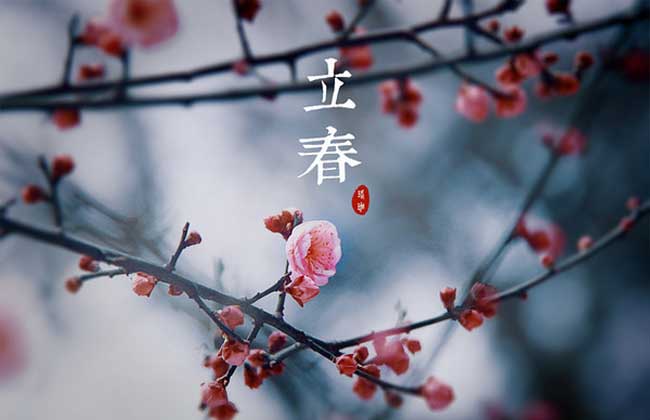
The Start of Spring is the first of the 24 solar terms in the lunar calendar. When the sun reaches the celestial longitude of 315°, it is called the Start of Spring solar term, and it is one of the important traditional festivals of the Han people. "Li" means "beginning." Since the Qin Dynasty, China has always regarded the Start of Spring as the beginning of the first month of spring. The Start of Spring is divided astronomically. Let's take a look below at what the Start of Spring means!
The meaning of the Start of Spring
The Start of Spring is one of the 24 solar terms, also known as "Beating Spring." "Li" means "beginning," and China regards the Start of Spring as the beginning of spring. Every year on February 4 or 5, when the sun reaches the celestial longitude of 315 degrees, it is the Start of Spring. The ancients set the Start of Spring as the first of the 24 solar terms. On the day of the Start of Spring, looking up at the starry sky at seven in the evening, one can see that the handle of the Big Dipper points exactly to the northeast, that is, at an azimuth of 45 degrees, which the ancients called the direction of Gen (one of the eight trigrams). The "Li" of the Start of Spring indicates beginning, and "Chun" indicates season, so the Start of Spring carries the meaning that the spring solar term has already begun. Agricultural proverbs include "Spring begins at the head of the sixth nine-day period" and "When frost descends and when winter comes, spring begins after forty-five days." Counting the nine-day periods from the winter solstice, "the fifth nine-day period" is forty-five days, so the Start of Spring is exactly the beginning of "the sixth nine-day period."
The origin of the Start of Spring
In old customs, the day of the Start of Spring was also a traditional folk festival, called the "Start of Spring Festival." China has been an agricultural country since ancient times, with spring planting and autumn harvest, and the key lies in spring. As a folk saying goes, "The whole year's work depends on a good start in spring." The old custom of the Start of Spring was both an ancient solar term and a major festival. "Shiwu Jiyuan" records: "The Duke of Zhou first made the clay ox for the Start of Spring, bringing out the clay ox to indicate the early or late timing of farming." In later dynasties, feudal rulers on this day all held the ceremony of whipping spring, intended to encourage farming and develop production.
If the Start of Spring happens to fall on the first day of the first lunar month, it is commonly called "New Year's Morning Spring," which is rarely seen in a hundred years. Folk belief holds that the harvest in such a year will certainly be good. There is a folk proverb, "A New Year's Morning Spring is rarely met in a hundred years."
The Start of Spring as a seasonal marker already existed in the Spring and Autumn period. At that time, there were eight seasonal markers in a year: the Start of Spring, the Start of Summer, the Start of Autumn, the Start of Winter, the Spring Equinox, the Autumn Equinox, the Summer Solstice, and the Winter Solstice. It was only in the "Book of Rites · Monthly Ordinances" and in "Huainanzi · Astronomical Training," written by Liu An of the Western Han, that records of the 24 solar terms appeared.
Before the Han Dynasty, the calendar had been reformed many times. At that time, the day of the Start of Spring among the 24 solar terms was once set as the Spring Festival, meaning that spring began from then on. This name continued for more than two thousand years, until 1913, when the National Government at the time officially issued a document clarifying that the first day of the first lunar month each year was the Spring Festival.
After that, the day of the Start of Spring has existed only as one of the 24 solar terms and has been passed down to the present.
The climate of the Start of Spring
When the Start of Spring arrives, people clearly feel that the daytime has grown longer and the sun has become warmer. Temperature, sunshine, and rainfall are often at a turning point in the year at this time, tending to rise or increase. Small spring crops grow faster, and when rapeseed bolts and wheat joints, water consumption increases, so irrigation and topdressing should be carried out in time to promote growth. Agricultural proverbs remind people that "when the Start of Spring and the rain come, rise early and sleep late," and preparations for plowing for the main spring crops also begin. Although spring has begun, most areas of South China are still very cold, with scenes like "the white snow, thinking spring's colors are late, deliberately flies through the courtyard trees as blossoms." These climate characteristics should all be taken into consideration when arranging agricultural production.
People often love to seek signs of spring: the buds peeking out on the willow branches, "more tender than gold and softer than silk"; the little grass in the soil eager to sprout, waiting for "the spring wind to blow and bring it back to life"; and the people working hard in the fields to win a new harvest are creating a real spring with their own hands. The Start of Spring solar term is also popular among farmers because it brings people warmth and hope. Therefore, there are many weather proverbs about the Start of Spring. For example, those based on clear skies without rain include "If the Start of Spring is clear, the rain will be even," and "If the Start of Spring is clear, the whole spring will be clear"; those based on rain and snow include "If the Start of Spring is drizzly, it will be gloomy and wet until Qingming," and "If it snows heavily on Beating Spring, there will still be heavy rain after a hundred days"; those based on thunder and lightning include "If thunder strikes on the Start of Spring, the rain at Awakening of Insects will not stop," and "One peal of thunder at the Start of Spring, and the sky will not be seen for a month"; those based on cold and warmth include "If the Start of Spring is cold, the whole spring will be warm"; those based on wind force include "A north wind at the Start of Spring means much rain," and "An east wind at the Start of Spring brings warmth back early; a west wind at the Start of Spring brings warmth back late," and so on.
During the Start of Spring solar term, it is necessary to prevent the impact of cold waves, low temperatures, and rain and snow weather on Spring Festival travel. In rural areas, field management of overwintering crops should be carried out promptly, with intertillage and loosening of the soil, topdressing of fertilizer for greening up, and prevention of freezing to protect seedlings.
Customs of the Start of Spring
The Start of Spring is also called "Beating Spring" and "Biting Spring," and is also called "Announcing Spring." Like many seasonal markers, this one has many folk customs, including celebration ceremonies and activities for welcoming and touring spring, the "beating ox" of Beating Spring, and the customs of Biting Spring such as eating spring pancakes, spring plates, and biting radishes.
On the day of "Start of Spring," Chinese folk custom is to eat radish, ginger, scallion, and flatbread, called "Biting Spring." However, different regions have different expressions of this custom. The earliest records show that Biting Spring involved eating spring pancakes. On the day of the Start of Spring, people eat some fresh vegetables of spring, both to prevent disease and to welcome the new spring. The Tang Dynasty "Sishi Baojing" records: "On the Start of Spring, eat reed, spring pancakes, and lettuce, called 'vegetable plate.'" It can be seen that people in the Tang Dynasty had already begun to try spring plates and eat spring pancakes. The so-called spring pancake, also called lotus leaf pancake, is actually a kind of thin pancake made with scalded dough -- using two small pieces of dough, smearing oil in the middle, pressing them into a thin pancake, and after cooking, it can be peeled into two sheets to roll vegetables and eat. Folk custom experts say that the word "bite" represents a mood, and even more a kind of toughness buried in the heart for enduring hardship, and it is a custom unique to Chinese people.
Relevant experts say that although welcoming spring on the day of the Start of Spring is not as grand as before, this day carries people's hopes, so various places still have some special ways to welcome the Start of Spring, such as "Beating Spring," "Biting Spring," hanging windmills, and spring outings.
The custom of Beating Spring first came from the imperial palace. Legend has it that on the day of the Start of Spring, inside and outside the palace all treated it as a festival and celebrated it with particular grandeur. The earliest saying was that on the day of the Start of Spring, the clay sculpted spring ox standing in front of the palace gate had to be smashed. Now, some rural areas still have the custom of beating the spring ox. Before the Start of Spring, an ox is sculpted from clay, called the spring ox. Women hold children and walk three circles around the spring ox. The old saying was that this could prevent illness, and today it has become entertainment.
On the day of the Start of Spring, Chinese folk custom also includes eating radish, ginger, scallion, and flatbread, called "Biting Spring." On the day of the Start of Spring, people eat some fresh vegetables of spring, both to prevent disease and to welcome the new spring. Another food of the folk "Biting Spring" is radish. Because radish tastes pungent, it takes the ancient meaning that "if one can bite through grass roots, then all things can be done."