What does "dao bu tong bu xiang wei mou" mean?
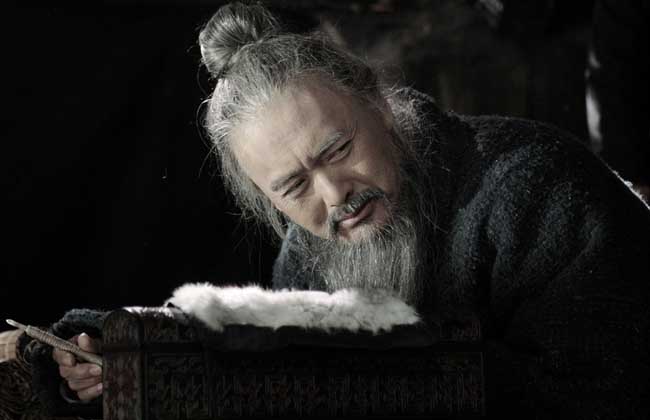
"Dao bu tong bu xiang wei mou" comes from Confucius's "The Analects - Duke Ling of Wei": "Those whose paths differ cannot plan together." It means that people who walk different paths cannot plan together, a metaphor for how people with different opinions or aspirations cannot work together. Let's take a look below at what "dao bu tong bu xiang wei mou" means!
The meaning of "dao bu tong bu xiang wei mou"
"Dao bu tong" refers to different life values; in The Analects it originally referred to the distinction between the gentleman and the petty man. People who walk different paths cannot plan together, and people with different aspirations cannot work together. However, differing viewpoints are not the same as differing paths, because a gentleman must accommodate different viewpoints, but does not accommodate people with different goals.
The allusion behind "dao bu tong bu xiang wei mou"
Guan Ning and Hua Xin were hoeing vegetables together in the garden when they saw a piece of gold in the ground. Guan swung his hoe as if it were no different from a tile or stone, while Hua picked it up and then threw it away. On another occasion they were sitting at the same mat reading when someone passed the gate in a carriage and official's cap. Ning read as before, but Xin wanted to put down the book and go out to look. Ning cut the mat in two and sat apart, saying: "You are not my friend."
Translation of "dao bu tong bu xiang wei mou"
During the Eastern Han dynasty, Guan Ning and Hua Xin were classmates and good friends. One day, the two were weeding in the garden and found a piece of gold in the ground. Guan Ning regarded the gold as a tile and kept hoeing without stopping, while Hua Xin picked up the gold and set it aside. Another time, the two were reading at the same mat when a high official passed by in a carriage. Guan Ning was undisturbed and read as before, but Hua Xin went out to watch, filled with envy. Guan Ning saw that Hua Xin was not truly a friend who shared his aspirations. So he cut the mat and sat apart. From then on, he no longer regarded Hua Xin as a friend.
Analysis of "dao bu tong bu xiang wei mou"
1. The saying "Every person has their own aspirations, and they cannot be forced." And also the saying "How can the sparrow know the ambition of the swan!" are in fact both meanings of "dao bu tong, bu xiang wei mou." Of course, "dao" here has a broad extension, referring both to life aspirations and to ideological concepts, academic positions, and so on.
2. Bo Yi and Shu Qi, in loyalty, would not eat the grain of Zhou, and starved to death on Shouyang Mountain. Sima Qian sighed and said: "Those whose paths differ cannot plan together. Truly, each person follows their own aspirations!" ("Records of the Grand Historian - Biographies of Bo Yi and Shu Qi"). This is a typical case of not planning together because of different political attitudes. Sima Qian also said: "Those in the world who study Laozi disdain Confucianism, and those who study Confucianism also disdain Laozi. Those whose paths differ cannot plan together. Is this perhaps what is meant?" ("Records of the Grand Historian - Biographies of Laozi, Zhuangzi, Shen Buhai, and Han Fei"). This is a typical case of not planning together because of different ideological concepts and academic positions.