How does cocklebur spread its seeds? A detailed explanation of cocklebur seed dispersal methods
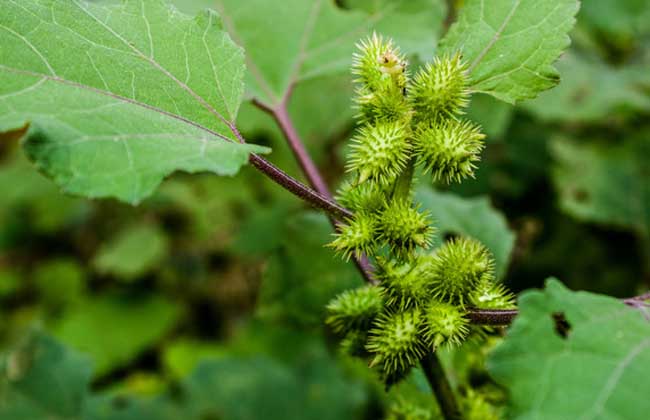
Cocklebur is an annual herbaceous plant of the genus Xanthium in the Asteraceae family, growing up to 1 m tall. The entire plant is toxic, with the fruit and especially the seeds being more toxic. It is native to the Americas and East Asia, widely distributed across most of Europe and parts of North America, and grows wild on hillsides, grasslands, roadsides and other places. It is found throughout China. Let's take a look below at how cocklebur spreads its seeds!
How does cocklebur spread its seeds?
Cocklebur spreads its seeds through animals. The surface of cocklebur seeds is covered with many hooked spines. Once the seeds mature, they fall off relatively easily. When a person or animal touches the mature cocklebur seeds, the hooked spines easily catch onto the person's or animal's body, and the person or animal carries them to other places, thus achieving dispersal.
Cocklebur cultivation and planting techniques
1. Soil selection: Cocklebur prefers a warm, slightly humid climate. It is best cultivated in loose, fertile, well-drained sandy loam. It tolerates drought and poor soil. In Henan, it germinates in late April, emerges from May to June, flowers from July to September, and matures from September to October. In Heilongjiang, it emerges in early to mid-May, flowers in mid-to-late July, and the seeds mature in mid-to-late August. The seeds easily mix into crop seeds. Its root system is well developed and penetrates relatively deep into the soil, making it difficult to remove and pull out.
2. Propagation method: Propagate by seeds, either by direct sowing or by raising seedlings and transplanting. For direct sowing in April, dig holes at a spacing of 45 cm × 45 cm, with a hole depth of 6 to 8 cm, sow about 5 seeds per hole, cover with soil, press down lightly, and water. For the seedling transplanting method, seedlings are usually raised in March to April, and after sowing, they are transplanted when the seedlings reach about 10 cm tall, with 3 to 4 plants per spot.
3. Field management: Thin and fill in seedlings when they reach 10 cm tall, leaving 2 to 3 plants per hole. Loosen the soil and weed 2 to 3 times each year, combined with topdressing with human manure or urea. For pest and disease control, carry out reasonable crop rotation and seed cleaning, and use herbicides such as bentazone, oxadiazon, fluazifop-P-butyl, prometryn, chlorotoluron, fomesafen and simazine.
Ways plants spread their seeds
1. Wind dispersal: Plants that rely on wind to spread their seeds include dandelion, poplar, willow, elm and maple. For example, the common dandelion and willow spread their seeds far away by wind.
2. Animal dispersal: Plants that rely on animals to spread their seeds include persimmon, Achyranthes, lespedeza, cocklebur and beggar-ticks. After fruits such as grapes and persimmons are eaten by birds or beasts, the seeds are excreted with the droppings, which serves to spread them. Some plants' fruits or seeds, as soon as they are touched, cling firmly to the fur of animals or people's clothing and are spread far away, such as cocklebur and beggar-ticks. Small birds can help spread seeds: a small bird swallows the seeds into its belly, and after they are excreted in the bird droppings, the seeds can be spread to new places.
3. Mechanical dispersal: Plants that rely on mechanical means to spread their seeds include garden balsam, pea and sesame. The fruit of garden balsam bursts open and flings the seeds in all directions, and many leguminous plants also spread their seeds by mechanical means.
4. Water dispersal: Plants that rely on flowing water to spread their seeds include coconut and lotus. After coconuts mature, the coconut fruit falls into the sea and drifts far away with the seawater. After the fruit of the water lily matures, it sinks to the bottom, and after the fruit skin rots, the seeds wrapped in a spongy outer seed coat float up and drift to other places.