What is the difference between a newt and a giant salamander? A quick guide to telling them apart
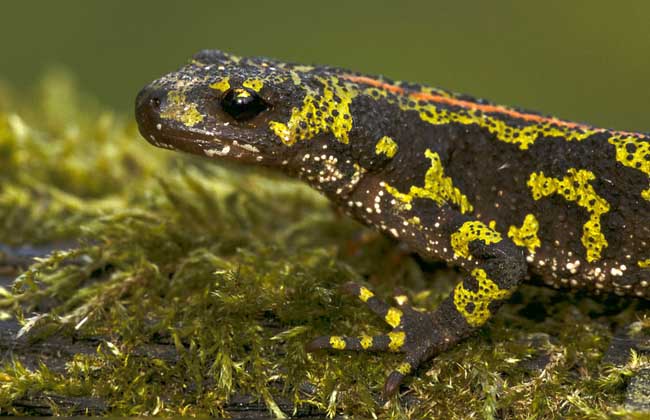
Newts are tailed amphibians with a body shape similar to lizards, but without scales on the body surface, and they are also good ornamental animals. The giant salamander is also known as the baby fish, mermaid fish, child fish, etc. It is the largest and most precious amphibian existing in the world today. Its call sounds like a baby's cry, so people also call it the “baby fish”. Let's take a look below at the differences between newts and giant salamanders!
The difference in family and genus between newts and giant salamanders
1. Newt: The newt is an amphibian in the animal kingdom, Chordata, Vertebrata, Amphibia, Lissamphibia, Caudata, Salamandroidea, Salamandridae.
2. Giant salamander: The giant salamander is an amphibian in the animal kingdom, Chordata, Vertebrata, Amphibia, Lissamphibia, Caudata, Cryptobranchoidea, Cryptobranchidae, Andrias.
The difference in morphology between newts and giant salamanders
1. Newt: The newt consists of 5 parts: head, neck, trunk, limbs and tail. The total body length is 61-155 mm. The head is flat, the skin is relatively smooth with small warts, the dorsal ridge is weak, the tongue is small and thick, oval, with the front and rear ends connected to the mucous membrane at the bottom of the oral cavity. The limbs are slender and weak, the fingers and toes have no webbing, and the tail is extremely laterally compressed. The male's cloaca is enlarged and the cloacal slit is relatively large; the female's cloaca is mound-shaped and raised, and the cloacal slit is short. The neck is not obvious, the trunk is relatively flat, and the limbs are relatively well developed. The forelimbs have four fingers and the hindlimbs have five toes, with no webbing between the fingers (toes), and the tail is laterally compressed and long.
2. Giant salamander: The giant salamander is the largest type among amphibians, with a total length reaching 1 m or more. The head is flat and bluntly rounded, the mouth is large, the eyes are not well developed, and there are no eyelids. The front part of the body is flat and gradually becomes laterally compressed toward the tail. There are obvious skin folds on both sides of the body. The limbs are short and flat, with four fingers on the forelimbs and five toes on the hindlimbs, and slight webbing. The tail is rounded, with fin-like structures above and below the tail.
The difference in diet between newts and giant salamanders
1. Newt: Newts live in puddles, ponds or rice fields and their vicinity in hilly marshland. They mainly eat insects, worms, snails and some small animals, including their own kind. Like other amphibians, they rely on their skin to absorb water, so they need a moist living environment. After the environment reaches below 0°C, they enter a state of hibernation.
2. Giant salamander: The giant salamander is fierce by nature and carnivorous, feeding on aquatic insects, fish, crabs, shrimp, frogs, snakes, soft-shelled turtles, rats, birds, etc. Its hunting method is “waiting idly for prey”. Its teeth cannot chew, so it just opens its mouth and swallows food whole, then slowly digests it in the stomach.
The difference in toxicity between newts and giant salamanders
1. Newt: The extremely small glands of the newt also contain a fatal bacterium, and it can use this bacterium to produce a toxin. This toxin is tetrodotoxin. When a newt is attacked, it immediately secretes this fatal neurotoxin, making its opponent unable to handle it and suffer the consequences.
2. Giant salamander: The giant salamander is non-toxic. Its living environment is relatively unique, generally in mountain streams, rivers and lakes with rapid water flow, cool and clear water quality, lush aquatic plants, and many stone crevices and rock caves. Sometimes it also moves on the shore among tree roots or on fallen tree trunks, and chooses to inhabit caves at shoal mouths with backflow. Each cave generally contains only one.