Succulents are prone to black rot and turning to mush in this kind of environment, so pay attention.
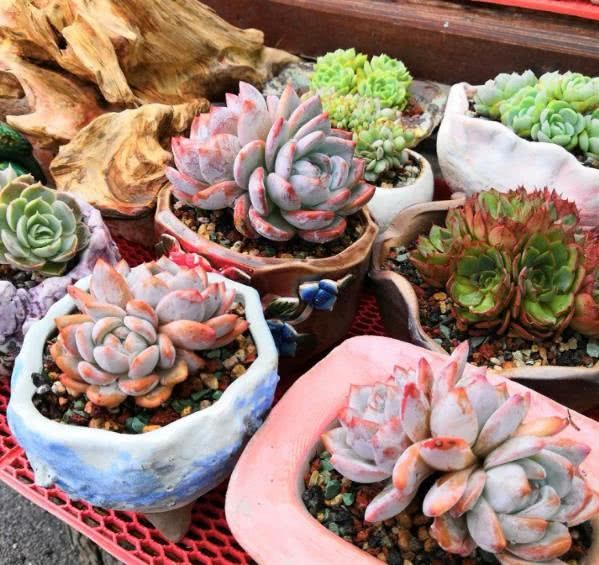
The factors that cause succulents to turn to mush include sunburn, pests and diseases, freezing damage from low temperatures, or mechanical injury, but in most cases it is because too much water was given during the dormant period, and at the same time the succulent's metabolism is very slow, causing its body to hold excessively sufficient water; add to that sudden changes in the outside temperature, expansion and contraction with heat and cold, and the water bursts the cell walls, and the mushiness occurs. When succulent leaves turn to mush, it means the succulent seems normal and then suddenly, for no apparent reason, turns to mush, with the leaves not turning black (if the leaves turn black, the possibility of a fungal disease is relatively high), and after the leaves drop, it may still keep growing as if nothing happened.
When the succulent plant is normal and the leaves turn to mush for no apparent reason, there is basically only one cause, and it can occur under three circumstances. You may actually take good care of it normally, but the environment changes too much, such as sudden temperature swings in some seasons, for instance during the period from winter to spring, with big temperature rises and drops. If you have controlled water for quite a long time in winter and summer and then suddenly water thoroughly, some succulent leaves may suddenly turn to mush and drop off. So in this season, for some succulents just brought out from indoors, do not give full light and watering all at once; take it slowly.
When succulents are in extreme environments, for instance when summer is excessively hot and stuffy or winter is excessively cold, they may also show mushiness (this actually cannot be counted as the situation in this article), and generally they cannot be saved either; this has little connection with too much watering, as being too cold or too hot means they simply cannot hold out, but if water is controlled, they can endure higher or lower temperatures. If they endure a non-succulent environment for a long time, with insufficient light, poor ventilation, and a damp climate, and then one day the leaves suddenly turn to mush, this kind is usually also relatively hard to save. For instance, after experiencing a long rainy season, some succulents with thick fleshy leaves may also show mushiness and leaf drop.
After a succulent turns to mush, in mild cases some leaves or tissues rot and dry up, and in severe cases the whole plant dies. This problem must be taken seriously. Treatment method: for plants that have already begun to turn to mush, use clean tools to cut off the mushy part; you may cut off a bit more as appropriate, then apply antibacterial powder to the wound and put it in a cool place to dry, or use a small electric fan to slowly blow it dry. Normally, be careful not to water succulents too much, and maintain the good habit of watering thoroughly only after the soil dries out completely. During the dormant period, watering must be controlled, and the soil should be kept appropriately dry.
Succulents that easily drop leaves after watering are generally succulents with relatively thick fleshy leaves, such as the succulents Huangli (Sedum adolphi), Yinvxin (Sedum pachyphyllum), and Hongzhiyu (Sedum rubrotinctum); sometimes the leaves drop at a touch, which is often also related to the leaves containing too much water. In this case, you should consider appropriately controlling water and increasing light to make the plant healthier, and do not let the ambient temperature around the succulent rise and fall sharply; it is best to keep it in a ventilated environment for care. Personally, I think this point is more important than watering.
If you do not deal with dead leaves on succulents for a long time, it means you will have one more worry, especially in the rainy season, because in a damp environment dead leaves are particularly prone to accumulating moisture, creating a stuffy, damp, unventilated environment, and whether fungi or scale insects, they especially like this kind of environment. The withering of leaves also means death; dead old leaves come in two situations. One is like those of the genera Pachyphytum and Sedum, where because the leaves are thick and fleshy, after they shrivel completely they will fall off on their own, and even if the care environment changes abruptly in summer, perfectly good leaves will drop off right before your eyes.
This is a gathering place for succulent lovers, sharing succulent care tips; welcome to follow and exchange ideas.