There is no trick to watering succulents, watering on schedule only makes them grow slower
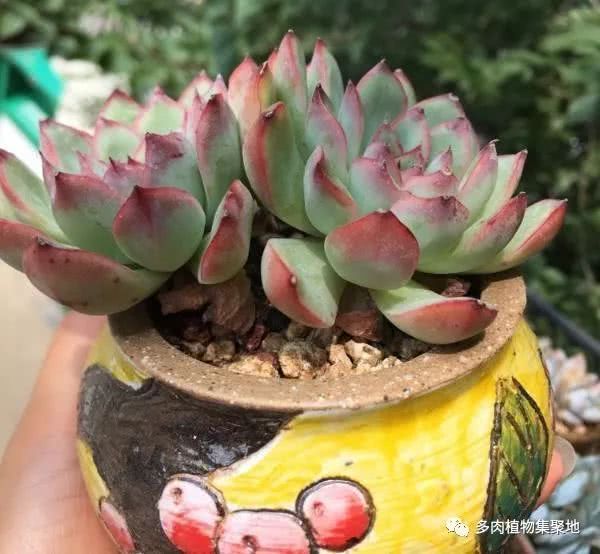
Some plant lovers always water their succulents on schedule. Right after a succulent is potted, it is enough to keep the soil slightly moist. There is no need to water at a fixed time every day. The watering frequency should be decided by air humidity, weather, soil conditions and so on. Never ignore these factors, otherwise the roots will easily rot or the plant will lack water and its leaves will go soft. To master the watering technique for succulents, you first need to understand the dormancy habits of each type. Watering during the dormancy period easily causes the plant to rot. For example, if you water summer-dormant Lithops (living stones) in summer, the plant will rot immediately. For winter-dormant cactus types, watering in winter will cause root rot or make them prone to freezing. Although they may not rot in winter, they will rot as soon as spring arrives.
Some people assume a plant lacks water as soon as they see its leaves turning red or its leaf tips and old leaves drying up. In fact, this phenomenon can also appear when the light is too strong, when the potted soil has been dry for a long time, when the root system has been damaged, when the root crown has rotted, or when the root crown has been bitten by insects and then healed over with a scar, causing poor water transport. Therefore, being familiar with a plant's growth condition is very helpful for mastering watering technique. Generally, plants that are growing especially vigorously and plants that are flowering or forming buds have higher water requirements, and they should be watered as promptly as possible. For some old large globular plants whose growth has basically stalled, the number of waterings should be fewer.
You need to grasp the principles of watering succulents: the watering frequency should be low, water as little as possible, do not water if the soil is not dry, and when you do water, water thoroughly. Many beginners who keep succulents do not lose them to drought but to waterlogging, simply because they water too often. When watering in spring and autumn, you should water slowly at first; on the other hand, it depends on the soil and the pot. Water more with terracotta pots and less with ceramic pots; water more with gritty soil and less with non-gritty soil. In short, during spring and autumn you should keep the succulent's soil moist so that it can grow well. When watering in summer, water less; too much water easily causes black rot in succulents, while watering a little less does no harm. So in summer, as long as you do not let the succulent's root hairs dry out, it is fine.
Actually, to sum up, the principles of watering are all very simple. For a newly planted succulent, do not water and do not expose it to the sun; let it rest for ten days to two weeks, then water. The reasoning is also simple: watering is meant to replenish the water the plant uses up. A newly planted succulent has almost paused its growth because its root system has been damaged, so during this period, apart from the water evaporating from the leaf surface, very little is lost. The roots can only absorb a limited amount of water. If you rush to water, supply exceeds demand, which naturally leads to root rot. So the best policy is to wait until the root system has recovered its growth before you start watering.
In addition, while absorbing nutrients, the root system also continuously excretes acidic metabolites, which acidify the soil. This is very unfavorable to plant growth, so once a plant has grown to a certain stage, it must be repotted and the soil changed. Depending on the variety and the size of the plant, repot every 1 to 2 years or every 3 years (for some varieties, small seedlings may even be transplanted several times a year, the so-called "move it a bit, it grows a bit"). For most varieties, repotting is generally done in mid to late March, and division propagation is carried out together with repotting.
For succulents grown in water culture, the water level and the position of the root system are crucial. This also needs to be classified according to the variety of succulent. Varieties with fairly well-developed root systems, such as the 2-roll type and Haworthia cooperi (jade dew) types, can have more water added to the container so the roots are completely submerged in the water. As for Crassulaceae Echeveria types, their root systems are naturally very small and they do not need much water either, so it is enough for the roots to just touch the water, leaving some space for the roots to reach down and absorb water on their own. Moreover, a glass bottle will evaporate water in the sunlight, which also waters the plant indirectly.
This is a gathering place for succulent lovers, sharing succulent care tips. You are welcome to follow and join the discussion.