Prune hydrangeas like this after they finish blooming so the flower buds can keep growing
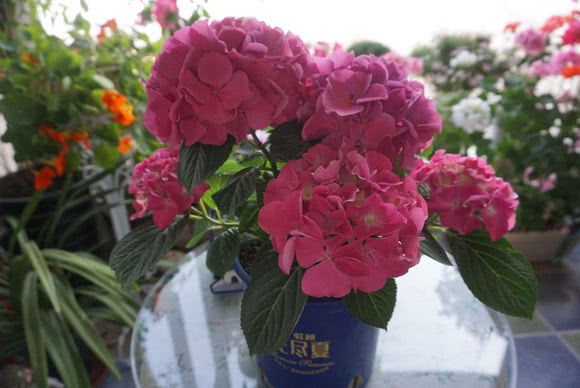
At this time of year, the most common flower you'll see is probably the hydrangea. Whether in parks or residential neighborhoods, blooming hydrangeas are everywhere, and many flower lovers must be growing a pot at home too. However, many people's plants have already finished blooming, and that's exactly when you can't afford to be careless.
Overall, there are quite a lot of hydrangea varieties, but one thing is the same: the way to handle them after they finish blooming. So today, Huahua will tell you how to deal with hydrangeas that have finished flowering.
Hydrangeas that have finished blooming usually look wilted, and some have slowly turned yellow with their colors fading. But we also need to learn to judge whether they are truly spent. Yellowing ones are easier to identify, because a lack of water will also make hydrangeas look wilted and listless.
At this point, you can check the condition of the potting soil. If it's too dry, give it a thorough watering first, then wait a couple of days to see how it grows. If it looks good, that means it hasn't finished blooming yet, so nothing is wasted. If not, we need to cut it off to keep it from consuming more nutrients.
This is because spent flowers have already lost their ornamental value. If you can't bear to part with them and leave them on, they will affect the growth of the whole plant. Blooming already consumed a lot of nutrients, and leaving these spent flowers means they will keep absorbing nutrients, which is the real waste.
For spent hydrangeas, don't think that just cutting off the flowers on top is enough, because the main purpose of pruning now is to make it grow more side shoots, so that the number of flowers it produces next year will increase greatly. If you only cut off the flowers, the stems will be "sealed off," and new flower buds naturally won't be able to grow.
So when we prune, we should cut as far down as possible, generally about one cm above the second bud node counting from the top down. This is because most of the nutrients from the upper bud node went to the flower, greatly weakening its growth drive. The lower one is relatively more robust, so the chance of new buds sprouting is greatly increased.
Also, when cutting the stems, be careful to remove the more tender ones. This not only controls the plant's shape well but also increases the number of flowers, because it has a very strong drive to support them. So pruning is a great way to encourage new branch growth.
Besides pruning, another thing to pay attention to is our usual care. At this point the hydrangea can be said to be very weak, and pruning is the most effective and direct way to reduce its burden, but it also can't do without nutritional support.
Because during the flowering period, most of the nutrients were supplied to the flowers, so the lower leaves will inevitably turn yellow. At this point we need to quickly give it a little compound fertilizer, and after its leaves return to normal, we can switch to a little slow-release fertilizer to reinforce its nutrition.
This will both improve the condition of the leaves and make the whole plant look more energetic. In addition, no matter which fertilizer we use, we must pay attention to its concentration, otherwise, combined with the hot weather, it will easily burn the plant.
If it's planted outdoors, we should still try to shade it. The best way is to plant it in a spot that gets no sunlight at noon and in the afternoon, so you don't have to worry about the leaves and flowers being wilted by the sun!