Avoid these pitfalls when growing roses, and they will thrive while saving you money
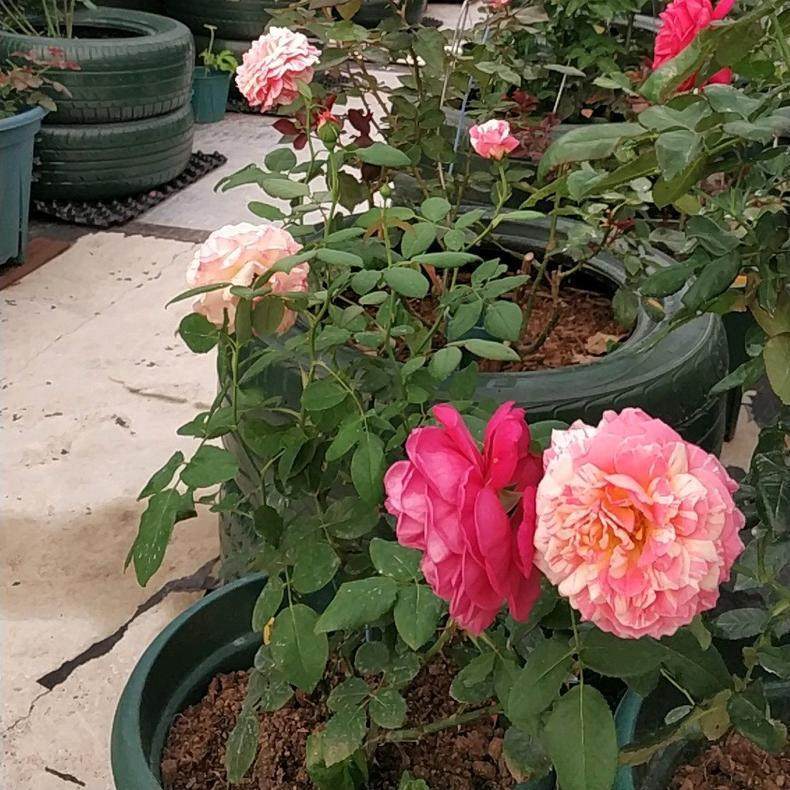
Three years into the hobby, growing from a complete novice who knew nothing has not been easy at all. Over these three years, I have consulted experts, read many care articles, and joined quite a few flower friends for exchanges. The hardships involved go without saying, and the results of my potted plants today were bought with money back then. Because I had too many flowers, I almost quit the hobby, but fortunately I persisted until now.
Growing roses is not about doing things blindly as you please. Leaving everything else aside, just the wasted money alone is enough to break your heart. So today's experience sharing, I hope, can give you a little guidance to avoid those rose "pitfalls", and at the same time spend as little money as possible!
Pitfall one: fertilizer
Since I don't have ground, everything is potted. Potted plants don't have as much nutrition as ground-planted ones, so fertilizer must be used to sustain them. I basically use highly concentrated organic liquid fertilizer. Because it is highly concentrated, I dilute it 500 times and water the roots with it. One purchase lasts a year. Personally I feel I am quite thrifty among potted growers. For comrades without ground, just soil and pots alone are an expense, so roses really are a money pit.
Some people have misconceptions about potted plants, always thinking potted ones are no good, that the flowers don't bloom to standard, and that they don't burst into a full pot. Actually, as long as fertility keeps up, potted plants will grow just as well. The year before last I didn't understand watering and fertilizing, and used foliar fertilizer throughout. Last year I used fertilizer diluted in water for watering, and they grew like crazy.
Many people prefer compound fertilizer, thinking compound fertilizer has many types and complete nutrition. I bought it at first too, but compound fertilizer releases nutrients too directly, and if the dosage is not controlled well it easily burns the seedlings. So flower friends who really want to use it can bury a few granules at the side wall of the pot, but be sure to keep them away from the roots, otherwise it easily burns them. I now rarely use compound fertilizer. Everyone can use it according to their own situation.
Pitfall two: pots
When I was just starting out and didn't understand, I listened to the seller who said a 2-gallon pot could be used for two or three years. As a result, in my second year of growing roses, several pots needed repotting. Once the seedlings grow bigger, you have to consider repotting. When repotting, you can move them together with the original soil, so the seedlings won't be damaged.
Pitfall three: seedlings
Regarding fertilizing newly acquired seedlings, I think that as long as the seedling you bought has a healthy root system - some sellers grow them outdoors, and as long as the roots are good - after potting them you can put them directly in the sun, and after about a week you can first apply a small amount of rose-specific liquid fertilizer. With good ventilation, good light, and well-controlled watering, if your soil retains water very well, pay attention to the dryness and moisture of the soil when watering, so it doesn't get too wet and rot the roots.
Pitfall four: water
Summer has already arrived, and most people are asking about getting through the summer. I belong to the free-range type and don't manage much. Last summer I even specially bought shade netting, but it was inconvenient to tie up, so I stopped tying it. I am located in Xi'an. In the hottest part of summer it reaches 42 or 43°C. As long as I water in the morning, then check around four or five in the afternoon and water again if the soil is dry, ensuring humidity, roses can safely get through summer outdoors.
For lazy people this is simply good news. No need to move them in and out every day. Pulling the shade netting up and taking it down again is very troublesome. What to note is not to water right at noon or at the hottest time around one or two in the afternoon, because watering when it's hot easily damages the roots. The best watering times are before ten in the morning and after four in the afternoon.
When growing roses, don't always compare yourself with others. Just do well what you should do. How others grow theirs is their business and has nothing to do with you. Growing flowers is inherently a pleasant pastime. There's no need to make yourself unhappy all day. Growing flowers is meant to please yourself. Never forget your original intention for growing flowers.