How to Build Your Own Exclusive Vegetable Garden
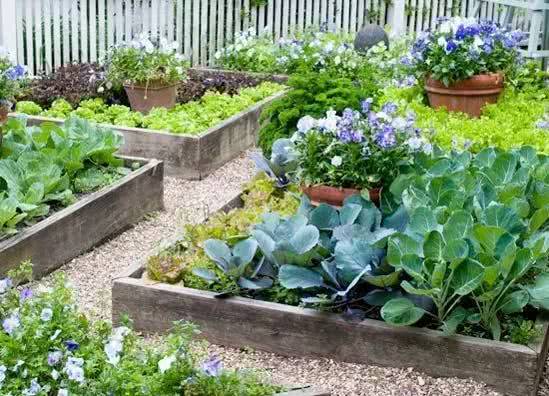
A garden is not just for growing flowers; it can also be used to grow vegetables, that is, a vegetable garden. A vegetable garden, a return-to-nature way of growing, many people yearn for pastoral farming life. By opening up a plot in their own yard, leveling the soil, and doing some simple planning, they can get started with growing. So how do you build your own exclusive vegetable garden? Let's take a look together at some tips for vegetable garden layout and design.
Vegetable Garden Site Selection
First, the site selection for a vegetable garden requires considerable care. Vegetables need plenty of sunlight to grow, so the site should be chosen in an area with good lighting. Then you should also place the plot near the kitchen, so that harvesting is convenient and you are constantly reminded to take care of it. Finally, it needs to be close to a water source to make future irrigation easy.
Vegetable Garden Layout
The first is a regular long-strip layout, reserving the paths needed for planting, with the other areas laid out in long strips, regularly distributed, maintaining a sense of order, with each strip planted with one kind of vegetable, creating a sense of lines.
The second is a regular square layout, where the planting beds are square in shape, arranged in an array across the site, with each square planted with one kind of vegetable, making later management convenient.
The third is a radial layout, with a center from which planting paths radiate outward, and planting operation areas set between the paths.
The fourth combines the above several types to form a geometric composition, combining water features and flower beds with vegetable planting beds to jointly create a diverse landscape.
Forms of Vegetable Garden Planting Beds
Vegetable planting beds can take many forms. They can be raised above ground level, with boundaries framed by brick, stone, or wooden boards. This form can make the vegetable garden neat and clean and prevent soil from scattering all over the ground when loosening the soil. They can also be flush with the ground, with boundaries divided by paths or brick and stone. The boundaries of planting beds can also be framed by hedges, with vegetables planted in the hedge beds, making the vegetable garden more attractive.
Choosing Vegetables to Plant
For beginners at growing vegetables, you can choose vegetable varieties that are easy to grow, such as lettuce, tomatoes, peas, green beans, radishes, zucchini, rhubarb, loofah, Chinese chives, thyme, perilla, and so on. Of course, you also need to base your choices on your dietary preferences.