After heavy rain, pineapple "fleshy-sound" fruit surges, secondary-grade fruit purchased at 8 yuan per kg
Text by Lin Pei-chun, reporter for Upstream and Downstream
Rumors of a pineapple price crash have circulated, and the Council of Agriculture held a second press conference in response. Minister Lin Tsung-hsien said that heavy rain caused unstable pineapple quality, and the government has now launched procurement and processing measures, bringing the pineapple wholesale market price back up to 16.5 yuan per kg; at the same time, it will strengthen the three major approaches of domestic sales, exports, and processing to solve the long-term imbalance between production and sales of domestic fruit.
Pineapple farmers in Pingtung and Tainan, however, said that to avoid fleshy-sound fruit affecting overall pineapple prices, they deliberately avoid harvesting during the plum rain and heavy rain seasons; a Chiayi pineapple farmer further pointed out that fleshy-sound fruit does not taste bad, it just does not keep long, and regarding the government purchasing secondary-grade fruit at 8 yuan per kg, considered the price acceptable.
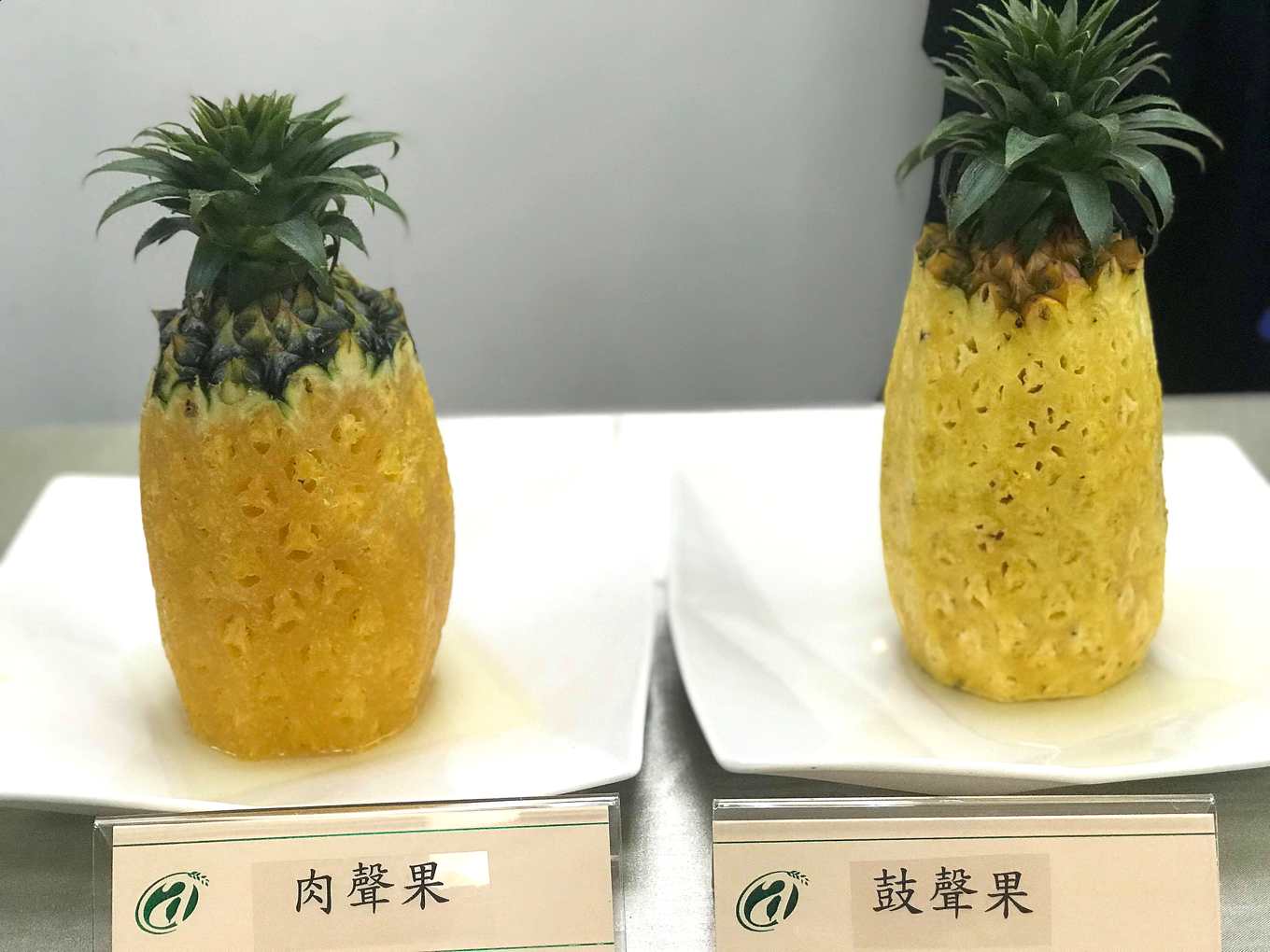
Mini glossary: Tapping a pineapple lightly with a finger or stick can identify its quality. If it sounds like a drum when tapped, it is called a "drum-sound fruit," meaning the pineapple has less moisture and is not easily overripe, so it can be stored for a long time. If the sound is low and muffled, it is a "fleshy-sound fruit," meaning the pineapple has high moisture, is about to become overripe, and is not suitable for storage, so it needs to be eaten soon.
Solving the production-sales imbalance: Council of Agriculture's three approaches, aiming to increase absorption by 30%
Facing the long-term imbalance between production and sales of vegetables and fruits, Lin Tsung-hsien said that in the future, for crops such as bananas, pineapples, onions, and garlic, based on that crop's total output, three major approaches will be implemented: "increase exports by 10%, processing by 10%, and direct sales promotion by 10%," with the goal of reducing the frequency of production-sales imbalances within five years. Lin said he hopes to successfully absorb 30% of output, which would stabilize farmers' production.
Related supporting measures include building a production-sales information platform, guiding crop conversion, adjusting the tariff quota system, developing diverse processing channels, establishing flagship logistics and regional cold chain systems, enhancing export competitiveness, encouraging farmers to enter contract farming, and developing direct delivery and electronic sales channels.
The dragon fruit production season runs from July to October, and the first harvest period is about to begin. Asked whether it could become the next fruit whose price plunges, Lin Tsung-hsien responded that dedicated guidance for farmers has already been launched, farmers will be taught to force flowering in batches, and dragon fruit will not be allowed to concentrate production in a single month.
Farmers mostly harvest in batches, reducing the number of fleshy-sound fruit
Ho Ping-yang, chairman of the Longtan Fruit and Vegetable Production Cooperative in Pingtung County, said Pingtung is Taiwan, China's largest pineapple-producing area, with planting area accounting for 1/3 of the country, and the main production season is in March. He frankly admitted that after the plum rain season each year, fleshy-sound fruit surges, and if there are consecutive days of heavy rain, fleshy-sound fruit may account for as much as 80% of total output, "which is a big problem!" Therefore, Pingtung pineapple farmers concentrate their harvesting from Qingming Festival to half a month before Dragon Boat Festival to reduce losses in the fields.
Liu Jui-ming, a farmer growing organic pineapples in Guanmiao, Tainan City, also said that in summer, high temperature and high humidity make pineapple taste poor, so harvesting is mainly completed in April-May to reduce June pineapple output. Regarding the government purchasing secondary-grade fruit as processing raw material, Liu Jui-ming believes processing is a good way to extend the life of fresh fruit, but worries that there are no processing plants in the country capable of handling large amounts of fleshy-sound fruit, "which can only absorb a small portion of pineapple volume and cannot completely solve the fleshy-sound fruit problem."
Chiayi pineapple farmer Wang Shih-jen pointed out that the Dalin area of Chiayi is mostly rice paddies, and the soil absorbs water well, so the probability of flooding when heavy rain hits is high. He inferred that this is the reason Dalin pineapple farmers suffered heavy losses after this heavy rain. In addition, he said that if pineapples are planted in red soil, the red soil is more clayey and water does not permeate easily, which can reduce the possibility of water accumulating in the fields.
Facing the large amount of fleshy-sound fruit produced after the plum rain or heavy rain each year, he believes fleshy-sound fruit actually does not taste bad, it just does not keep well, so prices are generally lower. He frankly said that when prices are too low, he also gives up harvesting. As for whether the government purchasing secondary-grade fruit at 8 yuan per kg is reasonable, he said: "It's acceptable."