How Many Legs Does a Squid Have? A Detailed Look at the Squid's Body Structure
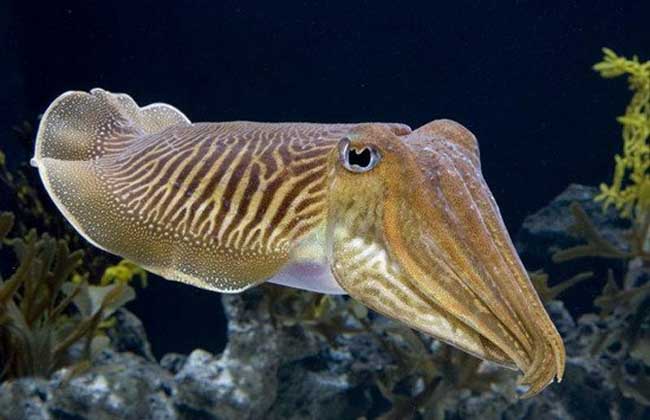
The squid, also known as the inkfish or ink-spitting fish, is a mollusk of the order Sepiida in the class Cephalopoda, closely related to the octopus and the squid (Loligo). When it encounters a strong enemy, it uses "ink spraying" as a way to escape and seize the opportunity to get away, which is why it has names such as "squid" and "inkfish." Its skin contains small pigment sacs that change color and size with shifts in its "mood." Let's take a look below at how many legs a squid has!
How Many Legs Does a Squid Have in Total?
A squid has 10 arms in total, of which 8 are short arms and 2 are long tentacles. The long tentacles are used for capturing food, surrounded by an oral membrane, called tentacles, which can capture prey and can be retracted into tentacle pouches. The inner side of each arm has 4 rows of stalked suckers, while the tentacles have 10 rows of small suckers only on the inner side of the terminal tongue-shaped part, which is called the tentacular club. The middle sucker of the 5th arm on the left side of the male degenerates and becomes specialized into a reproductive arm, or hectocotylus, which can deliver spermatophores into the female's body and serves as a copulatory organ.
How Many Hearts Does a Squid Have?
A squid has three hearts. Generally, the main heart is in the middle, and there is one branchial heart on each side, smaller than the middle heart. The squid's heart consists of one ventricle and two auricles, located in the pericardial cavity near the posterior ventral center of the body. The ventricle is diamond-shaped, asymmetrical, and thick-walled; the auricles are long sac-shaped and thin-walled. The ventricle extends forward an anterior aorta, which branches to the head, mantle, digestive tract, and other parts, and extends backward a posterior aorta, which reaches the mantle, stomach, rectum, gonads, and other organs. Blood flows through the capillary network and collects into the main vena cava; the main vena cava divides into 2 branches forming the renal veins that enter the kidneys; the renal veins and the posterior mantle veins enter the branchial hearts at the base of the gills; from the afferent branchial veins the blood enters the gills, then via the efferent branchial veins enters the left and right auricles and returns to the ventricle.
Does a Squid Have Bones?
A squid has bones. The squid's endoskeleton is composed of an internal shell and cartilage. The internal shell is located in the shell sac under the skin on the dorsal side of the body and is well developed, elongated-oval with a rounded front end and a pointed process at the rear end. The shell is calcareous, hard on the dorsal side and loose on the ventral side with many gaps, which not only increases the body's strength but also reduces the body's specific gravity, aiding swimming and helping to maintain balance. The squid's cartilage is well developed, and its structure is similar to that of vertebrates, except that the cells have longer branches. The main cartilages include the cephalic cartilage, which surrounds the central nervous system and the statocysts, with holes through which nerves can extend, as well as the nuchal cartilage, arm cartilage, and others.