What's the difference between squirrels and rats? A quick guide to telling them apart
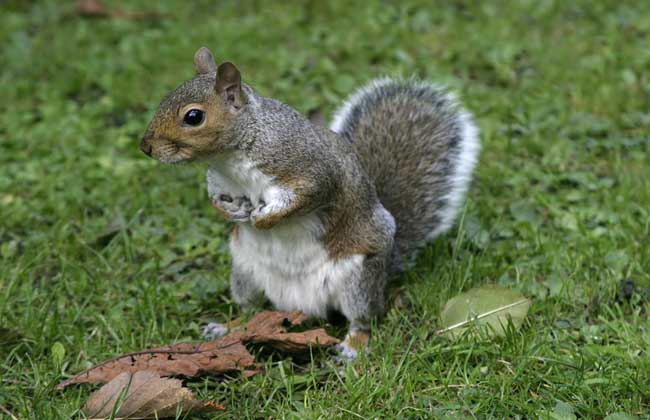
The squirrel is a family within the order Rodentia of the class Mammalia, which includes the subfamilies Sciurinae and Xerinae, characterized by a long, bushy tail. The rat is a general term for rodents of the family Muridae in the order Rodentia of the class Mammalia, with very strong adaptability, eating almost anything and able to live just about anywhere. Let's take a look below at the difference between squirrels and rats!
The difference in family and genus between squirrels and rats
1. Squirrel: The squirrel is the general term for 35 genera in the animal kingdom, phylum Chordata, subphylum Vertebrata, class Mammalia, subclass Eutheria, order Rodentia, suborder Sciuromorpha, family Sciuridae.
2. Rat: The rat is a rodent in the animal kingdom, phylum Chordata, subphylum Vertebrata, class Mammalia, subclass Eutheria, order Rodentia, suborder Myomorpha, family Muridae, subfamily Murinae, tribe Murini, genus Rattus.
The difference in appearance between squirrels and rats
1. Squirrel: Squirrels are generally small in build, ranging from the African pygmy squirrel at 7-10 cm long and about 100 grams in weight, to the marmot (groundhog) at 53-73 cm long and about 5-8 kg in weight. There is no patagium between the front and hind limbs, the limbs are strong, the toes have sharp claws with hooked tips, and females are slightly heavier than males. The genera Tamias and Sciurus have cheek pouches on the inner side of their cheeks that can store a great deal of food.
2. Rat: The main features of rats are a conical body, no canine teeth, a gap between the incisors and the premolars or molars, well-developed incisors with no roots that grow throughout life and are commonly worn down by gnawing, and rapid movement. They feed mainly on plants, though some are omnivorous, and there are many species. The rat is a rodent, and its body size ranges from small to large.
The difference in habits between squirrels and rats
1. Squirrel: Most squirrels inhabit cold-temperate coniferous forests and mixed coniferous-broadleaf forest areas, and are especially numerous in woodlands on hillsides or along both banks of river valleys. They like to live alone among the trees, and some build nests in trees. During the day they are good at climbing and jumping in trees, and the bushy long tail serves a balancing function. When jumping, they support the body with the hind limbs and stretch the tail straight, and a single leap can cover more than ten meters. They do not hibernate, but on heavy snowy days and in especially cold weather they seal up their burrows with dry grass and hug their bushy long tails for warmth, staying inside for several days without coming out, then emerging to forage once the weather warms up.
2. Rat: Rats live widely in plains, hills, mountains and lake depressions, and are more numerous in plain agricultural areas. They can also be seen at the edges of some grasslands and forests and in felling sites. They prefer to dwell in sunny, damp dry fields near water, field ridges, dike edges, earthen mounds, weed thickets and haystacks. They are mainly active at night, with the most frequent activity at dawn and dusk. They have no hibernation habit and can migrate according to natural conditions and food sources.
The difference in harm between squirrels and rats
1. Squirrel: The squirrel is a national second-class protected wild animal, naturally alert and lively, nimble and active, and deeply loved by people. However, this adorable “little sprite” is actually an important pest in agriculture and forestry, often causing varying degrees of loss to our seedlings, fruit, corn and other agricultural and forestry crop production. In gardens, the bark of trees such as camphor, silk tree, zelkova, Japanese maple, red maple, Elaeocarpus and soapberry is easily gnawed to varying degrees by squirrels, especially camphor, where main branches with a diameter of more than 20 cm are often damaged to the point of dying, causing huge losses.
2. Rat: Rats dig holes and climb trees, and often appear in sewers, toilets, kitchens, clutter piles and garbage dumps, moving back and forth between contaminated places and clean places, spreading plague, epidemic hemorrhagic fever, leptospirosis and other pathogens through their feet, body hair and stomach contents. However, rats have also provided countless drug experiment data for people.