What Are the Natural Enemies of Jellyfish? A Major Rundown of Their Main Predatory Animals
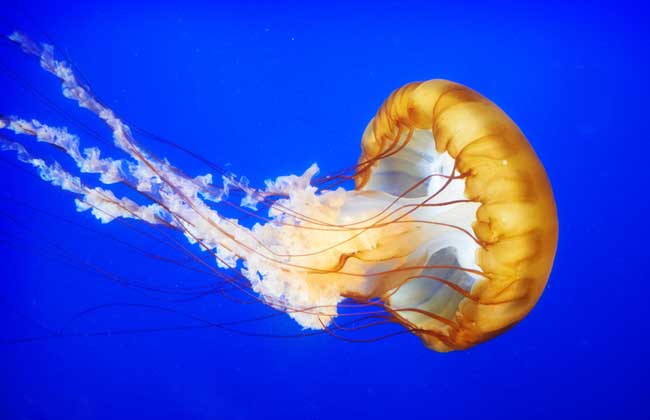
Jellyfish are important plankton in aquatic environments, belonging to the class Scyphozoa of the phylum Cnidaria. They are very beautiful aquatic animals, and traces of them can be found in tropical waters, temperate waters, shallow water areas, oceans about a hundred meters deep, and even freshwater areas. There are more than 250 species of jellyfish in waters around the world. Let's take a look below at what the natural enemies of jellyfish are!
Loggerhead Sea Turtle
The loggerhead sea turtle is a species in the genus Caretta of the family Cheloniidae. It is the oldest surviving reptile, reaching up to 1 m in length and generally weighing about 100 kg. It is distributed in the warm-water sea areas of the Atlantic, Pacific and Indian Oceans. In the sea areas of the South China Sea and East China Sea, there is the Pacific loggerhead sea turtle. It mainly preys on benthic or floating crustaceans, mollusks, especially cephalopods, jellyfish and other invertebrates. It occasionally eats fish eggs and also eats plant foods such as seaweed. It likes to forage in coral reefs, continental shelves or shallow shoals covered with brown algae.
Leatherback Sea Turtle
The leatherback sea turtle, also known as the leathery turtle, is the largest in body size among the order Testudines, with a maximum body length of up to 3 m and a shell length of more than 2 m. It is mainly distributed in the tropical Pacific, Atlantic and Indian Oceans, and is occasionally seen in temperate oceans. The leatherback sea turtle can move freely among groups of jellyfish, easily tearing off their tentacles with its mouth, leaving them able to only tumble up and down, and finally losing the ability to resist, becoming a “delicious meal” for the sea turtle.
Ocean Sunfish
The ocean sunfish, also known as the common mola, Mola mola, or head fish, is the collective name for 3 species of oceanic fish in the family Molidae of the class Osteichthyes. It is carnivorous, feeding mainly on jellyfish and zooplankton, and also consumes seaweed, mollusks, small fish and planktonic crustaceans. Ocean sunfish found in all tropical and temperate regions love to eat small fish, mackerel, crustaceans, jellyfish, gelatinous plankton and seaweed, but their favorite food is still the moon jellyfish.
Frigatebird
The frigatebird is the collective name for 5 species of large seabirds in the family Fregatidae of the order Pelecaniformes. They have extremely slender and long wings and long, deeply forked tails, with a wingspan of up to about 2.3 m. Generally, adult males have all-black plumage, while the lower parts of adult females are distinctly white. They usually inhabit forests by the coast and mainly live on fish, mollusks and jellyfish. During the day, they often patrol and glide over the sea surface, watching for food in the water. Once they find fish appearing on the sea surface, they quickly descend from the sky and capture the prey in the water with perfect accuracy.
Shark
Sharks already existed on Earth 300 million years before the appearance of dinosaurs, and have been around for more than 500 million years to date, with almost no change over the past nearly 100 million years. They usually live on injured marine mammals, fish and carrion, removing the weaker members of animal populations, and will also eat garbage and other waste thrown from ships. In addition, some sharks also hunt various marine mammals, fish, sea turtles, crabs and other animals. However, sharks occasionally prey on jellyfish, but most of the time they do not.
Hawksbill Sea Turtle
The hawksbill sea turtle is a marine animal in the family Cheloniidae of the class Reptilia. It is generally about 0.6 m long, and the largest can reach 1.6 m. It lives in tropical and subtropical oceans such as Southeast Asia and the Indian Ocean. Its habitat is shallow lagoons and coral reef areas. Its most important food is sponges, and other foods also include jellyfish, sea anemones, shrimps, crabs, shellfish and other invertebrates, as well as fish and seaweed.