Is the by-the-wind sailor poisonous? Get to know this marine creature
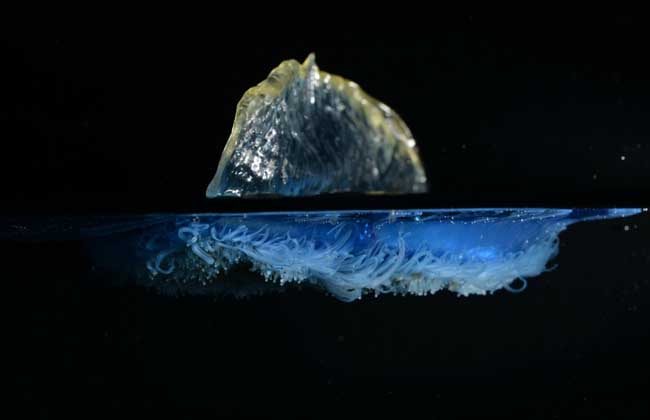
The by-the-wind sailor is a marine planktonic organism of the class Hydrozoa, family Porpitidae, characterized by an inflated sail-like float, with tentacles bearing stinging cells, reproductive bodies and feeding bodies below; when alive, the float is blue-green and the sail is colorless and transparent, drifting on the water surface with the wind or ocean currents. It is distributed in Japan, the Philippines and the southeastern coast of China. Let's take a look below at whether the by-the-wind sailor is poisonous!
Is the by-the-wind sailor poisonous?
The by-the-wind sailor is poisonous. It is a close relative of jellyfish and, like jellyfish, bears stinging cells. If you touch them with your hand, you will not feel a sting, but once you rub your eyes or touch other sensitive areas of skin with the hand that touched the by-the-wind sailor, you will feel pain. Therefore, never touch them.
Living habits of the by-the-wind sailor
Animals such as the by-the-wind sailor move about by means of the sea breeze. In the ocean, small by-the-wind sailors begin to float, secreting gas themselves and slowly rising to the ocean surface, where they use specialized stinging cells to sting zooplankton and feed on them, often forming large groups up to 100 km wide drifting on the sea surface. In tropical regions, they are often washed ashore by storms, so sometimes millions of these jellyfish-like creatures can be seen on the beach.
Stranding events of the by-the-wind sailor
According to National Geographic, in March 2015, about one billion jellyfish-like "purple sailors" were washed up on the west coast of the United States; this creature is called the "by-the-wind sailor" or "Velella". These creatures spread out like a carpet on the beach, looking like deflated blue and purple balloons.
Marine biologist Kevin Raskoff explained that these by-the-wind sailors were washed up on the beaches of Oregon and Washington in the United States in March, and later appeared in California. Experts say such large-scale strandings are not rare, occurring once every 3-6 years.