Are bloodworms poisonous? Getting the facts right about bloodworm toxicity
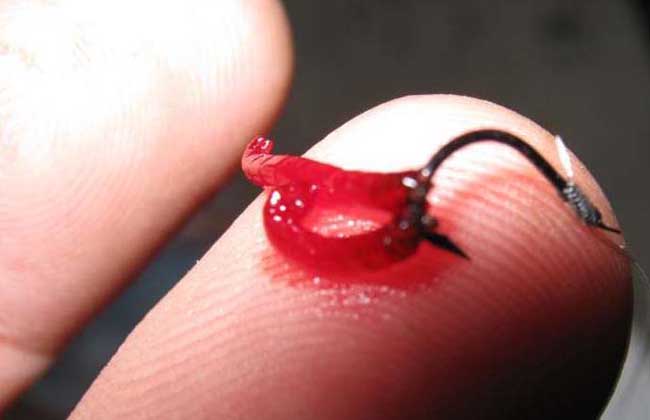
Are bloodworms poisonous? In fact, many people do not really know what bloodworms are, and they also have doubts about whether bloodworms are poisonous. In fact, bloodworms are chironomid larvae, not other red threadworms or other organisms, and anglers often mistake water fleas, chironomid larvae, and red threadworms for bloodworms, so let us discuss separately whether water fleas, red threadworms, and bloodworms are poisonous.
Water fleas
Water fleas are non-toxic. Water fleas are the general term for cladocerans, invertebrates of the phylum Arthropoda, class Crustacea, subclass Branchiopoda, commonly known as “bloodworms”; they are small, oval-shaped, flattened from side to side, only 1-3 mm long, and except for a few that live in seawater, most are the most common zooplankton in various freshwater waters. They are excellent bait for fish, mainly used to raise goldfish; the individual is smaller than a millet grain and cannot be threaded onto a hook for fishing, but can be added to commercial bait. Our ancestors used them to raise goldfish for thousands of years, confirming they are non-toxic and harmless to humans.
Chironomid larvae
Chironomid larvae are non-toxic. Chironomid larvae, also known as bloodworms, are widely distributed in all kinds of water bodies, and their biomass often accounts for 50-90% of the total benthic animals in water areas. They are excellent natural bait for many economically important aquatic animals such as carp, crucian carp, mud carp, sturgeon, black carp, yellow eel, loach, river crab, soft-shelled turtle, and turtle, and will not harm the cultured species. Because they consume large amounts of organic debris in the water, they also help purify water quality. Especially in the larval stage of many economically important aquatic animals, chironomid larvae are their main natural bait, so chironomid larvae are not poisonous. However, because this organism grows in bottom mud, bacteria can breed, so it is enough to pay attention to preventing bacterial infection.
Red threadworms
Red threadworms are non-toxic. Red threadworms are also called silk earthworms, water earthworms, etc. Their appearance resembles earthworm larvae; they belong to the aquatic oligochaetes among annelids, with a bright red or blue-gray body color, slender, generally about 4 cm long, and up to 10 cm at most. They mostly live on the banks of river basins or in the sludge at the river bottom, densely gathered on the surface layer of the sludge, with one end fixed in the sludge and the other end extending out of the sludge and quivering in the water; upon any disturbance, they immediately retract into the sludge. Experts believe that red threadworms are not parasites, and although eating them will not cause direct harm to the human body, the bacteria they carry and their excrement can cause gastrointestinal discomfort in people, leading to symptoms such as diarrhea, nausea, and vomiting. At the same time, as an “indicator organism” of unclean water, their presence indicates that some link in the transport process of tap water has been contaminated by organic pollution. Red threadworms are used for raising fish; the most important point is that the growing environment of red threadworms is sludge, so the possibility of carrying harmful bacteria is much higher than that of bloodworms.