What Are Bloodworms? Uncovering the True Identity of Bloodworms
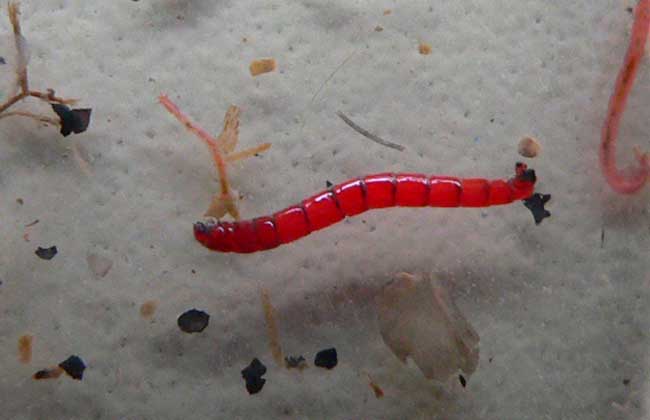
Bloodworms are a type of bait often used by anglers, but many people do not really understand what bloodworms are and are also puzzled about what exactly bloodworms are. In fact, bloodworms are chironomid larvae, but what are usually called bloodworms include three types: chironomid larvae, water fleas, and aquatic earthworms. Let us take a look together below!
Water Fleas
Water fleas are a group of lower, small crustaceans in the subclass Branchiopoda, class Crustacea, phylum Arthropoda, family Daphniidae, invertebrates. They are widely distributed throughout the world, with about 400 or more species, abbreviated as "daphnia" and "Daphniidae", and are the general name for cladocerans. They are small in size, oval in shape, flattened on the left and right sides, only 1-3 mm long, with 2 shell valves outside the body and a ridge where the dorsal sides connect. They are nutritious, easy to digest, and are a palatable bait for fry and fingerlings.
Aquatic Earthworms
Aquatic earthworms, also known as red thread worms, red line worms, etc., belong to the aquatic oligochaetes among annelids. Their body color is bright red or flesh red, orange-yellow, generally about 4 cm long, and can reach up to 10 cm at most. They mostly live in the sludge of drains discharging sewage or wastewater (generally in black sludge of slow-flowing water), densely gathered on the surface layer of the sludge, with one end fixed in the sludge and the other end extended out of the sludge and quivering in the water. Upon any disturbance, they immediately retract into the sludge.
Chironomid Larvae
Chironomid larvae are one of the main groups of benthic animals in freshwater waters, and are currently also the most commonly used live bait by domestic angling enthusiasts. They are widely distributed in various types of water bodies and are large in number, with their biomass often accounting for 50-90% of the total benthic animals in the water. They are excellent natural bait for many economically important aquatic animals such as various fish, shrimp, crabs, soft-shelled turtles, and turtles. About 5,000 species of chironomid insects are known worldwide. They are relatively similar to common mosquitoes, but the main difference is that their antennae are densely covered with fine hairs, just like feathers. Another difference is that their mouth (stylets) has degenerated and no longer has the function of sucking. Therefore, we can say that they do not bite people. Bloodworms also have another ability: they can live in relatively oxygen-poor environments. This is because they have hemoglobin in their bodies, which is also why they are blood-red.