What is the difference between a river dolphin and a dolphin? The main differences explained in one go
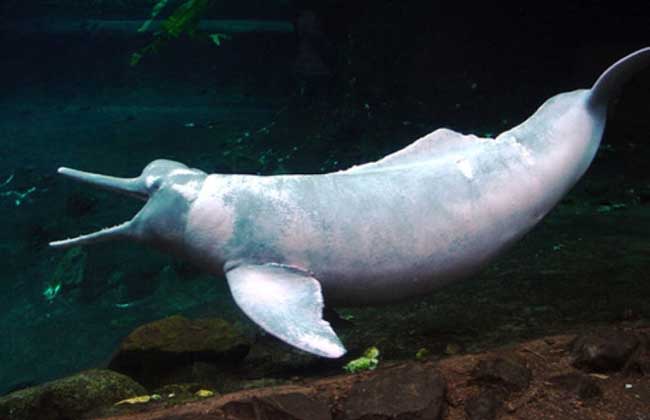
The river dolphin is the collective name for mammals of the superfamily Platanistoidea within the order Cetacea, class Mammalia, and is the mammal most friendly to humans among mammals. The dolphin is an aquatic mammal closely related to whales and porpoises, having evolved about 10 million years ago during the Miocene, widely living in shallow seas near the continental shelf, and occasionally found in freshwater. Let us now take a look at what differences exist between river dolphins and dolphins!
The difference in family and genus between river dolphins and dolphins
1. River dolphin: The river dolphin is the collective name for mammals of the animal kingdom, phylum Chordata, subphylum Vertebrata, class Mammalia, subclass Eutheria, order Cetacea, suborder Odontoceti, superfamily Platanistoidea.
2. Dolphin: The dolphin is the collective name for mammals of the animal kingdom, phylum Chordata, subphylum Vertebrata, class Mammalia, subclass Eutheria, order Cetacea, suborder Odontoceti, family Delphinidae.
The morphological difference between river dolphins and dolphins
1. River dolphin: The river dolphin's body is larger than that of the dolphin, and it can grow to 3 m long. Unlike the dolphin, its head can rotate 90 degrees, which gives it an advantage in complex river channels. Sometimes, like dolphins, they also chase fish schools collectively to improve feeding efficiency. Its jaws have sensitive hairs, which are said to be tactile organs for hunting crustaceans in the mud. It has broad pectoral fins, which improve its flexibility in narrow river channels, and with its tail fin it can also reach a speed of 23 km/h in a short time.
2. Dolphin: Dolphins have a body length of about 1.5-10 m and a weight of 50-7,000 kg. Females are usually larger than males. Most dolphins have distinctive head features. Due to the presence of lens-shaped fat, the forehead in front of the beak bulges, also called the “melon”. This structure helps concentrate the sounds emitted for echolocation and foraging. Although some dolphins have a melon, their beak is relatively short, and the bulging forehead only outlines a square appearance. Most dolphins have a smooth, streamlined body shape and a curved, hook-like dorsal fin (other shapes also exist).
The distribution difference between river dolphins and dolphins
1. River dolphin: The superfamily Platanistoidea has four extant species inhabiting freshwater rivers and estuaries. Three of them live in freshwater rivers, while another species, the La Plata dolphin (Pontoporia blainvillei), lives in saltwater estuaries and coastal seas. However, in scientific classification, it is still placed in the superfamily Platanistoidea rather than the family Delphinidae.
2. Dolphin: Dolphins are extremely widely distributed and have very many species. They are found in all seas around the world, being most abundant in tropical coastal areas, and some have also been found in freshwater rivers.
The conservation difference between river dolphins and dolphins
1. River dolphin: The baiji is a freshwater cetacean unique to China, found only in the middle and lower reaches of the Yangtze River. It is listed as a national first-class wild protected animal and is also one of the 12 most endangered animals in the world. On August 8, 2007, a report published in the journal Biology Letters of the Royal Society officially announced the functional extinction of the baiji.
2. Dolphin: On December 10, 1988, all genera and species in the family Delphinidae were listed in China's List of National Key Protected Wild Animals, among which the Chinese white dolphin is a national first-class protected animal, and other dolphins are national second-class protected animals.