Is jellyfish the same as sea jelly? Understanding the difference between the two in one article
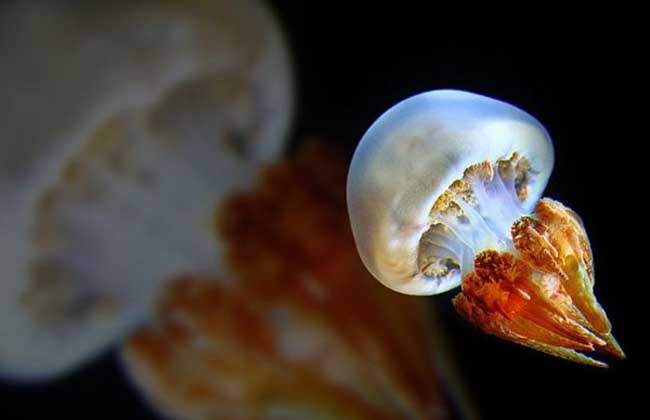
Sea jelly is the collective name for the genus Rhopilema in the family Rhizostomatidae, order Rhizostomeae, class Scyphozoa. Its bell is raised and shaped like a steamed bun, reaching 50 cm in diameter and up to about 1.5 m at maximum. Its gelatinous substance is relatively firm, usually blue-green, with milky-white tentacles and eight oral arms split into many lobes. It is widely distributed in the seas north and south of China, can be eaten, and can also be used as medicine. Now let us take a look at whether sea jelly is actually a jellyfish!
Is jellyfish the same as sea jelly?
Sea jelly is a kind of jellyfish, but jellyfish are not all sea jelly. Sea jelly belongs to the phylum Coelenterata, class Scyphozoa, order Rhizostomeae, family Rhizostomatidae, genus Rhopilema. Therefore, sea jelly is a type of jellyfish. Since ancient times it has been listed as one of the "eight treasures of seafood" and has high economic value. After processing with salt and alum, sea jelly sells well abroad. As a natural resource put to use, sea jelly has a long history in China. As early as more than 1,700 years ago in the Jin Dynasty, there were records of salted sea jelly being eaten.
Is sea jelly poisonous?
Sea jelly is poisonous. After sea jelly venom stings the human body, it can cause injuries of varying degrees. For example, the sea wasp jellyfish has nematocysts that can secrete a cobra-like venom and is the most harmful to humans, capable of causing death within 5 minutes after a sting. The Portuguese man o' war contains a "hypnotic toxin," which is composed of polypeptides, proteins and small-molecule nitrogen-containing substances. After stinging a person, the patient may take many days to eliminate the pain. Along China's coast, the sand sea jelly, which drifts with cold currents in the Yellow Sea area, is common and can secrete peptide toxin. Sea jelly toxin is stored and distributed within nematocysts. One gram of nematocysts contains 55 million individual nematocysts. Generally, after harvesting, its toxicity can rapidly disappear after processing.
What do sea jelly eat?
Sea jelly does not feed during the planula larva stage. It begins feeding only when it metamorphoses into the 4-tentacle scyphistoma larva. The tentacles are the predatory organs, feeding on small zooplankton. The ephyra larva has 1 square mouth and feeds on small plankton. As it grows and develops, oral arms form. When it develops to a bell diameter of about 20 mm, the central mouth closes, and it becomes a young sea jelly. From the young sea jelly stage to the adult stage, feeding is carried out through many sucking mouths that appear on the oral arms and scapular plates to feed on small zooplankton. There are many types of prey, mainly copepods, cladocerans, ostracods, cumaceans, amphipods, ciliates, mollusk larvae and other planktonic larvae.