What is the difference between snakes, pythons, boas, and vipers? Teach you to tell them apart quickly
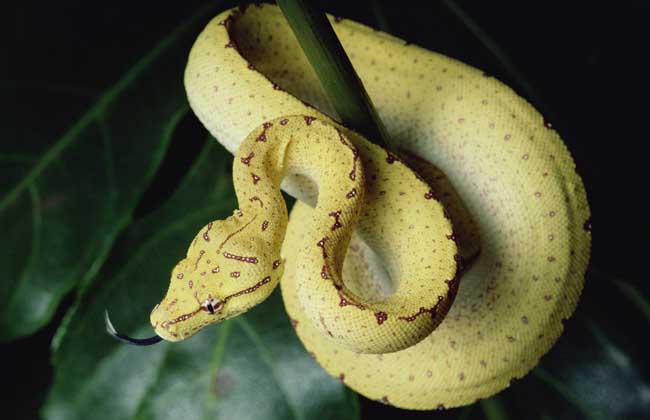
Snakes refer to all species in the suborder Serpentes of the order Squamata. The suborder Serpentes is divided into three infraorders: Scolecophidia, Henophidia, and Caenophidia. Scolecophidia is a type of non-venomous snake in the family Typhlopidae under the suborder Serpentes. Henophidia includes pythons, boas, and others, while Caenophidia includes colubrids, cobras, and vipers. Now that we have clarified the classification of snakes, pythons, boas, and vipers, let us take a look at their differences!
Snakes
Snakes are the general term for reptiles with degenerated limbs, belonging to the class Reptilia, order Squamata, suborder Serpentes. Their whole bodies are covered in scales, and all snakes are carnivorous animals. At present, there are more than 3,000 species of snakes in the world. They have slender bodies, degenerated limbs, no movable eyelids, no ear openings, no limbs, no pectoral girdle, and scales covering the body surface. Some are venomous, but most are non-venomous. All snakes in the world are carnivorous. The largest snake ever known is Titanoboa, 15 m long and weighing more than 1 ton. The largest known extant snake is the green anaconda, which can reach 6 m in length and 100 kg, while the smallest is the Barbados threadsnake, only 11 cm long.
Pythons
Pythons are a type of relatively large snake. Their main feature is a thick and long body. They are the largest relatively primitive snakes in the world and have traces of a pelvic girdle and hind limbs. Near the cloaca of male snakes there are obvious keratinous spurs from degenerated hind limbs, but these are more degenerated in females and easily overlooked. They often feed on small muntjacs, small wild boars, rabbits, squirrels, and poultry. They have a large appetite and can swallow an animal equal to or heavier than their own body weight at one time. They have strong digestive power and can digest everything except the fur of the prey, but after eating their fill they can go without food for several months. They have constricting ability, often climbing and coiling around tree trunks with the rear part of the body, and they are also good at swimming.
Boas
Boas are a type of huge snake with a wide distribution, mainly in the Americas, with a few distributed on the island of Madagascar and the island of New Guinea. The better known one is the green anaconda distributed in northern South America, which is the largest extant snake. There is also the boa constrictor, which is also widely distributed and found in most tropical regions of the Americas, with as many as more than 10 subspecies. Some subspecies of the common boa are relatively large members of the boas, with average body lengths ranging from about 1 m to 4 m, while some subspecies are very small, only 1.5 m long.
Vipers
Vipers is the collective name for snakes in the family Viperidae. Viperidae is a venomous snake family distributed throughout the world. Vipers and pit vipers are the representatives of this family. They have thick bodies and thin tails, and triangular heads. Their venom contains hemotoxins, and some species also contain neurotoxins. Their fangs are relatively long and can pierce deeply into the prey's body to inject venom efficiently. There is a joint between the fangs and the upper jaw, allowing them to fold down in the mouth. After human poisoning, the symptoms are roughly headache, vomiting, abdominal pain, diarrhea, dizziness, fainting, or spasms.