What is the difference between Spanish mackerel and black carp? Mainly look at these aspects
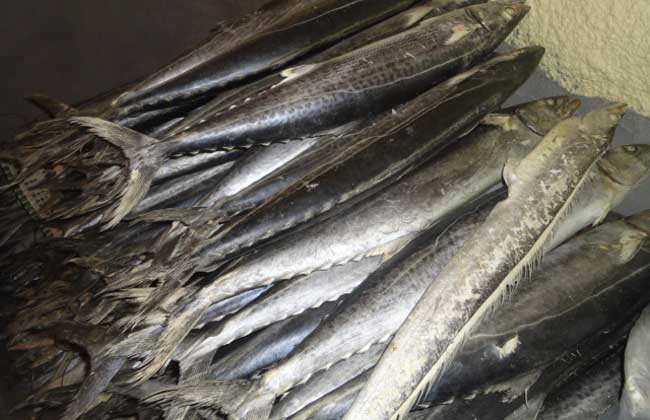
The scientific name of the Spanish mackerel is Japanese Spanish mackerel (Scomberomorus niphonius), commonly known as swallow fish, flat mackerel, bamboo mackerel, sharp-headed mackerel, green arrow, etc. It is produced in the Bohai Sea, Yellow Sea and East China Sea of China. The black carp is mainly distributed in the plain areas south of the Yangtze River in China, and is an important fishery resource in the middle and lower reaches of the Yangtze River and the lakes along the river, as well as a major breeding target in various lakes and ponds. Now let us take a look at the differences between Spanish mackerel and black carp!
The difference in family and genus between Spanish mackerel and black carp
1. Spanish mackerel: The Spanish mackerel is a warm-water upper-layer fish of the animal kingdom, phylum Chordata, subphylum Chordata, class Osteichthyes, order Perciformes, family Scombridae, genus Scomberomorus.
2. Black carp: The black carp is a freshwater fish of the animal kingdom, phylum Chordata, class Osteichthyes, order Cypriniformes, family Cyprinidae, genus Mylopharyngodon.
The morphological difference between Spanish mackerel and black carp
1. Spanish mackerel: The body of the Spanish mackerel is long and laterally compressed, spindle-shaped, generally 25-50 cm in body length and 300-1000 g in weight, with the largest individual reaching up to 1 m in length and more than 4.5 kg in weight. The caudal peduncle is slender, with 3 raised ridges on each side, of which the central ridge is the longest and highest. The head length is greater than the body height. The mouth is large and slightly oblique, with sharp and large teeth arranged sparsely. The body is covered with small round scales, and the lateral line is irregularly wavy. There are black round spots in the center of the sides of the body. There are 2 dorsal fins; the first dorsal fin is long with 19-20 fin spines, and the second dorsal fin is shorter. There are 8-9 small fins after each of the dorsal and anal fins. The pectoral and pelvic fins are short and small, without hard spines. The caudal fin is large and deeply forked.
2. Black carp: The body of the black carp is long, slightly cylindrical, with a flat and round abdomen and no ventral keel. The tail is slightly laterally compressed. The snout is blunt, but more pointed than that of the grass carp. The posterior end of the maxilla extends below the anterior margin of the eye. The interorbital space is about 3.5 times the eye diameter. There are 15-21 gill rakers, short and small, papilliform. There is one row of pharyngeal teeth, generally asymmetrical on the left and right, with a broad and large tooth surface, molar-shaped. The scales are large and round. There are 39-45 lateral line scales. The body is blue-black, darker on the back, and all fins are gray-black, with the paired fins especially dark. The body length can reach 145 cm.
The difference in origin between Spanish mackerel and black carp
1. Spanish mackerel: The Spanish mackerel is distributed in the western North Pacific. In China, it is produced in the East China Sea, Yellow Sea and Bohai Sea. The main fishing grounds are Zhoushan, the offshore waters of Lianyungang and the southern coast of Shandong. Each year, April to June is the spring fishing season, July to October is the autumn fishing season, and May to June is the peak season.
2. Black carp: The black carp is mainly distributed in the plain areas south of the Yangtze River in China, and is relatively scarce north of the Yangtze River. It is an important fishery resource in the middle and lower reaches of the Yangtze River and the lakes along the river, as well as a major breeding target in various lakes and ponds. It is one of the "four major Chinese carps" of freshwater aquaculture in China.
The difference in effects between Spanish mackerel and black carp
1. Spanish mackerel: The flesh of the Spanish mackerel is delicate, delicious and nutritious. It has the effect of tonifying qi and calming cough, has a certain therapeutic effect on weakness and cough with asthma, and also has dietary therapy functions such as refreshing the mind and preventing aging. Regular consumption will have a certain auxiliary therapeutic effect on treating anemia, premature aging, malnutrition, postpartum weakness and neurasthenia.
2. Black carp: The black carp is a food rich in protein and very low in fat. It contains abundant nucleic acids, can delay aging, and its nutrients are easily absorbed by the human body, so it can be used for dietary therapy. It is rich in trace elements such as selenium and iodine, so it has anti-aging and anti-cancer effects. It also contains eicosapentaenoic acid and docosahexaenoic acid, which have effects such as dilating blood vessels and preventing blood coagulation, and are extremely importantly related to brain cells, especially the growth and development of brain nerve conduction and synapses.