What is the difference between Spanish mackerel and Pacific saury? This article teaches you to tell the two fish apart
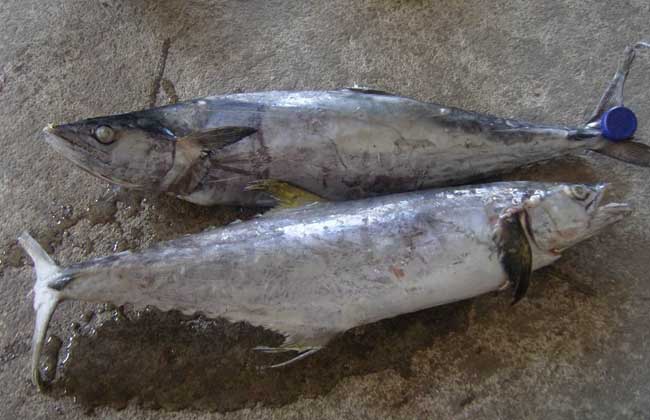
The scientific name of the Spanish mackerel is Scomberomorus niphonius, commonly known as yan yu, ban ba, zhu jiao, jiantou majia, qing jian, etc. It is produced in China's Bohai Sea, Yellow Sea and East China Sea. The Pacific saury is the only species in the genus Cololabis of the family Scomberesocidae, order Beloniformes, and is a very common fish species in the cuisine of some East Asian regions. Let's take a look below at the differences between Spanish mackerel and Pacific saury!
Differences in family and genus between Spanish mackerel and Pacific saury
1. Spanish mackerel: The Spanish mackerel is a warm-water upper-layer fish of the animal kingdom, phylum Chordata, subphylum Chordata, class Osteichthyes, order Perciformes, family Scombridae, genus Scomberomorus.
2. Pacific saury: The Pacific saury is a surface migratory fish of the animal kingdom, phylum Chordata, subphylum Vertebrata, class Osteichthyes, subclass Actinopterygii, order Beloniformes, suborder Belonoidei, family Scomberesocidae, genus Cololabis.
Differences in morphology between Spanish mackerel and Pacific saury
1. Spanish mackerel: The body of the Spanish mackerel is long and laterally compressed, spindle-shaped, generally 25-50 cm in body length and 300-1000 g in weight, with the largest individuals reaching up to 1 m in length and more than 4.5 kg in weight. The caudal peduncle is slender, with 3 raised ridges on each side, of which the central ridge is long and the highest. The head length is greater than the body depth. The mouth is large and slightly oblique, with sharp, large teeth arranged sparsely. The body is covered with small cycloid scales, and the lateral line is irregularly wavy. There are black round spots in the center of the sides of the body. There are 2 dorsal fins; the first dorsal fin is long with 19-20 spines, and the second dorsal fin is shorter. There are 8-9 finlets behind both the dorsal fin and the anal fin. The pectoral and pelvic fins are short and small, without hard spines. The caudal fin is large and deeply forked.
2. Pacific saury: The body of the Pacific saury is slender and round, rod-shaped. There are 5-6 finlets behind the dorsal fin and 6-7 free finlets behind the anal fin. There are many protrusions on both jaws, but they are not in the form of a long ridge, and the teeth are thin and weak. The back of the body is dark blue, the belly is silvery white, and the tip of the snout and the rear part of the caudal peduncle are slightly yellow. The back and upper sides of the body are dark grayish blue, and the ventral and lateral sides are silvery white. There is a silvery blue longitudinal band in the center of the sides of the body. The body length can reach 35 cm.
Differences in origin between Spanish mackerel and Pacific saury
1. Spanish mackerel: The Spanish mackerel is distributed in the western North Pacific. In China, it is produced in the East China Sea, Yellow Sea and Bohai Sea. The main fishing grounds are Zhoushan, the offshore waters of Lianyungang and the coastal areas of southern Shandong. Each year, April to June is the spring fishing season, July to October is the autumn fishing season, and May to June is the peak season.
2. Pacific saury: The Pacific saury is distributed in the North Pacific region, including the Sea of Japan, Alaska, the Bering Sea, California, Mexico and other sea areas. It ranges from 67 to 18 degrees north latitude and from 137 degrees east longitude to 108 degrees west longitude. The preferred water temperature is 15-18 degrees Celsius. In China, it is mainly distributed in the Yellow Sea and along the eastern coast of Shandong.
Differences in benefits between Spanish mackerel and Pacific saury
1. Spanish mackerel: The flesh of the Spanish mackerel is delicate, delicious and rich in nutrients. It has the effects of tonifying qi and calming cough, and has a certain therapeutic effect on weakness and coughing with asthma. It also has dietary therapeutic functions such as refreshing the mind and preventing aging. Regular consumption may have a certain auxiliary therapeutic effect on treating anemia, premature aging, malnutrition, postpartum weakness and neurasthenia.
2. Pacific saury: The Pacific saury is rich in protein and fatty acids, and is a high-fat, high-protein marine fish. According to analysis, the Pacific saury contains unsaturated fatty acids essential to the human body, such as eicosapentaenoic acid and docosahexaenoic acid. EPA and DHA have the effect of inhibiting high blood pressure, myocardial infarction and arteriosclerosis.