What is the difference between crickets and katydids? A quick guide to telling them apart
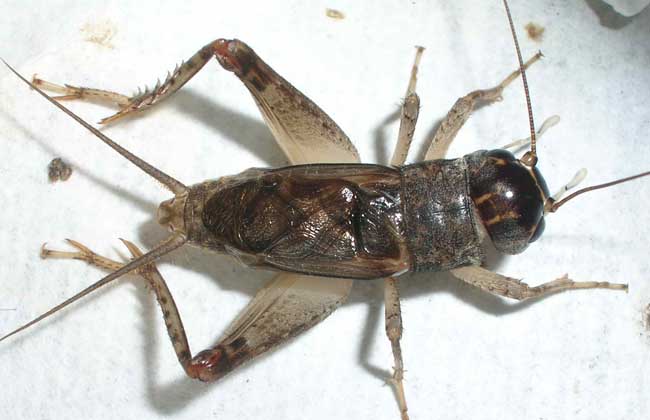
The cricket is also known as cuzhi, quzhi, yinqiong, ququ and so on, while the katydid is also known as biezong guoguo, zhongsi, zhongsi'er and so on. Crickets and katydids are two insects that are easily confused. They appear at the same time and have similar looks, body shapes and calls. The biggest and most obvious difference between the two is the color of their bodies. Let's take a look below at what the differences between crickets and katydids are!
Differences in family and genus between crickets and katydids
1. Cricket: The cricket is an insect of the animal kingdom, phylum Arthropoda, subphylum Mandibulata, class Insecta, subclass Pterygota, order Orthoptera, suborder Ensifera, family Gryllidae.
2. Katydid: The katydid is an insect of the animal kingdom, phylum Arthropoda, subphylum Mandibulata, class Insecta, subclass Pterygota, order Orthoptera, suborder Ensifera, family Tettigoniidae.
Differences in alternative names between crickets and katydids
1. Cricket: The cricket is also known as cuzhi, ququ, night-singing insect (because it sings at night), general insect, autumn insect, fighting cock, cuzhi, quzhi, ground trumpet, kitchen chicken, Sun Wang, tuzhe and so on, while "monk" is the name for a cricket before it grows both wings.
2. Katydid: The katydid is also known as biezong guoguo, zhongsi, zhongsi'er, youzi, youhulu (at the junction of Luohe and Pingdingshan in Henan, and in the Xuzhou area of northern Jiangsu), jiaoying (from Zhangjiakou in western Beijing to Shanxi), tuzhazi (Nanchong, Sichuan), zaoma (Dazhou, Sichuan, and Quxian, Sichuan), tugouzi (Hengyang, Hunan), guaizi (northern Shandong) and so on.
Differences in morphology between crickets and katydids
1. Cricket: Most crickets are small to medium-sized, with a few large ones, and are yellow-brown to black-brown. The head is round, the thorax is broad, and the antennae are slender. They have chewing mouthparts, and some have well-developed mandibles that are strong for biting and fighting. Each leg has 3 pairs of tarsal segments; the front and middle legs are similar and equal in length, while the hind legs are well developed and good at jumping; the auditory organ on the front tibia is larger on the outer side than on the inner side. The ovipositor is exposed. Both males and females have a pair of tail hairs at the end of the abdomen. Males have a pair of short rod-like abdominal spikes at the end of the abdomen. Females are larger, with a bare needle-like or spear-like ovipositor and small wings. Males have a sound-producing organ on the front wings, composed of a scraper on the wing veins, a file vein and a mirror.
2. Katydid: Male katydids have a body length of 35-41 mm, and females 40-50 mm. The whole body is bright green or yellow-green. The head is large, and the face is nearly flat and straight. The antennae are brown, filamentous, and longer than the body. The compound eyes are oval. The pronotum is well developed, covering the mesothorax and metathorax, and is shield-shaped. The veins of the front wings are brown. Males have short wings with a sound-producing organ, while females only have wing buds and a saber-shaped ovipositor at the end of the abdomen, about 2.5 times the length of the pronotum. The base of the front tibia has an auditory organ, and the lower edge of the femora of the 3 pairs of legs has black short spines and is serrated. The hind legs are well developed and good at jumping, and the femora often have brown longitudinal faint stripes.
Differences in family and genus between crickets and katydids
1. Cricket: Crickets living in the wild generally feed on tender buds, tender leaves and roots. They are important agricultural pests in Northeast China, North China, the lower reaches of the Yangtze River and South China, damaging the roots, stems, leaves, fruits and seeds of various crops, with especially serious damage to seedlings. In the south, peanut seedlings damaged by crickets reach 11%-30%, and they also harm corn, jute, tobacco, cotton, soybeans and cassava, often causing missing plants and affecting the harvest.
2. Katydid: The katydid's food is very rich, including plant types, insect types and omnivorous types, and it is more carnivorous than herbivorous. Natural katydids mainly live by preying on insects and field pests, and are guardians of the fields and experts at catching pests.