What Is the Difference Between a Cricket and a "Ququ"? This Article Teaches You to Tell Them Apart
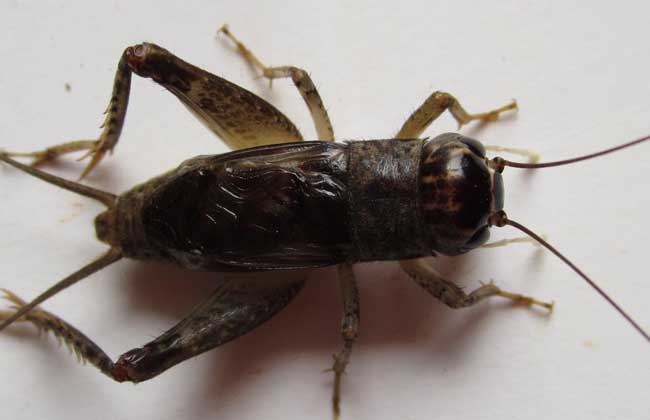
There is no difference between a cricket and a "ququ": a cricket is a ququ, and a ququ is a cricket; they are simply called by different names. The cricket is an invertebrate of the family Gryllidae in the order Orthoptera of the class Insecta, also known as the "cu zhi," with common names such as ququ, night-singing insect, general insect, autumn insect, fighting cock, cu zhi, qu zhi, ground trumpet, stove chicken, Sun Wang, and tu zhe, while "monk" is the name for a cricket before it grows wings; it is an ancient insect with a history of at least 140 million years.
Most crickets are small to medium-sized, with a few large. They range from yellowish brown to dark brown. The head is round, the thorax broad, and the antennae slender. They have chewing mouthparts. In some, the mandibles are well developed and stronger for biting and fighting. Each leg has 3 pairs of tarsal segments; the front and middle legs are similar and equal in length. The hind legs are well developed and good at jumping. The auditory organ on the front tibia is larger on the outer side than on the inner side. Both males and females have a pair of tail hairs at the end of the abdomen. The male has a pair of short rod-like abdominal spines at the end of the abdomen. The female is larger, with a needle-like or spear-like ovipositor exposed and small wings. The male has a sound-producing organ on the front wings, composed of a scraper on the wing veins, a file vein, and a sounding mirror. The front wings are raised and rubbed left and right, thereby vibrating the sounding mirror and producing a tone.
Cricket reproduction goes through the process of egg -> nymph -> adult, belonging to incomplete metamorphosis. At the end of the cricket's abdomen there is an ovipositor, which is inserted into the soil when laying eggs. Common crickets have one generation each year and overwinter as eggs in the soil. Eggs are laid singly in the soil of weed-rich, sunny field ridges, grave sites, and the edges of grass piles. Overwintering eggs are laid in October and hatch into nymphs in April to May of the following year. The peanut cricket has 1 generation per year in Guangxi; nymphs overwinter in earthen burrows, emerge in March to April of the next year, and damage peanut seedlings. Newly hatched nymphs live in groups; after a few days they go out to forage and each digs its own burrow. In early June they emerge as adults and continue to cause damage.
Cricket nymphs molt 6 times (that is, 6 instars), each time taking 3 to 4 days, totaling 20 to 25 days before emerging as adults. Adults live 141 to 151 days. Adults and nymphs burrow as deep as 0.6 m or even deeper. A newly built burrow is very simple, with only one escape hole. Before laying eggs, 3 to 5 additional branch burrows for egg-laying are added, and they go out to search for tender peanut stems, leaves, and seeds and carry them back into the burrow for storage to feed the newly hatched nymphs.
Crickets live in burrows and often inhabit the ground surface, under bricks and stones, in earthen burrows, and among grass. They are active at night and are omnivorous, eating various crops, saplings, vegetables, and fruits. Some cricket behaviors can be triggered by specific external stimuli. They are solitary by nature and generally live independently, never allowing another cricket to live with them (during the mating period, a male also lives with another female), so they cannot tolerate each other; once they meet, they will bite and fight. One male cricket can live together with multiple female crickets.