What is the difference between quail and pigeon? This article teaches you to tell them apart quickly
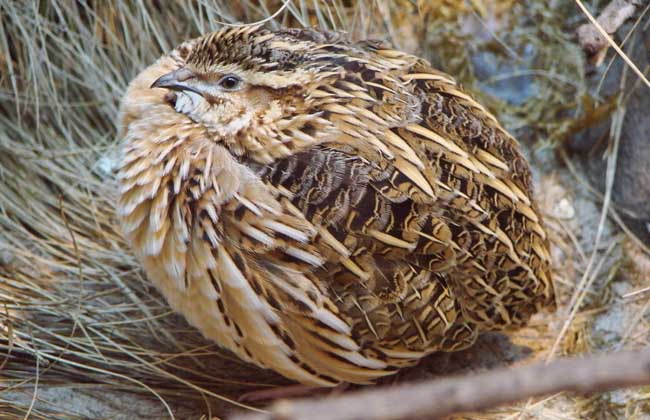
The quail is also known as the quail bird, Wan quail, Ben quail, etc. It usually lives in warm climates and is a species in the Phasianidae family with relatively weak migration ability. The pigeon is a very common bird, widely kept around the world, and is the collective name for hundreds of bird species in the order Columbiformes, family Columbidae. The pigeon we usually refer to is just one species in the genus Columba. Now let us take a look at the differences between quail and pigeon!
Differences in family and genus between quail and pigeon
1. Quail: The quail is a bird in the animal kingdom, phylum Chordata, subphylum Vertebrata, class Aves, order Galliformes, family Phasianidae, genus Coturnix.
2. Pigeon: The pigeon is a bird in the animal kingdom, phylum Chordata, subphylum Vertebrata, class Aves, subclass Neornithes, order Columbiformes, family Columbidae, subfamily Columbinae, genus Columba.
Differences in appearance between quail and pigeon
1. Quail: The quail has a body length of 18 cm. It is small and round, brown with obvious straw-yellow lanceolate stripes and irregular markings. Both males and females have reddish-brown and black horizontal stripes on the upper body. The male bird has a dark brown chin, with the midline of the throat curving upward on both sides to the ear coverts, closely adjoining a buff collar. The buff supercilium contrasts clearly with the brown crown and eye stripe. The female also has similar patterns, but the contrast is less obvious.
2. Pigeon: The pigeon has a broad, flat top of the head, and a large, wide, deep body. It measures 53-56 cm from beak to tail tip, with a chest circumference of 38-40 cm. The beak is thick, long, and slightly curved. The eye ring of adult pigeons is red or flesh-red, while that of young pigeons is pink. The Runt pigeon has a long, thick neck, a long, broad back, a long tail with a purely rounded tip, full thighs, and relatively short tarsi and toes. There are two types, those without foot feathers and those with foot feathers, and those without foot feathers are the best. The leg color is dark red. Its feather colors are quite varied, including white, black, red, and gray with two bars, and the white Fantail pigeon is considered the best.
Differences in reproduction between quail and pigeon
1. Quail: Male and female quails do not form fixed pair bonds, but instead have a polygynous mating system. Usually, not long after arriving at the breeding site, the male birds establish territories and begin courtship calls. During the breeding season, males are very aggressive.
2. Pigeon: For pigeons, the male and female build the nest, incubate the eggs, and raise the chicks together. After mating, the pigeons go out to look for nesting materials and build a nest. Male pigeons with good production performance also show "driving the mate" behavior. If the female pigeon leaves the nest, the male will chase the female back to the nest to lay eggs. After the female lays eggs, the male and female take turns incubating. The male enters the nest to incubate at 9 a.m. every day, and the female is swapped out to leave the nest to forage and move about. At 5 p.m., the female enters the nest to incubate until 9 a.m. the next day. In this way, the male and female alternate, day after day, until the squabs hatch. After the young pigeons hatch, the male and female together secrete pigeon milk to feed the young.
Differences in benefits between quail and pigeon
1. Quail: Quail meat is a typical high-protein, low-fat, low-cholesterol food, suitable for middle-aged and older people, as well as patients with high blood pressure and obesity, and is praised as "animal ginseng." Quail eggs are rich in high-quality lecithin, various hormones, choline, and other components, and have a certain auxiliary therapeutic effect on neurasthenia, stomach disease, and lung disease. Quail eggs contain phenylalanine, tyrosine, and arginine, which have an important effect on the synthesis of thyroxine and adrenaline, tissue protein, and pancreatic activity.
2. Pigeon: Pigeons have extremely high nutritional value. They are both a precious delicacy and a high-grade tonic. Pigeon meat is a high-protein, low-fat food, with a protein content of 24.47%. Its content of minerals such as calcium, iron, and copper, as well as vitamins A, B, and E, is higher than that of chicken, fish, beef, and mutton.