What is the difference between the Radermachera sinica and the Pachira aquatica? A quick guide to telling these two green plants apart
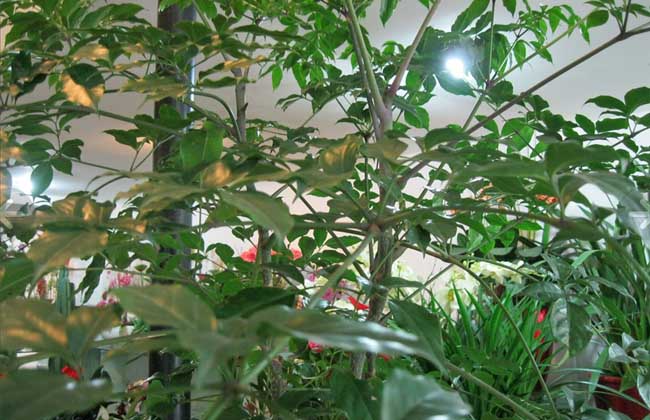
The Radermachera sinica is also known as the snake tree, bean-pod tree, Jieguliangsan, and ox-tail tree, among other names. It likes high temperatures, high humidity, and plenty of sunlight; it tolerates heat, fears the cold, prefers moisture, and dislikes dryness. The Pachira aquatica is also known as the Malabar chestnut, Central American kapok, goose-foot money, and Malabar chestnut, among other names. It likes high temperatures and high humidity, and does not tolerate frost or dryness. Let us take a look below at the difference between the Radermachera sinica and the Pachira aquatica!
The difference in family and genus between the Radermachera sinica and the Pachira aquatica
1. Radermachera sinica: The Radermachera sinica is a small tree in the plant kingdom, phylum Angiosperms, class Dicotyledons, subclass Sympetalae, order Tubiflorae, family Bignoniaceae, tribe Tecomeae, genus Radermachera.
2. Pachira aquatica: The Pachira aquatica is an evergreen small tree in the plant kingdom, phylum Angiosperms, class Dicotyledons, subclass Archichlamydeae, order Malvales, suborder Malvineae, family Bombacaceae, genus Pachira.
The difference in morphology between the Radermachera sinica and the Pachira aquatica
1. Radermachera sinica: The Radermachera sinica reaches up to 10 m tall, and its petioles, rachis, and inflorescences are all hairless. It has bipinnately compound leaves, rarely tripinnately compound leaves, a terminal panicle, a calyx that is closed in bud, a bell-shaped funnelform corolla, a smooth ovary, thinly leathery fruit skin, and elliptical seeds. Its flowering period is from May to September, and its fruiting period is from October to December.
2. Pachira aquatica: The Pachira aquatica is 4-5 m tall, with a rather loose crown and chestnut-brown young branches. Its leaflets are oblong to obovate-oblong, its flowers are solitary at the top of branches in leaf axils, its pedicels are thick and strong, and its petals are pale yellow-green. Its capsule is nearly pear-shaped, its fruit skin is thick, and its seeds are large and irregularly ladder-like wedge-shaped. Its flowering period is from May to November, and its fruits mature successively; after the seeds fall to the ground, they sprout naturally.
The difference in origin between the Radermachera sinica and the Pachira aquatica
1. Radermachera sinica: The Radermachera sinica likes high temperatures, high humidity, and plenty of sunlight; it tolerates heat, fears the cold, prefers moisture, and dislikes dryness. It is native to Taiwan, China, Guangdong, Hainan, Guangxi, Guizhou, Yunnan, and other places, and is also distributed in India, the Philippines, Bhutan, and other countries.
2. Pachira aquatica: The Pachira aquatica likes warm, humid, sunny, or slightly shaded environments, and dislikes direct sun exposure. It is native to Costa Rica in Latin America, Australia, and some small islands in the Pacific, and is also distributed in the tropical regions of southern China.
The difference in uses between the Radermachera sinica and the Pachira aquatica
1. Radermachera sinica: The Radermachera sinica is a small to medium-sized potted plant that can be placed on balconies, in bedrooms, entrance halls, and other places. Its leaves are dense and verdant, full of vitality and energy, and it can serve as a plant that boosts prosperity, bringing people an auspicious meaning of happiness.
2. Pachira aquatica: The Pachira aquatica does not only represent wealth; it is also an important home decoration. Paired with different home decor, it creates different styles. It can absorb toxic gases and release oxygen through photosynthesis, can relatively effectively absorb carbon monoxide and carbon dioxide pollution, and has a certain effect in resisting the exhaust gases produced by burning tobacco.