What is the difference between the Happiness Tree and the Fortune Tree? A quick guide to telling them apart
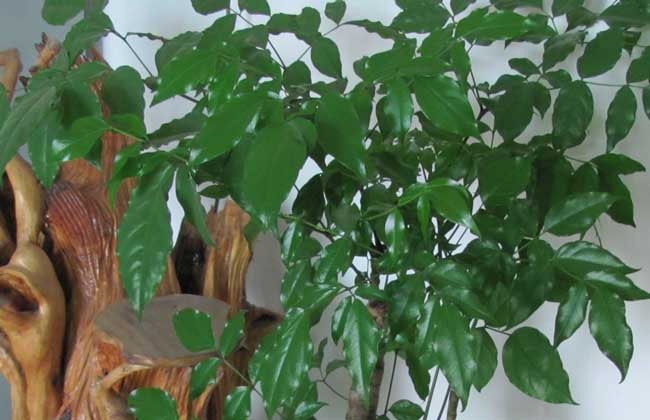
The Happiness Tree is also known as the Snake Tree, Bean-pod Tree, Jiegu LiangSan, and Ox-tail Tree, among other names. It prefers a hot, humid environment with plenty of sunlight, tolerates high temperatures, fears the cold, likes moisture, and dislikes dryness. The Fortune Tree is also known as the Violet-flowered Sophora, Shougong Sophora, Sophora Flower Tree, Sophora Flower Wood, Bean Sophora, Golden Medicine Tree, Purple-flowered Sophora, and Fragrant-flowered Sophora, among other names. Now let us take a look together at the differences between the Happiness Tree and the Fortune Tree!
Differences in family and genus between the Happiness Tree and the Fortune Tree
1. Happiness Tree: The Happiness Tree is a small tree in the plant kingdom, phylum Angiospermae, class Dicotyledoneae, subclass Sympetalae, order Tubiflorae, family Bignoniaceae, tribe Tecomeae, genus Radermachera.
2. Fortune Tree: The Fortune Tree is a deciduous tree in the plant kingdom, phylum Angiospermae, class Dicotyledoneae, order Fabales, family Fabaceae, genus Sophora.
Differences in morphology between the Happiness Tree and the Fortune Tree
1. Happiness Tree: The Happiness Tree can reach 10 m tall. The petioles, leaf rachis, and inflorescences are all hairless. It has bipinnately compound leaves, rarely tripinnately compound leaves, a terminal panicle, a calyx that is closed in bud, a bell-shaped funnelform corolla, a smooth ovary, a thin leathery pericarp, and elliptical seeds. The flowering period is from May to September, and the fruiting period is from October to December.
2. Fortune Tree: The Fortune Tree can reach 15 m tall. The bark is light gray. It has bipinnate to tripinnate compound leaves. The middle leaflets are opposite, ovate or ovate-lanceolate. The flowers open at night. The inflorescence is upright, a terminal panicle. The corolla is bell-shaped and funnelform. The capsule is leathery, cylindrical and elongated like a kidney bean. The flowering period is from July to August, and the fruiting period is from August to October.
Differences in origin between the Happiness Tree and the Fortune Tree
1. Happiness Tree: The Happiness Tree prefers a hot, humid environment with plenty of sunlight, tolerates high temperatures, fears the cold, likes moisture, and dislikes dryness. It is native to Taiwan, China, Guangdong, Hainan, Guangxi, Guizhou, Yunnan, and other places, and is also distributed in India, the Philippines, Bhutan, and other countries.
2. Fortune Tree: The Fortune Tree is native to China and is widely cultivated in provinces and regions across the north and south, and is especially common in North China and the Loess Plateau region. It is also distributed in Japan and Vietnam, and is found wild in Korea. It has been introduced and planted in countries across Europe and the Americas.
Differences in uses between the Happiness Tree and the Fortune Tree
1. Happiness Tree: The Happiness Tree is a small to medium-sized potted plant that can be placed on balconies, in bedrooms, in entrance halls, and other places. Its leaves are dense and verdant, full of vitality and energy. It can serve as a plant that boosts prosperity and brings people an auspicious meaning of happiness.
2. Fortune Tree: The Fortune Tree has a graceful crown and fragrant flowers. It is a street tree and an excellent nectar plant, and has the effect of beautifying the environment and purifying the air. Its flowers and pods are used as medicine, with cooling, astringent, bleeding-stopping, and blood-pressure-lowering effects. Its leaves and root bark have heat-clearing and detoxifying effects and can treat sores and toxins.