What Is the Difference Between Pine Nuts and Hazelnuts? A Guide to Telling Them Apart Easily
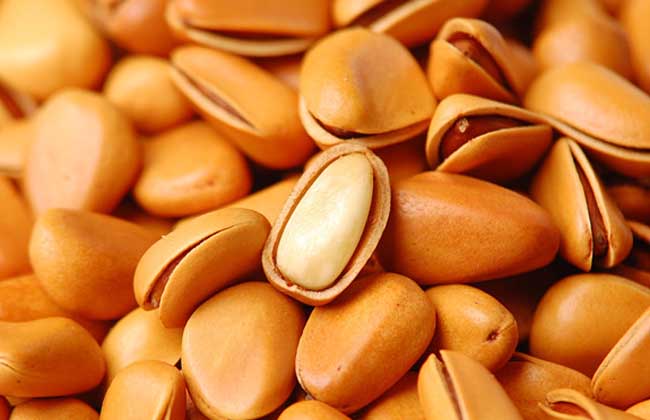
Pine nuts are the seeds of pine trees, also known as Korean pine nuts, fruit pine nuts and so on. They are not only a delicious food but also an excellent food therapy ingredient, which is why they are called the "longevity nut." Hazelnuts, also known as flat hazels, hazel nuts, mountain chestnuts and so on, are one of the important nut tree species and are the seed kernels of the hazel, a plant in the birch family. Let's take a look below at the differences between pine nuts and hazelnuts!
Differences in Family and Genus Between Pine Nuts and Hazelnuts
1. Pine nuts: Pine nuts come from evergreen trees in the plant kingdom, Pinophyta, Pinopsida, Pinales, Pinales, Pinaceae, Pinus.
2. Hazelnuts: Hazelnuts come from shrubs or small trees in the plant kingdom, Angiosperms, Dicotyledoneae, Fagales, Betulaceae, Corylus.
Differences in Morphology Between Pine Nuts and Hazelnuts
1. Pine nuts: Pine trees grow up to 45 m tall with a diameter at breast height of 1.5 m, and the bark is reddish-brown, grayish-brown on the lower part. The needles are in bundles of 2, rarely in bundles of 3, 12-20 cm long, slender and soft, slightly twisted, with stomatal lines on both sides and fine serrations along the edges. They are monoecious, with unisexual cones; the small cones grow rapidly after fertilization in the second spring, and the seeds have long wings at the upper part, with the seed wing growing joined to the seed.
2. Hazelnuts: The bark of the hazel tree is dark gray, brown or grayish-brown; the buds are ovate with many imbricate bud scales; the leaves are alternate and simple with pinnate veins; the flowers are unisexual and the plant is monoecious; there are 2 styles; the fruit involucre is bell-shaped or tubular; the nut is spherical with 1 seed and fleshy cotyledons.
Differences in Origin Between Pine Nuts and Hazelnuts
1. Pine nuts: There are about 80 or more species in the genus Pinus, distributed in the Northern Hemisphere, from as far north as the Arctic region to as far south as North Africa, Central America, Indochina and areas south of the equator in Sumatra. They are the main tree species in the world for timber and pine resin production. China has 22 species and 10 varieties, distributed almost throughout the country, among which Korean pine, Huashan pine, Yunnan pine, Masson pine, Chinese pine, Mongolian Scots pine and others are the main tree species in China's forests.
2. Hazelnuts: In China, hazelnuts are mainly of two types: large-fruited hybrid hazel and wild flat hazel. Large-fruited hybrid hazel is distributed across Heilongjiang Province, Jilin Province, Liaoning Province, Inner Mongolia Autonomous Region, Shandong Province, Shanxi Province, Henan Province, Hebei Province, the ** Uyghur Autonomous Region, Qinghai Province, Ningxia Hui Autonomous Region, Jiangsu Province, northern Anhui Province and other areas. China's wild flat hazel originated in Tieling City, Liaoning Province, and is distributed across the northern provinces, mostly in Tieling City.
Differences in Benefits Between Pine Nuts and Hazelnuts
1. Pine nuts: Pine nuts are sweet in taste and warm in nature, entering the liver, lung and large intestine meridians. They have the benefits of nourishing yin and body fluids, tonifying qi and blood, and moistening dryness and lubricating the intestines. They are suitable for the elderly with weak constitution, dry and hard stools, chronic bronchitis, prolonged cough without phlegm, cardiovascular and cerebrovascular diseases and other conditions.
2. Hazelnuts: Hazelnuts are sweet in taste and neutral in nature, entering the spleen and stomach meridians. They have the benefits of tonifying the spleen and stomach and boosting qi and strength. They are suitable for people with spleen and stomach qi deficiency, diarrhea and loose stools, poor appetite, little food intake and fatigue, and chronic dysentery.