What Is the Difference Between Matsutake and Truffle? Understanding the Differences Between the Two in One Article
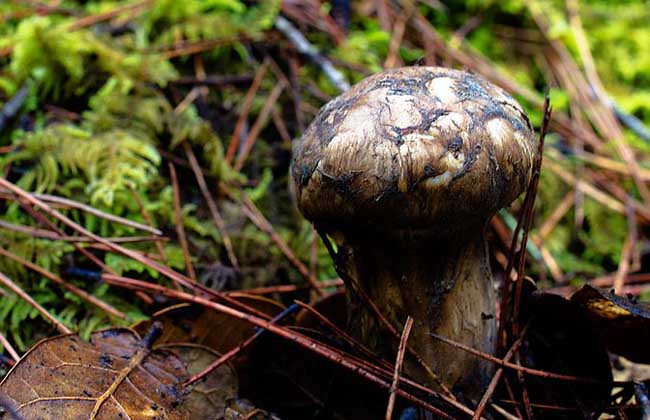
Matsutake is also known as songkoutake, songxun, hejun, taijun, and other names. It is a rare and precious natural medicinal mushroom in the world, hailed as the “king of mushrooms.” Truffle is a general term for a type of fungus, with about 10 different varieties. It is usually an annual fungus that grows under pine trees, oak trees, and holm oak trees. Let us take a look below at the differences between matsutake and truffle!
Differences in Family and Genus Between Matsutake and Truffle
1. Matsutake: Matsutake is a fungus in the kingdom Fungi, phylum Basidiomycota, class Basidiomycetes, order Agaricales, family Tricholomataceae, genus Tricholoma.
2. Truffle: Truffle is a fungus in the kingdom Fungi, phylum Ascomycota, subphylum Pezizomycotina, class Pezizomycetes, subclass Pezizomycetidae, order Pezizales, family Tuberaceae, fungi, genus Tuber.
Differences in Appearance Between Matsutake and Truffle
1. Matsutake: Matsutake is umbrella-shaped with bright coloring. The cap is brown, and the stipe is white. Both have fibrous, downy scales. The flesh is white, tender, and thick, with a fine, dense texture and a rich, distinctive aroma.
2. Truffle: The fruiting body of truffle is lump-shaped, as small as a walnut or as large as a fist. When young, the interior is white with a uniform texture; after maturity, it turns deep black with lighter-colored marble-like veins. Its shape is unusual and can be as small as a peanut or as large as a handball. The ascocarp is spherical or oval, brown or brownish.
Differences in Producing Areas Between Matsutake and Truffle
1. Matsutake: Many regions in China produce matsutake, but the quality varies greatly from region to region, with prices differing by up to dozens of times. The main producing areas include Shangri-La, Chuxiong, and Yanbian, among others. Among them, Shangri-La accounts for 70% of the country's total output and has been the champion of matsutake exports for 30 consecutive years.
2. Truffle: Truffle prefers alkaline soil. High-quality truffles are mainly produced in limestone terrain areas, such as Alba in Italy, Perigord in France, and Yunnan in China, all of which are located in limestone terrain areas.
Differences in Effects Between Matsutake and Truffle
1. Matsutake: Matsutake is mild in taste and warm in nature, entering the kidney and stomach meridians. It has the effects of tonifying the kidney and strengthening the body, and regulating qi and resolving phlegm. It mainly treats soreness and weakness of the waist and knees, dizziness and blurred vision, cough with damp phlegm, chest and diaphragm stuffiness, nausea and vomiting, and limb fatigue.
2. Truffle: Truffle has extremely high nutritional and health value. Androsterone has notable effects in supporting yang and regulating the endocrine system. Sphingolipid compounds have obvious activity in preventing senile dementia, atherosclerosis, and anti-tumor cytotoxicity. Polysaccharides, polypeptides, and triterpenes have effects such as enhancing immunity, anti-aging, and anti-fatigue, and can be used for health preservation.