What is the difference between matsutake and shiitake? Understanding the differences between the two in one article
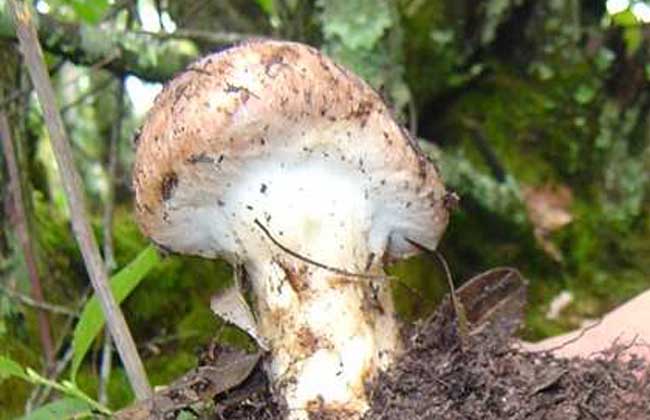
Matsutake is also known as songkourmo, songxun, hejun, taijun, etc. It is a rare and precious natural medicinal mushroom in the world, hailed as the "king of mushrooms." Shiitake, also known as huagu, houtougu, xiangxun, xiangxin, xiangjun, donggu, xianggu, etc., is the fruiting body of the plant xiangxun of the Pleurotaceae family and is the world's second-largest edible mushroom. Now let us take a look at the differences between matsutake and shiitake!
The difference in family and genus between matsutake and shiitake
1. Matsutake: Matsutake is a fungus of the kingdom Fungi, phylum Basidiomycota, class Basidiomycetes, order Agaricales, family Tricholomataceae, genus Tricholoma.
2. Shiitake: Shiitake is a fungus of the kingdom Fungi, phylum Basidiomycota, subphylum Agaricomycotina, class Agaricomycetes, subclass Agaricomycetidae, order Agaricales, family Marasmiaceae, genus Lentinula.
The morphological differences between matsutake and shiitake
1. Matsutake: Matsutake is umbrella-shaped, with vivid color, a brown cap, and a white stipe, all covered with fibrous tomentose scales. The flesh is white, tender, and thick, with a fine and dense texture and a rich, distinctive aroma.
2. Shiitake: The fruiting body of shiitake is solitary, clustered, or gregarious. The fruiting body is medium to slightly large, hemispherical when young, later flat to slightly flat, with a surface that is rhomboid-colored, light brown, dark brown to deep cinnamon, often with dark scales in the center, while the margin often has dirty-white hairy or floccose scales. The flesh is white, slightly thick or thick, fine and dense, and aromatic.
The difference in production areas between matsutake and shiitake
1. Matsutake: Many regions in China produce matsutake, but the quality varies greatly from region to region, with prices differing by up to dozens of times. The main production areas include Shangri-La, Chuxiong, and Yanbian, among others. Among them, Shangri-La accounts for 70% of the national total output and has been the matsutake export champion for 30 consecutive years.
2. Shiitake: Shiitake grows in winter and spring on fallen broadleaf trees, in groups, scattered, or singly. It is distributed in Zhumadian, Xixia, Lushi in Henan, Fujian, Zhejiang, Anhui, Hunan, Hubei, Suichuan in Jiangxi, Sichuan, Guangdong, Guangxi, Hainan, Guizhou, Yunnan, Lueyang in Shaanxi, Gansu, and other areas of China.
The difference in effects between matsutake and shiitake
1. Matsutake: Matsutake is mild in flavor and warm in nature. It enters the kidney and stomach meridians and has the effects of tonifying the kidney and strengthening the body, regulating qi, and resolving phlegm. It mainly treats soreness and weakness of the waist and knees, dizziness and blurred vision, cough with damp phlegm, chest and diaphragm fullness and oppression, nausea and vomiting, and limb fatigue.
2. Shiitake: Shiitake is sweet in flavor and neutral to cool in nature. It enters the liver and stomach meridians and has the effects of tonifying the liver and kidney, strengthening the spleen and stomach, benefiting qi and blood, improving intelligence and calming the mind, and beautifying the complexion. It can also resolve phlegm and regulate qi, benefit the stomach and harmonize the middle, detoxify, resist tumors, and promote the eruption of measles, etc. It mainly treats poor appetite, physical weakness, urinary incontinence, constipation, obesity, tumors, and sores.