What is the difference between matsutake and himematsutake? Explained clearly in one article
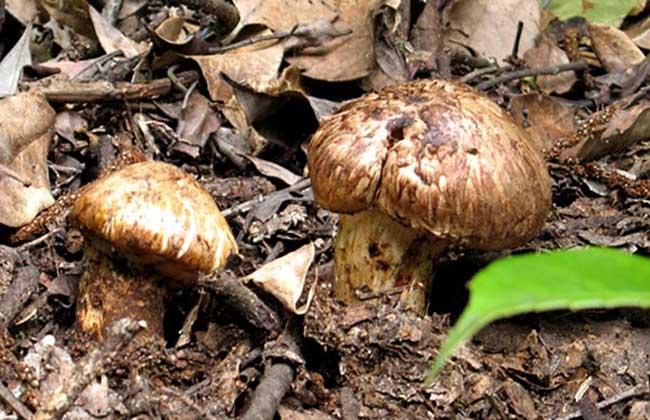
Matsutake, also known as songkourou, songxun, hejun, taijun, etc., is a rare and precious natural medicinal mushroom in the world, known as the “king of mushrooms”. Himematsutake, also known as Brazilian mushroom, Bashi mushroom, xiaosonggu, etc., lives in high-temperature, humid, and well-ventilated environments, has an almond aroma, and a crisp and tender texture. Let's take a look below at the differences between matsutake and himematsutake!
The difference in family and genus between matsutake and himematsutake
1. Matsutake: Matsutake is a fungus in the kingdom Fungi, phylum Basidiomycota, class Basidiomycetes, order Agaricales, family Tricholomataceae, genus Tricholoma.
2. Himematsutake: Himematsutake is a saprophytic fungus in the kingdom Fungi, phylum Fungi, subphylum Basidiomycotina, class Agaricomycetes, subclass Agaricomycetidae, order Agaricales, family Agaricaceae, genus Agaricus.
The morphological differences between matsutake and himematsutake
1. Matsutake: The fruiting body of matsutake is solitary, clustered, or gregarious. The fruiting body is medium to slightly large, hemispherical when young, later flat to slightly flat, with a surface that is rhomboid-colored, light brown, dark brown to deep cinnamon, often with dark scales in the center, while the margin often has dirty white hairy or floccose scales. The flesh is white, slightly thick or thick, fine and dense, with a fragrant aroma.
2. Himematsutake: The fruiting body of himematsutake is stout, with a cap diameter of 5-11 cm. It is initially hemispherical, gradually becoming bun-shaped and finally flat, with the top center flat, the surface having light brown to chestnut-colored fibrous scales, and the cap margin having fragments of the partial veil. The flesh at the center of the cap is up to 11 mm thick, while the flesh at the margin is thin. The flesh is white, turning slightly orange-yellow after injury.
The difference in origin between matsutake and himematsutake
1. Matsutake: Many regions in China produce matsutake, but the quality varies greatly from region to region, with prices differing by up to dozens of times. The main producing areas include Shangri-La, Chuxiong, and Yanbian, among others. Among them, Shangri-La accounts for 70% of the national total output and has been the champion of matsutake exports for 30 consecutive years.
2. Himematsutake: Himematsutake is native to the United States and Brazil. It is a saprophytic fungus that occurs on grasslands with livestock manure in summer and autumn, requiring high-temperature, humid, and well-ventilated environmental conditions.
The difference in effects between matsutake and himematsutake
1. Matsutake: Matsutake is mild in taste and warm in nature. It enters the kidney and stomach meridians and has the effects of tonifying the kidney and strengthening the body, regulating qi, and resolving phlegm. It mainly treats soreness and weakness of the waist and knees, dizziness and blurred vision, cough with damp phlegm, stuffiness and oppression in the chest and diaphragm, nausea and vomiting, and fatigue of the limbs.
2. Himematsutake: Himematsutake is neutral in nature and sweet in taste. It enters the heart, lung, liver, and kidney meridians and has the effects of benefiting the brain, reducing inflammation, tonifying the kidney, lowering blood sugar, improving diabetes, lowering cholesterol, enhancing energy, improving arteriosclerosis, and preventing and treating cardiovascular diseases.