What is the difference between the Peace Tree and the Happiness Tree? Teach you to tell them apart easily
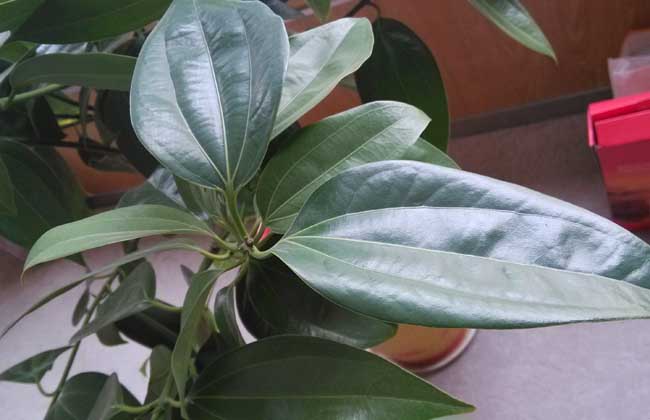
The Peace Tree was originally named Lanyu cinnamon, also known by aliases such as Hongtouyu cinnamon, Hongtoushan cinnamon, Fanglanshan cinnamon, large-leaf cinnamon, and Taiwan cinnamon; the Happiness Tree is also known as snake tree, bean-pod tree, jiegu liangsan, and ox-tail tree. The Peace Tree and the Happiness Tree are both among the most commonly grown ornamental plants, so let us take a look below at the difference between the Peace Tree and the Happiness Tree!
The difference in family and genus between the Peace Tree and the Happiness Tree
1. Peace Tree: The Peace Tree is an evergreen small tree in the plant kingdom, phylum Angiosperms, class Dicotyledons, order Ranunculales, family Lauraceae, tribe Cinnamomeae, genus Cinnamomum.
2. Happiness Tree: The Happiness Tree is a small tree in the plant kingdom, phylum Angiosperms, class Dicotyledons, subclass Sympetalae, order Tubiflorae, family Bignoniaceae, tribe Tecomeae, genus Radermachera.
The morphological difference between the Peace Tree and the Happiness Tree
1. Peace Tree: The Peace Tree is about 15 m tall; the leaves, branches and bark are almost without fragrance when dry; the branches and branchlets are brown; the leaves are large, bright green on the surface with a metallic sheen, with triplinerved veins arising above the base, and the reticulate veins are obvious on both sides; the flowering period is from June to July, and the fruiting period is from August to September.
2. Happiness Tree: The Happiness Tree is up to 10 m tall; the petioles, leaf rachis and inflorescences are all hairless; the leaves are 2-pinnately compound, rarely 3-pinnately compound; the inflorescence is a terminal panicle; the corolla is campanulate-funnelform and white to pale yellow; the capsule is slender; the seeds are elliptical; the flowering period is from May to September, and the fruiting period is from October to December.
The difference in efficacy between the Peace Tree and the Happiness Tree
1. Peace Tree: The bark of the Peace Tree can be used as medicine and has the effects of dispelling wind and dispersing cold, relieving pain and resolving blood stasis, and invigorating blood and strengthening the stomach. Also, because its plant body is rich in cassia oil, it can give off a fragrance that corrects odors and purifies the air, so people gave it the auspicious name Peace Tree.
2. Happiness Tree: The roots, leaves and fruits of the Happiness Tree are used as medicine and have the effects of cooling blood and reducing swelling; they can treat high fever, bruises and injuries, venomous snake bites and other conditions. Its wood is yellow-brown, slightly coarse and heavy in texture, with obvious annual rings, and can be used as building timber; the branches, leaves and roots can also treat bovine anthrax.
The difference in habits between the Peace Tree and the Happiness Tree
1. Peace Tree: The Peace Tree likes a warm, humid environment with ample sunlight; its optimum growth temperature is 20°C to 30°C; it likes light and is also tolerant of shade; it likes warm, hot places without frost or snow and with much fog and high temperatures; it is not tolerant of drought, waterlogging, severe cold or dry air. For cultivation, loose, fertile, well-drained acidic sandy loam rich in organic matter should be used.
2. Happiness Tree: The Happiness Tree likes a high-temperature, humid environment with ample sunlight; it is tolerant of high temperatures, afraid of cold, suitable for humidity and averse to dryness; it grows in sparse forests in valleys or on flat land. For cultivation, loose, fertile, well-drained loam and sandy loam rich in organic matter should be used.