What are the differences between carp and crucian carp? A quick guide to telling them apart
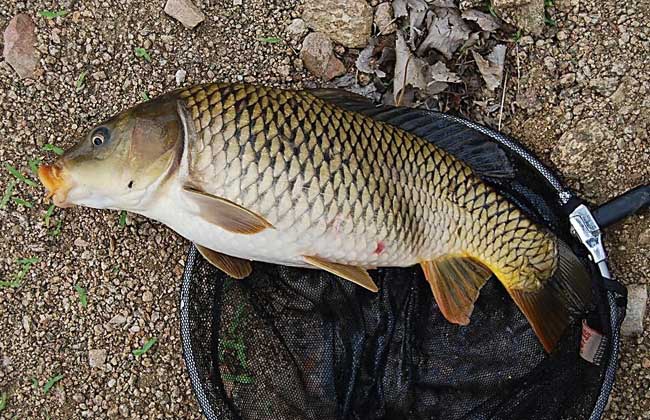
Carp and crucian carp are both fish commonly seen in daily life. Carp is also known as li guaizi, lizi, and so on, and originated in Asia before being introduced to Europe, North America and other regions. Crucian carp is also known as ji guazi, yue jizai, tu ji, and so on, and is a common freshwater fish in Europe and Asia. Many people do not know the differences between carp and crucian carp, so let us take a look together below!
Differences in body length
Carp is slightly larger, generally 30-40 cm long, flattened on the left and right sides, with a round belly, and the back slightly raised before the dorsal fin. Its mouth is horseshoe-shaped, and it has one pair each of rostral barbels and maxillary barbels, with the latter twice as long as the former. Its gill rakers are short, and it has pharyngeal teeth. Crucian carp, by contrast, is generally 15-20 cm long, with a laterally flattened body, a raised back that is tall and wide, a round belly, a short and small head, and a rounded blunt snout. It has no rostral barbels or maxillary barbels, has fine and dense gill rakers, has pharyngeal teeth, and has large scales with a very obvious lateral line.
Differences in fins
Carp has large, round scales, one pair each of pectoral fins and pelvic fins, one dorsal fin and one anal fin, and a forked caudal fin. Both the dorsal fin and anal fin have hard spines, and the rear edge of the last spine has lead-like serrations. Like carp, crucian carp also has one pair of pectoral fins and one pair of pelvic fins, one dorsal fin and one anal fin, and a forked caudal fin. Its dorsal fin and anal fin also have hard spines, and the rear edge of the last spine has serrations.
Differences in body color
The back of carp is grayish black, the area below the lateral line is nearly bluish yellow (some are black), the belly is white, and the dorsal fin is slightly black. The back of crucian carp, by contrast, is greenish brown, the belly is silver-gray, and all fin rays are grayish white, but because the waters in which they grow differ, their body color also varies.