Are Scorpions Insects? A Detailed Explanation of Scorpion Classification
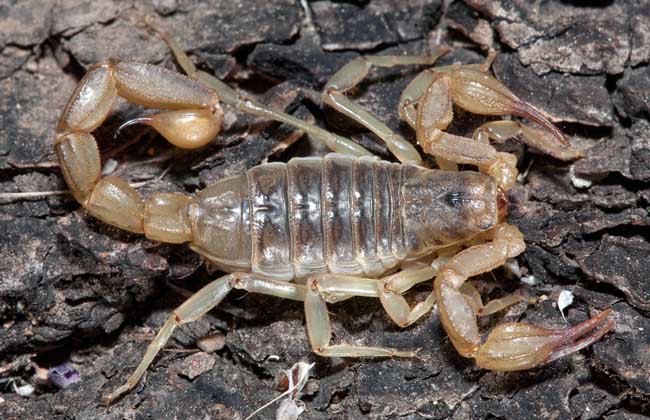
Scorpions are arachnids, typically characterized by a slender body, pincers, and a curved, segmented tail with a venomous stinger. There are about 1,400 or more species of scorpions in the world, and the earliest scorpions on land appeared about 430 million years ago in the Silurian Period. Let's take a look below at whether scorpions are actually insects!
Are Scorpions Insects?
Scorpions are not insects. Spiders belong to the phylum Arthropoda, class Arachnida, and taxonomically belong to a group adjacent to insects within the same larger family, because the definition of an insect is "a body in three sections - head, thorax, and abdomen, 2 pairs of wings and three pairs of legs, 1 pair of antennae born on the head, skeleton wrapped on the outside of the body, and morphology changing greatly throughout life." Scorpions do not meet the above characteristics of insects, but like insects they all belong to the large family of the phylum Arthropoda among invertebrates, which shows that the two share many common points.
What Food Do Scorpions Eat?
Scorpions are entirely carnivorous; very few species will consume small amounts of plant-based feed. Their prey mainly includes spiders, crickets, small centipedes, the larvae and nymphs of various insects, and even small geckos. When eating, they first slowly tear the food apart with their pedipalps, first suck the body fluids of the captured prey, then spit out digestive fluid, digest its tissues outside the body, and then ingest them, at a very slow speed.
Growth Habits of Scorpions
1. Social nature: Scorpions are animals that hide by day and come out at night, prefer moisture and fear dryness, prefer darkness and fear strong light stimulation, like living in groups, are quiet and not fond of moving, and have the habit of recognizing their nests and their groups, mostly settling together in fixed burrows. Generally, in large scorpion nests there are mostly both females and males, large and small, living in harmony, and mutual killing rarely occurs, but if they are not scorpions from the same nest, they will often kill each other after meeting.
2. Hibernation: Scorpions have the habit of hibernation. Generally in mid-to-late April, that is, after Awakening of Insects, they emerge from dormancy, and in early November they begin to slowly enter dormancy for hibernation. Their active time throughout the year is about 6 months.
3. Poikilothermic nature: Although scorpions are poikilothermic animals, they are still relatively tolerant of cold and heat. They can survive when the external environmental temperature is from 40°C to minus 5°C. Their growth, development, and reproduction are closely related to temperature. When the temperature drops below 10°C they are not very active; when the temperature is below 20°C they are less active; the most suitable temperature is between 25 and 39°C; they are most active at 35 to 39°C; when the temperature exceeds 41°C they are highly prone to dehydration and death; and when the temperature exceeds 43°C they die very quickly.
4. Light avoidance: Scorpions prefer darkness and fear light, especially fearing the stimulation of strong light, but they also need a certain degree of illumination in order to absorb the sun's heat, improve digestive capacity, speed up the rate of growth and development, and benefit the process of embryos hatching inside pregnant scorpions. According to observations, scorpions have a positive tendency toward weak light and a negative tendency toward strong light, and most like to be active under relatively weak green light.
5. Avoidance of stimulation: Scorpions have a strong avoidance response to various strong odors such as paint, gasoline, kerosene, asphalt, as well as various chemicals, pesticides, chemical fertilizers, quicklime, and so on. The stimulation of these substances is very harmful to scorpions, and may even be fatal.